
Lamont in the Media
Earth & Climate Science News
A 4,000-foot-high mountainside collapsed in Glacier Bay National Park this week in a massive landslide that spread debris for miles across the glacier below. Scientists at Lamont-Doherty Earth Observatory are studying it to improve understanding of landslide risks.
Antarctic sea ice is constantly on the move as powerful winds blow it away from the coast and out toward the open ocean. A new study shows how that ice migration may be more important for the global ocean circulation than anyone realized.
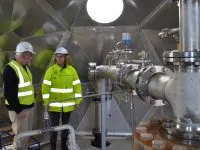
On June 24, a scientist involved in the CarbFix carbon capture and storage project in Iceland will give a live-streamed presentation about the technology and the project's success at turning CO2 to stone.

A new initiative aims to help homeowners in New Jersey cope with arsenic contamination in private wells—a problem that has only come to light in recent years, and about which many homeowners are still unaware.
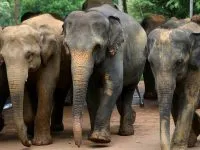
The tropics are already hot, and they’re getting hotter as global temperatures rise. A new study offers a glimpse into how seriously a couple more degrees could disrupt the region’s ecological map.
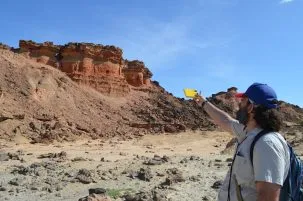
East Africa's rift valley is considered by many to be the cradle of humanity. In the Turkana region of northwest Kenya, researchers Christopher Lepre and Tanzhuo Liu of Columbia University's Lamont-Doherty Earth Observatory are cooperating with colleagues to study questions of human evolution, from the creation of the earliest stone tools to climate swings that have affected developing civilizations.
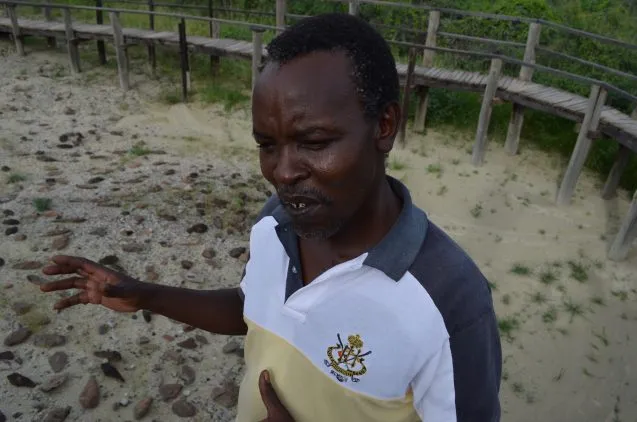
Who were our earliest ancestors? How and when did they evolve into modern humans? And how do we define “human,” anyway? Scientists are exploring Kenya’s Lake Turkana basin to help answer these questions.
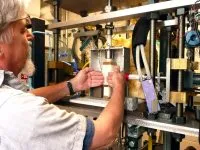
To understand how quickly ice from glaciers can raise sea level or how moons far across the solar system evolved to hold vast, ice-covered oceans, we need to be able to measure the forces at work. A new instrument designed and built at Lamont does just that.
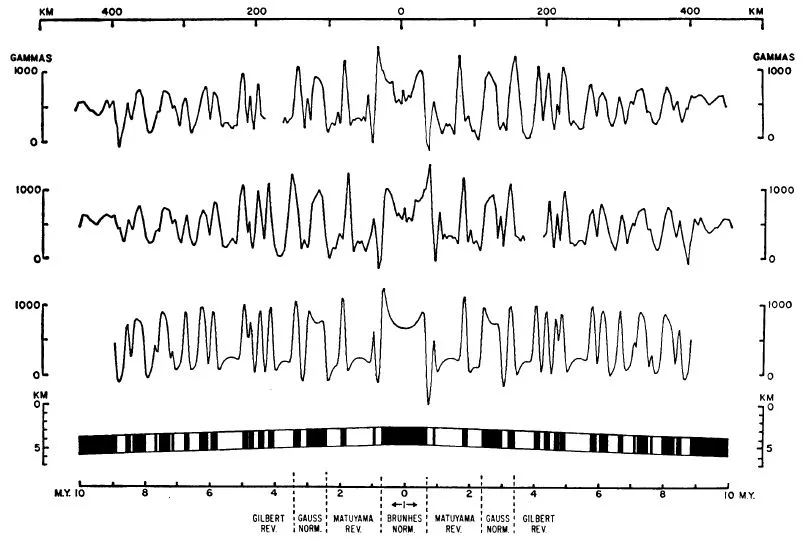
The young scientists who led the plate tectonics revolution 50 years ago showed how asking the right questions and having access to a wide range of shared data could open doors to an entirely new understanding of our planet.
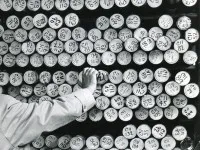
Imbrie, a former head of the Department of Geological Sciences, helped confirmed connections between changes in Earth’s orbit and the timing of the ice ages and was a co-founder of CLIMAP, an international effort to use sediment cores to map Earth’s climate at the height of the last ice age.
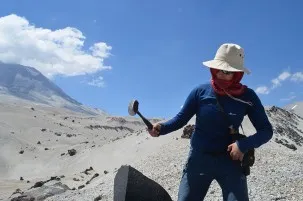
High in the southern Andes, Chile’s Quizapu crater is one of South America’s most fearsome geologic features. In 1846, it was the source of one the continent’s largest historically recorded lava flows. In 1932, it produced one of the largest recorded volcanic blasts. The volcano is currently inactive, but could revive at any time. What is next?
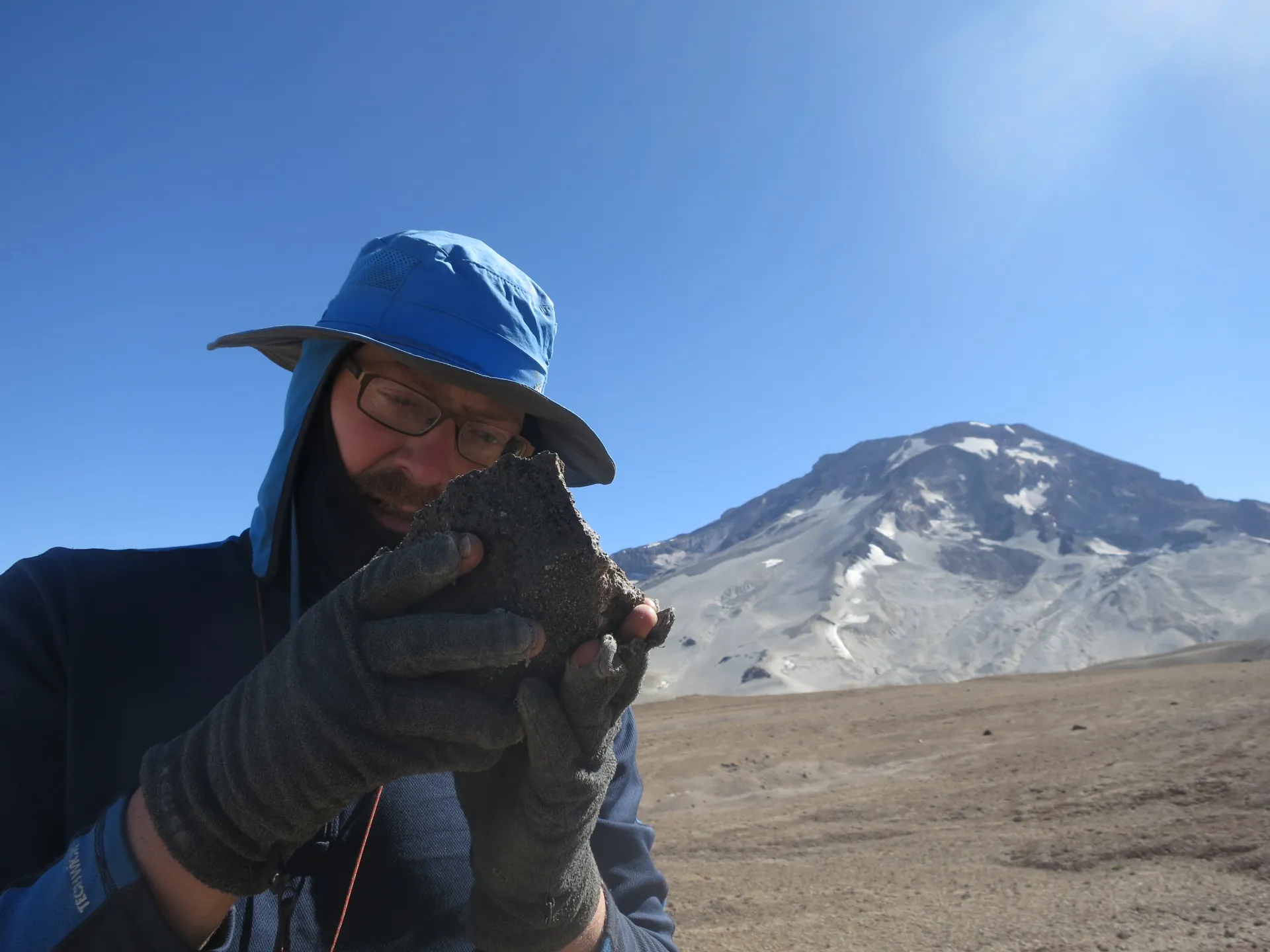
On a ledge just inside the lip of Chile’s Quizapu volcanic crater, Philipp Ruprecht was furiously digging a trench. Here at an elevation of 10,000 feet, a 1,000-foot plunge loomed just yards away, and wind was whipping dust off his shovel. But the volcanologist was excited. Ruprecht had just found this spot, topped with undisturbed wedding-cake layers of fine, black material that the crater had vomited from the deep earth some 84 years ago. Samples from the currently inactive site might shed light on its exceedingly violent behavior.