

Lamont in the Media

Earth & Climate Science News

Two decades after arsenic was found to be contaminating drinking water across Bangladesh, tens of millions of people are still exposed to the deadly chemical. Now a new report from the group Human Rights Watch charges that the Bangladesh government “is failing to adequately respond” to the issue, and that political favoritism and neglect have corrupted the government’s efforts.
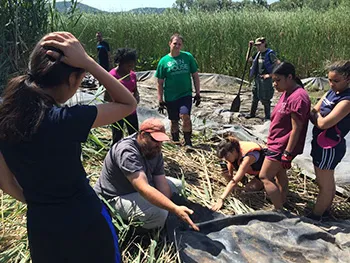
This summer, the Earth Institute is offering Columbia students opportunities to intern within various departments and research centers at the institute. All full-time Columbia and Barnard students are eligible to apply.

Science at sea isn't easy, but the benefits are huge, writes Sidney Hemming in her final post from a two-month expedition that collected millions of years of climate history in the deep-sea sediment from off southern Africa.

Expedition 361's newest sediment cores brought up spectacular foraminifera—translucent, glassy and “very pretty” throughout the ocean sediment.

Sidney Hemming and her team aboard the JOIDES Resolution got a surprise when they began taking sediment cores from their first river site off southern Africa—about 10 times more sediment than expected.
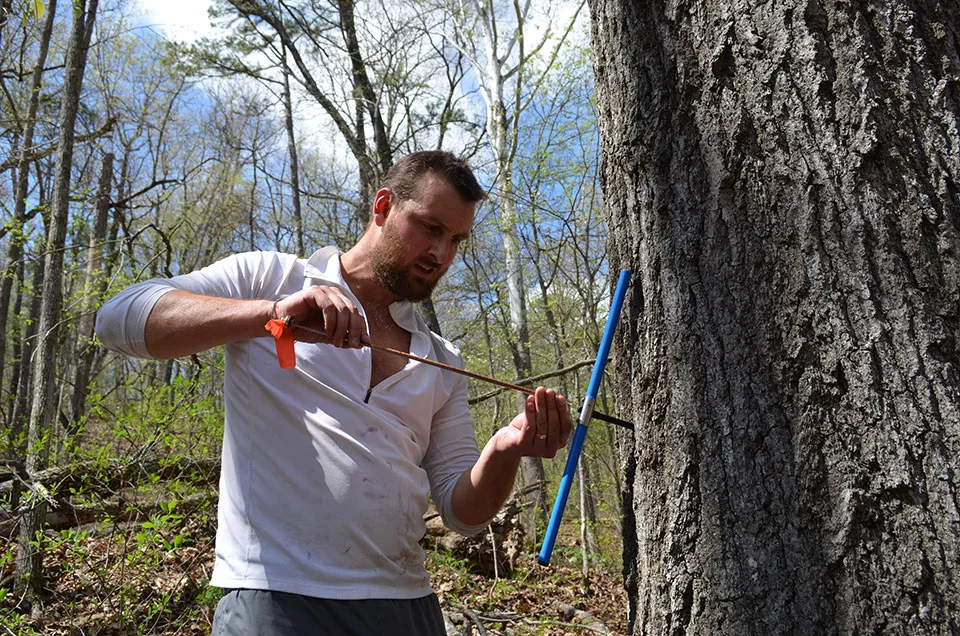
One foggy spring morning just after a hard rain, Park Williams was tromping through the woods deep in Arkansas’ Ozark Mountains. Toiling down a steep slope, he supposedly was keeping a simultaneous eye out for rattlesnakes, copperheads, poison ivy and big old trees. Williams seemed mostly focused on the trees, though; attention to the other stuff was just slowing him down. Williams studies how forests react to changes in climate, and the Ozarks’ deeply dissected hills and hollers—what some might refer to as typical hillbilly country—are a kind of ground zero for this.
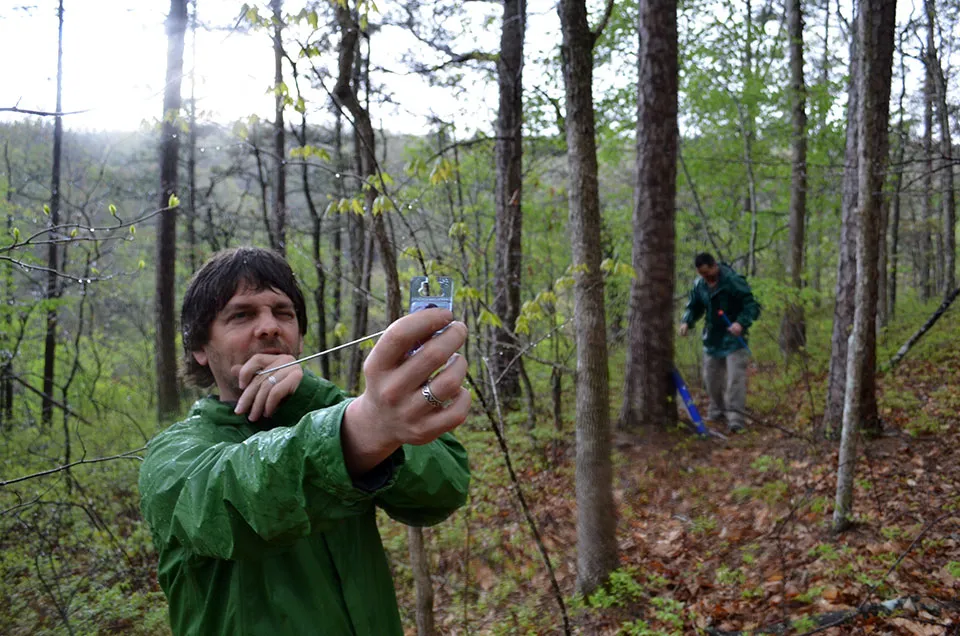
Forests in the south-central United States are some of the country’s most productive and diverse. They also sit in a warming “hole”—an area where the progressive rise in temperature affecting most of the continent hasn’t yet taken hold. A team from Columbia University’s Lamont-Doherty Earth Observatory is studying how these forests might shift—or even disappear—when climate change does catch up with them, as expected.
With calm seas, the JOIDES Resolution's latest sediment core comes up with what appears to be a fantastic, cyclic climate signal that is continuous back 7 million years, writes Sidney Hemming.
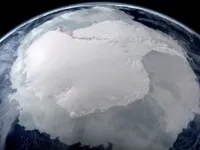
A new study that looked at the feasibility of lowering sea levels by pumping water onto icy Antarctica offers a warning about the costs today’s greenhouse gas emissions may be creating for future generations.

Sometime soon, a flock of “Climate Birds” could be ascending from a former NATO base in northeast France to take the measure of climate change around the world.
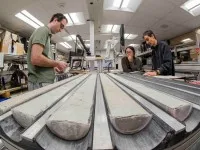
After weeks of anticipation, permission arrived just in time to core off Mozambique. Sidney Hemming and her team of scientists aboard the JOIDES Resolution are excited about what they might learn from the ocean sediment.

Mercury’s dark surface is revealing intriguing new clues about the formation of the solar system, including evidence announced today that the planet closest to the Sun may have formed in part from carbon, a key component of life.