
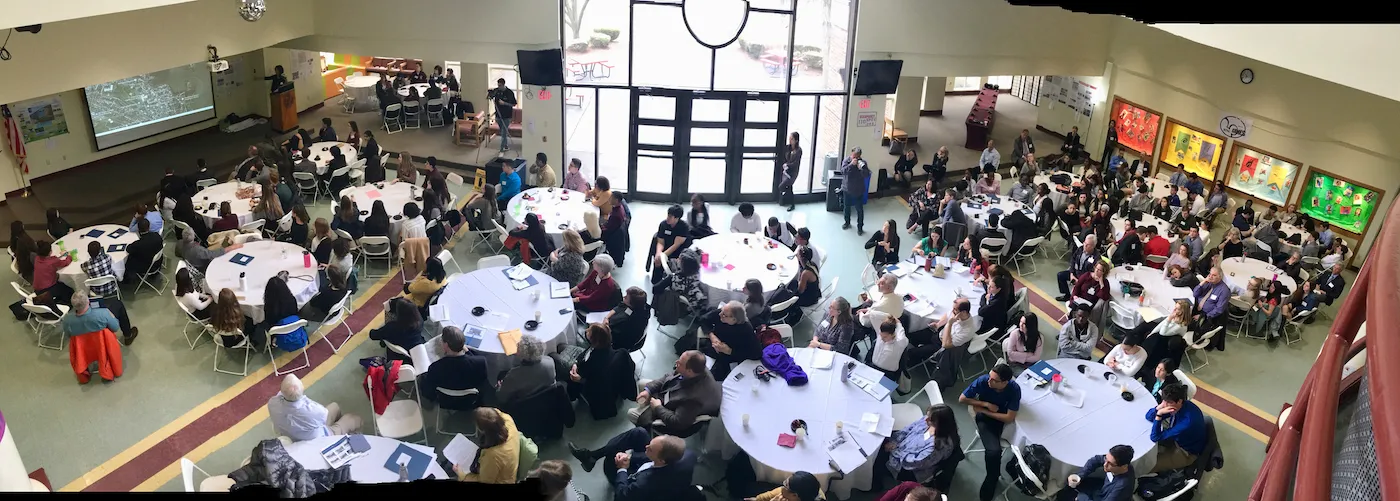
This school-based program engages students in addressing sustainable planning in their immediate community. Rockland County is composed of 5 towns and 19 villages, each with a unique identity and set of factors to consider for future development projects. Each community has pockets of commercial and residential development that are thriving, and others that are hoping for new energy and revitalization, but many were not developed with sustainability in mind. In Rockland P.L.U.S. the students focus on a local site to revitalize. Students consider how creative planning can make the community more sustainable and climate smart through mitigations like increased efficiency in transportation, water and energy, and applying adaptations like using green infrastructure in to improve water infiltration and to divert run off to flooding. Students develop presentations on their project designs which are shared with community professionals through a Symposium event.
Special thank you to Rockland County Youth Bureau for funding for the coordination and support of this event, Rockland Municipal Planning Federation for their support for resources and Saint Thomas Aquinas College for hosting the Symposium Event.
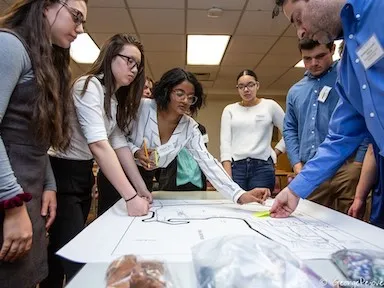
Class projects are designed for students to really S.E.E. their community. Students consider four complementary processes that make a community successful and sustainable: a balance of social equity, economic, and environmental factors or what we refer to as S.E.E.ing their community. Traditionally ~300 students from a complement of ten community high schools (Albertus Magnus, Clarkstown North, North Rockland, Nyack, Pearl River, P-Tech, Ramapo, Suffern and Spring Valley, Tappan Zee) participate in a series of 3 classroom visits as they develop projects focused on their local Rockland community. The program concludes with a student Symposium where about half the students participate, working with local professional mentors and facilitators.
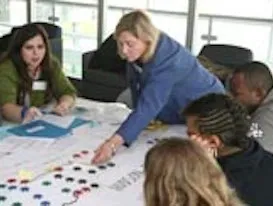
Symposium Event. The highlight of the program is a Symposium Event with students teams presenting their own project plans to mentors from the community. The group then transfers their sustainable planning skills to a new site in Rockland County where they work with new colleagues to put together a planning framework.
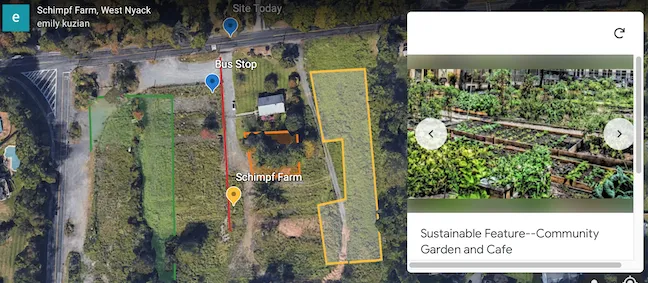
Schimpf Farm Project: Click the image or here to preview this project concept developed by one of our student teams, Albertus Magnus High School. Each school had a different project property to consider and different teams developed a range of project ideas for their sites. Consider as you tour of the site using Google Earth Projects what sustainable planning tools the students integrated into their plan.
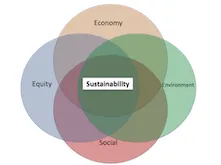
In 1987 the World Commission on Environment & Development defines this as "Development that meets the need of the present without compromising the ability of future generations to meet their own needs."
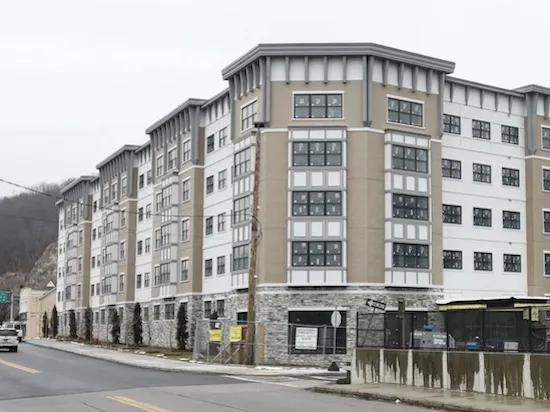
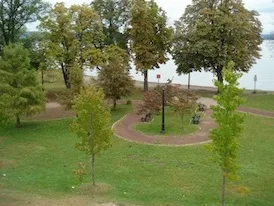
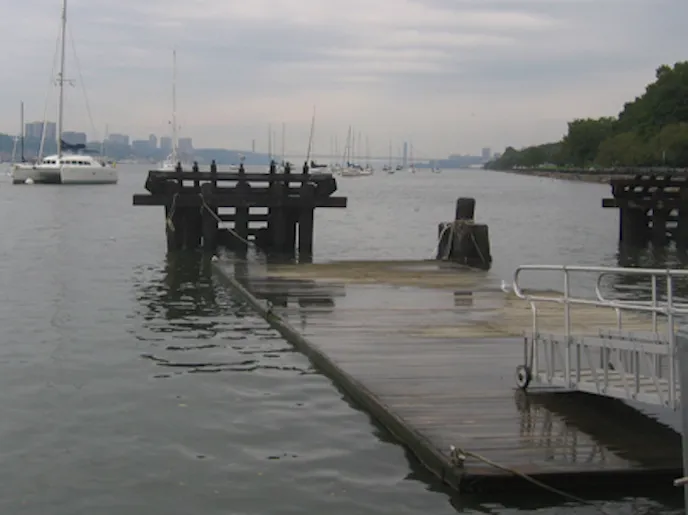
Student Project Resources
Please be sure every student has completed this linked consent form for 2026 and returned it to the RPLUS representative working with your class by the second visit.
There are many opportunities for youth to become involved in the community! We have compiled a list of groups that are looking for a youth voice to help in planning and guidance for the future. These include opportunities at the County level as well as in your own community. Climate Smart Communities Committees, Water Task Force Planning groups, and Planning Boards, Rockland Conservation Service Core. We invite you to get involved!
- Presentation #1 on Sustainable Planning
- Community Assessment Worksheet
- Community Enhancing Features Worksheet
- Key Words for Sustainable Planning and this project
- Presentation Tools for Planning
- Full set of Student Planning Cards
- Cost-Benefit Analysis Sheet
- Green Features Ideas And Examples
- Image bank of sustainable and green features for use in your presentations
- Presentation guidelines for Symposium Projects
- Clarkstown North (3 classes)
- North Rockland
- Nyack
- Pearl River
- Ramapo
- Spring Valley
- Suffern
- Tappan Zee