
"If we can understand our climate system, we can prepare reliable projections of future global and regional climate trends. This will enable informed management of a sustainable society and help safeguard humankind’s future as well as the planet’s well-being."
Scientists in the Ocean and Climate Physics (OCP) division delve into the mysteries of Earth's climate in order to document its change and to build an understanding of its controlling forces.
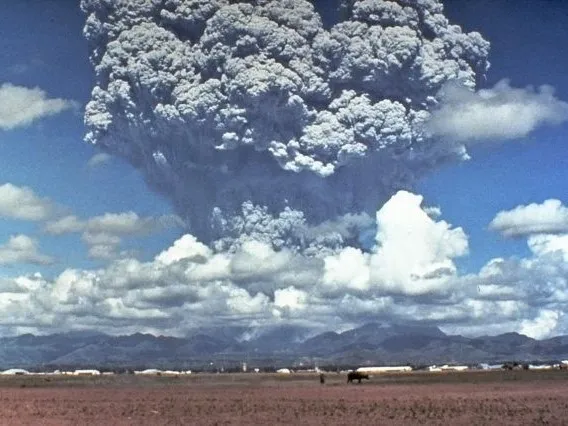
Changes in Earth’s climate—whether abrupt or gradual, global or regional—are governed by complex interactions involving the atmosphere, the oceans, planetary volcanism, the cryosphere (ice), the biosphere (living things), and external forces such as variability of solar radiation and even the occasional asteroid impact.
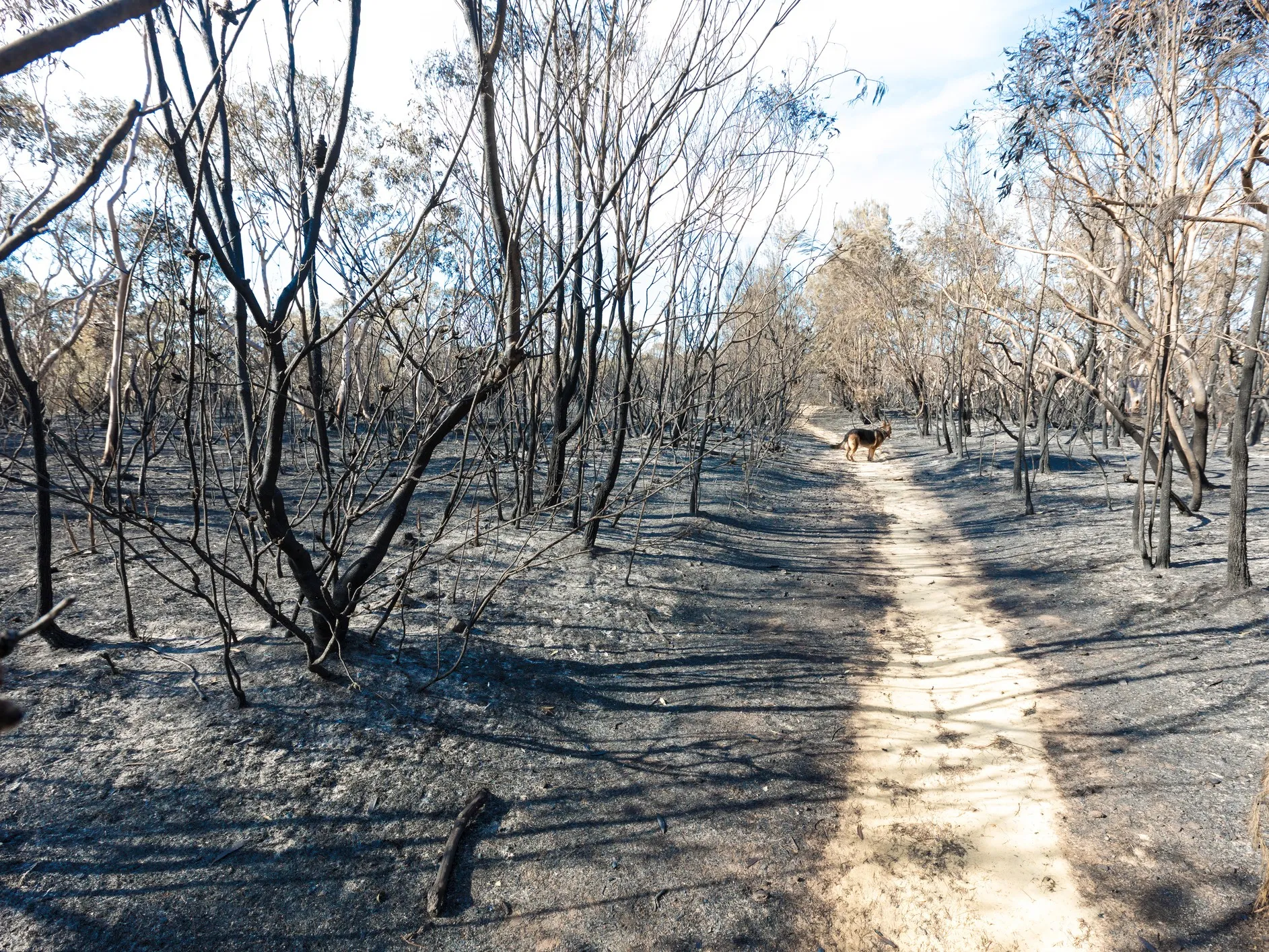
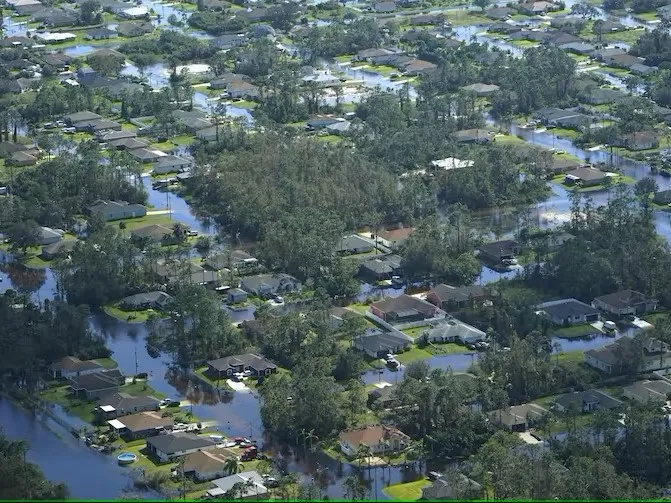
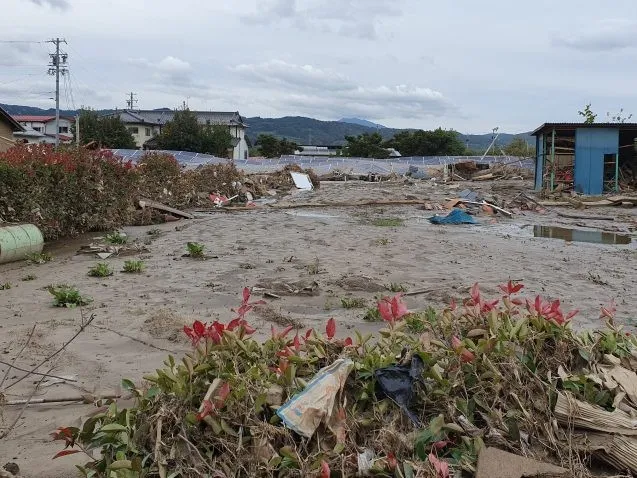
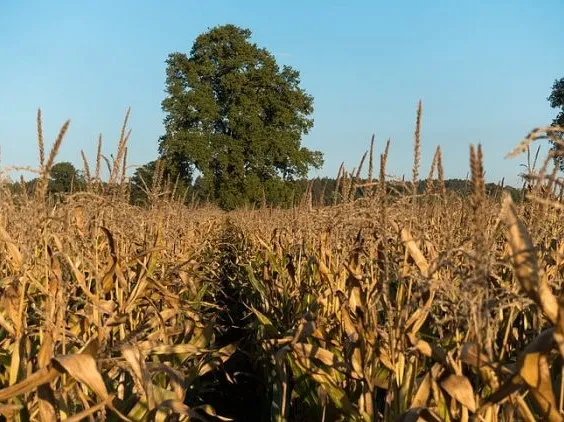
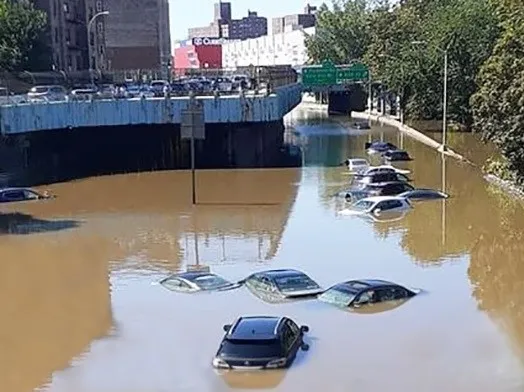
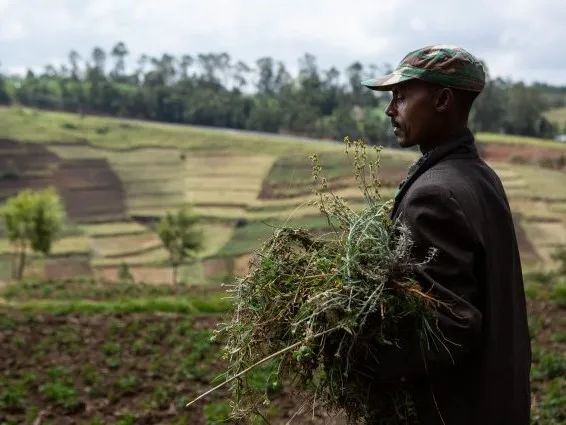
Over recent decades, it is becoming increasingly apparent that our climate is rapidly changing. The air is warming, more so at high latitudes; ice and permafrost are melting; sea level is rising as warmer sea water expands and ice and glacial melt water reach the ocean; changing patterns of precipitation and evaporation are stressing agricultural and water resources; and droughts and floods seem to be more intense. Increasingly, these recent climate changes are attributed to human activities.
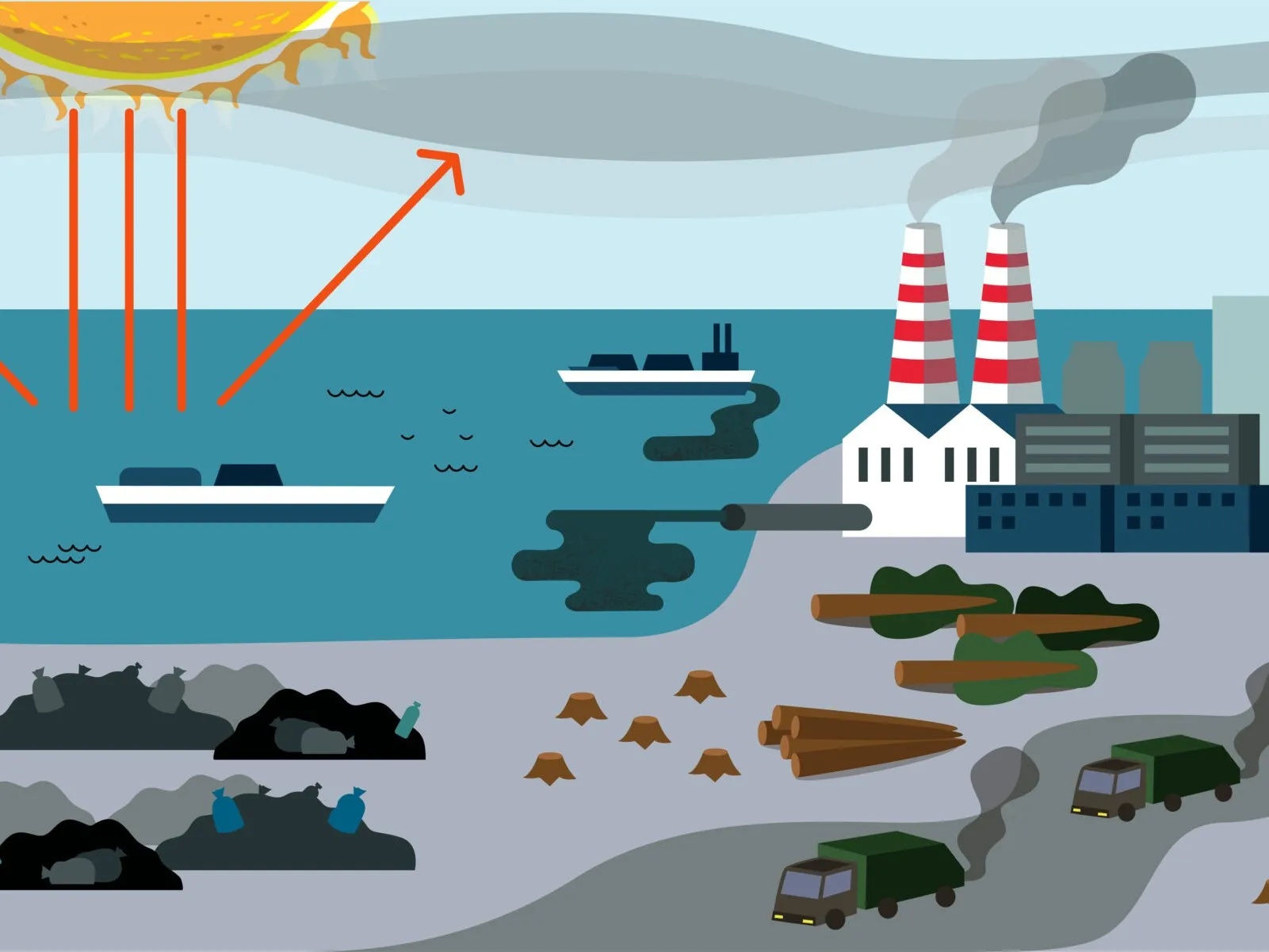
While understanding the natural variability of Earth’s climate is complicated enough, human activities are introducing powerful stresses on Earth’s delicately balanced climate system. Therefore, reliable prediction is vital to humankind's future and the well-being of the planet.

Featured Video
Ocean and Climate Physics Researchers & Staff
Yuwei joined the Department of Earth and Environmental Science PhD program in 2022. Her research interests are greenhouse gases and their impacts on air quality in urban areas. Yuwei is affiliated with the Commane Atmospheric Composition Group in Lamont-Doherty Earth Observatory's Ocean & Climate Physics research division.
Yuwei received her B.S. degree in Environmental Engineering from Colorado State University and B.Eng. in Environmental Engineering from The University of Jinan.
Yuwei likes hiking, cooking, and live music.
I am currently a Lamont Associate Research Professor at the Lamont-Doherty Earth Observatory of Columbia University. I research the general circulation of the atmosphere, including the midlatitude jet streams, storm tracks and monsoon circulation, using observations and numerical model simulations. My recent research projects focus on understanding the impact of Arctic sea ice loss on the midlatitude weather and climate as well as understanding the summer monsoon circulation and its associated troposphere-stratosphere transport. Before joining Lamont, I worked an Assistant Professor in the Department of Earth, Atmospheric, and Planetary Sciences at Purdue University and before that, a postdoctoral research associate at the Courant Institute of Mathematical Sciences. I received Ph.D. in Applied Mathematics from Columbia University in 2011.
I have engaged in studies of variability of the Antarctic atmosphere-ocean-sea ice system and its role in global climate since 1995. My research has progressed from the identification of polar-global linkages, expanded to an ENSO-Antarctic Dipole teleconnection mechanism study, and finally resulted in an Antarctic sea ice forecast. At the same time, I have utilized space-born scatterometer observations and developed a series of studies focused on air-sea interactions on synoptic time scales, ranging from cyclone-sea ice interaction, high wind evaluations to satellite enhanced cyclone statistics in the Southern Ocean. With the accumulation of knowledge regarding climate variability in the atmosphere, sea ice and at the air-sea interface, an understanding of the ocean’s role in the mid-high latitudes climate system becomes increasingly important. However, this task is much more challenging because of sparse observations in the Southern Ocean. In recent years, I have developed a few oceanic field programs to advance our knowledge of how the polar ocean plays out in the climate system. I also developed statistical forecast models for polar sea ice fields and maintain Antarctic and Arctic sea ice seasonal predictions routinely.
Suzana J. Camargo is a Professor of Climate at the Climate School and a Co-director of the Climate School Postdoctoral Program. She is an expert on extreme weather events, in particular tropical cyclones and their relationship with climate on various time scales. Her research includes exploring predictability, seasonal forecasting, climate change projections, as well as the risk and impacts of extreme weather events. She teaches courses on climate, extreme events and natural disasters.
Originally from Brazil, where she studied Physics at the University of São Paulo, she received a PhD in Physics from the Technical University of Munich in Germany. She is an elected Fellow of the American Geophysical Union (AGU) and the American Meteorological Society (AMS). She was an editor of the prestigious AGU journal Geophysical Research Letters from 2017 to 2025.
I am a PhD student at Columbia University's Lamont Doherty Earth Observatory studying climate dynamics. I am researching the physics that drive cycles of rain and drought throughout the past two millennia.
- About
I am a Ph.D. student at the Department of Earth and Environmental Sciences at Columbia University. I am being advised by Dr. Daniel M Westervelt, the Principal Investigator of Westervelt Aerosol Group based at Lamont Doherty Earth Observatory. My research focuses on air quality, atmospheric aerosols, satellite remote sensing, Geographic Information Systems (GIS), and environmental exposure disparities. I am especially interested in ground-based air sensors and satellite Aerosol optical depth products to understand the sources and trends of particulate matter.
My interests are in integrating ground-based observations from air sensor networks, regulatory monitoring data, satellite, and reanalysis products to characterize particulate pollution and its sources. I am also interested in understanding the accuracy of air sensors in measuring particulate and gaseous pollutants. I am currently involved in multiple projects: Air quality monitoring in Queens; Size-resolved Performance Evaluation and Correction Factor Development for 10 Consumer-Grade Air Sensors in New York; Monitoring Ultrafine, Fine, and Coarse Particles Along with Gaseous Pollutants Using Modulair Sensors at a major highway in New York City. Apart from research, I also engage regularly in community outreach, educating citizens about air quality and pollution.
Atmospheric composition and chemistry in Urban, Rural and Arctic regions
Research website: https://atmoscomp.ldeo.columbia.edu
I'm an atmospheric physicist interested in how clouds and radiation -- sunshine and earthlight -- sculpt the circulation of the atmosphere and the thermal and hydrological climate. I work with a group of physicists, atmospheric scientists, applied mathematicians and data scientists working to understand the fundamental mechanisms of the climate system using observations, simulation, and pencil-and-paper theory. Some recent questions include
- Why does it rain more as the surface temperature rises?
- How do changes in the concentration of greenhouse gases alter the planteary energy budget?
- How does cloud geometry affect the amount of sunlight reaching the surface?
My research website has more detailed information.
I am a climate scientist at Lamont-Doherty Earth Observatory. I was born in the United Kingdom and did my undergraduate studies at the University of Liverpool where I was introduced to atmospheric sciences, climate studies and oceanography. I moved to New York and Columbia to do my PhD under Mark Cane and Steve Zebiak in tropical atmosphere-ocean and climate dynamics. After a postdoc at the University of Washington I returned to Lamont and have been here ever since. My work concerns climate variability and change on timescales of weeks to millennia with a special focus on atmosphere-ocean interaction, the causes of droughts and hydro climate variability and change. My work uses numerical models, observations and proxy climate reconstructions from paleoclimate records and covers the globe.
Radley Horton is a Professor at Columbia University’s Climate School. His research focuses on climate extremes, tail risks, climate impacts, and adaptation. Radley was a Convening Lead Author for the Third National Climate Assessment. He currently is the Principal Investigator for the NOAA-Climate Adaptation Partnerships-funded Consortium for Climate Risk in the Urban Northeast. He is also the Columbia University lead for the NSF Funded Megalopolitan Coastal Transformation Hub (MACH) and the Department of Interior-funded Northeast Climate Adaptation Science Center. Radley has served on numerous national and international task forces and committees, including the Climate Scenarios Task Force in support of the 2018 National Climate Assessment, and he often appears on national and international television, radio, and in print. Radley also teaches/is developing graduate courses on climate risk assessment.
Pierre Dutrieux received his Ph.D in Oceanography from the University of Hawaii in 2009. His PhD work investigated tropical ocean circulation and dynamics with a particular focus on meso-scale eddy variability. Since then he directed his attention to the interaction between the oceans and the polar ice sheets, first at the British Antarctic Survey (until 2015), at the Polar Science Center, APL-UW, and now at LDEO.
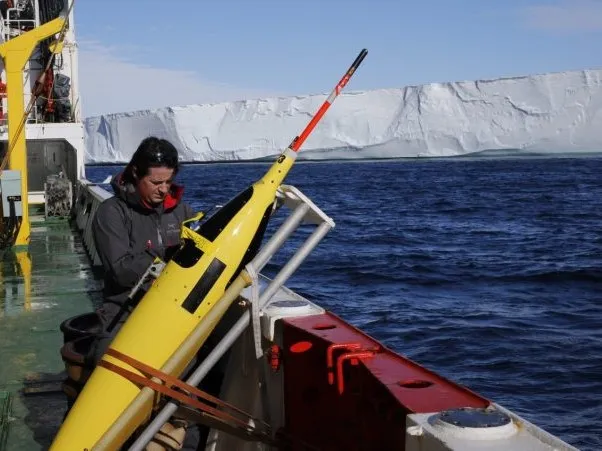
Using pioneering autonomous platforms (Autosub 3) to roam under at least 300 m thick ice for tens of kilometers, his research demonstrated that warm waters >3° above the in situ freezing point reaches the grounding line (where the ice sheet comes afloat and eventually extends into an ice shelf) of Pine Island Glacier, in West Antarctica. This water efficiently melts the ice shelf, reduces its buttressing effect on the flow of grounded ice into the ocean, and is now shown to be a key driver of a wide-spread glacial acceleration and retreat in the Amundsen Sea, West Antarctica, with important contributions to sea level rise, the freshwater budget of the Southern Ocean and possible impacts on the global thermohaline circulation and local primary production.
Using autonomous platforms, ship-borne ocean observations, ground-based and airborne radar observations, satellite observations and numerical modelling, Pierre further demonstrated that in this setting glacial melt is strongly modulated in time by remote climatic sources, and that the spatial distribution of melt is complex, varying at meters to kilometers scales, and carving and interacting with intriguing landscapes under the ice.
Developing new observational tools and integrating new understanding into predictive models, Pierre continues his work to shed light on the processes controlling the oceanic melting of glacial ice and its implications for the climate system.
Noel Siegert (he/him) is a Columbia DEES PhD student working with Dr. Radley Horton. Originally from Ipswich, MA he received a BA in Geography from Dartmouth College. Noel studies the hazards, uncertainties, and impacts associated with climate events such as heatwaves. He enjoys riding his bike around New York City, going to thrift stores, playing the trumpet, and staring at public transit maps.
Nathan Steiger is an Adjunct Associate Research Scientist at the Lamont-Doherty Earth Observatory of Columbia University. He works to understand the historical variability of the climate system and its relevance to human societies. In particular, he conducts research on the physical mechanisms of severe droughts, pluvials, and other climate extremes.
Mona Hemmati serves as a postdoctoral research scientist at Columbia University, specializing in the intricate nexus of hazard, exposure, and vulnerability associated with weather-related natural disasters, including floods and tropical cyclones. Her research commitment is steadfastly anchored in the pursuit of effective strategies for mitigating community vulnerability and enhancing resilience in the context of climate change, encompassing a comprehensive disaster management approach.
Hemmati's research scope extends to the investigation of sustainability issues, with a specific emphasis on the complex interplay of environmental, social, and governance factors intertwined with natural disasters. Driven by the urgency of the global climate crisis, her research serves as a catalyst for bridging the gap between scientific knowledge and practical policy implementation, thereby contributing to a sustainable future.
Throughout her academic career, Hemmati has made significant scholarly contributions, notably through her authorship and co-authorship of multiple peer-reviewed journal articles. Her work provides a valuable compass for guiding the scientific community in navigating the multifaceted challenges presented by natural disasters, ultimately aiming to foster greater community resilience and safety.
For those interested in exploring her research or engaging in collaborative research projects, Hemmati welcomes inquiries and collaboration opportunities.
Mingfang Ting, Professor of Climate at the Columbia Climate School, earned her Ph.D. in Climate Dynamics from Princeton University. As a climate scientist, Dr. Ting’s research covers a wide array of topics related to climate variability and change. These include the study of weather and climate extremes in a warming world, Asian monsoon systems, Arctic sea ice variability and changes, decadal and multidecadal climate modes, hydroclimate variability, and the impacts of climate change on agriculture and human health.
She is the recipient of the prestigious NSF CAREER award, an elected Fellow of both the American Geophysical Union (AGU) and American Meteorological Society (AMS), and has received the AMS Distinguished Scientific/Technological Accomplishment Award in Climate Variability and Change. In 2021, she was named one of the “world’s top climate scientists” by Reuters, recognized for the quality and impact of her scholarly publications in climate change science. She served as Co-Editor-in-Chief of the Journal of Climate, one of the leading journals in physical climate science, from 2020 to 2023. She is also Vice Dean for Student Affair and Co-Director of the Master of Science in Climate Program at the Columbia Climate School. Since 2004, she has been teaching climate science at both the undergraduate and graduate levels at Columbia University.
I was born and raised in Udine, Italy. I went to college in Trieste to study Physics and eventually fell in love with climate science. Thanks to good mentors at ICTP, COLA, and CMCC, I ended up getting my PhD in Atmospheric Sciences at the University of Washington. I came to Lamont in 2004 as a postdoc and never left. I live in NYC with my husband, my son, and my cat Emma.
My research interests fall under the broad heading of climate dynamics. Currently, I am working to better understand i) the dynamic and thermodynamic controls of the atmospheric water cycle in present-day and future climates, and ii) the atmosphere/ocean effects of annular mode/North Atlantic Oscillation (NAO) variability.
Like so many other oceanographers, I was born in Brooklyn, New York, in the days before the Dodgers left and precipitated the decline of American civilization. I was lucky enough to work on the tropical oceans in the era when we came to understand and predict El Niño and the Southern Oscillation (ENSO), the now famous pattern of interannual climate variability with well-publicized global consequences. Together with then student Steve Zebiak, I devised the first numerical model able to simulate ENSO, and in 1985 we used this model to make the first physically based forecasts of El Niño. Over the years the Zebiak-Cane model has been the primary tool used by many investigators to enhance understanding of ENSO. Making predictions led to asking what to do with them. So I began to work on the impact of El Niño and other climate variability on human activity, especially agriculture and health. My 1994 paper (with student Gidon Eshel) on the strong effect of El Niño on the maize crop in Zimbabwe has been influential in prompting decision makers to consider climate variability. This line of inquiry led to the creation of the International Research Institute for Climate and Society, housed here at Lamont. I also founded and directed the Masters Program in Climate and Society. While I continue to work on equatorial dynamics, El Niño, prediction of climate variations and climate impacts, and global climate issues, current work is dominated by concern for the impacts of human influence on the climate system. IN addition to the futurre and the present , my interest is drawn to explaining the variations in the paleoclimate record, especially the astoundingly strong abrupt changes and the succession of droughts over the past millennium.
for more info CLICK HERE
Linqiang is currently a Lamont-Doherty Postdoctoral Fellow at Columbia University, working with Profs. Michela Biasutti and Yochanan Kushnir. Before joining Lamont in the summer of 2024, Linqiang received his PhD from the Institute of Atmospheric Physics, Chinese Academy of Sciences, under the supervision of Prof. Tianjun Zhou.
Linqiang's research focuses on how the hydroclimate responds to past and future warm states. By integrating proxy evidence, theoretical understanding, and climate modeling, he aims to better understand how the hydroclimate evolved in the past and how it informs future changes—particularly in monsoon and Mediterranean climate systems.
Linh is a PhD student conducting research at the Lamont-Doherty Earth Observatory under the guidance of Yutian Wu. Her work focuses on Arctic climate, sea ice, and polar amplification, utilizing Python to analyze large ensemble climate and reanalysis data.
Prior to her doctoral studies, Linh earned a Bachelor’s degree from the University of Washington, where she double-majored in Atmospheric Sciences and Earth & Space Sciences. Her academic background includes research on cyclones, sea ice, and ice cores in collaboration with Professors Cecilia Bitz and TJ Fudge, as well as Dr. Robin Clancy. Additionally, she gained experience in operational meteorology and exoplanetary climate modeling through internships at NASA and the National Weather Service.
Joe is a PhD student in Westervelt’s Aerosol group. Joe received a BSc in Chemistry from the University of Ghana, and an M.S. in Computer Science Applied to Climate Change from the West African Science Service Center on Climate Change and Adapted Use program hosted in the University of Ouagadougou in partnership with the University of Wurzburg, Germany, where he graduated in the top 1% of his class. Joe is interested in aerosols, air pollution, and climate climate. He currently researches how global aerosol reductions impact climate variables in Africa, Asia, Europe, North America, and the Middle East regions through the Regional Aerosol Model Intercomparison Project (RAMIP) and uses climate models like the NASA GISS ModelE and CMIP6 models. His previous research centered around using Machine Learning and Artificial Intelligence to estimate air pollution concentrations in West African Cities. Outside academics, Joe likes traveling and exploring big cities.
Jason E. Smerdon is a Professor of Climate and Vice Dean for Academic Planning within the Columbia Climate School. He teaches courses on climate, environmental change and sustainable development to undergraduate and graduate students. Smerdon also lectures widely in public and private settings on the subject of climate change and its social dimensions. He is co-author (with Ed Mathez) of the textbook Climate Change: The Science of Global Warming and Our Energy Future (Columbia University Press, September 2018).
Smerdon’s research focuses on climate variability and change during the past several millennia and how past climates can help us understand future climate change. He publishes widely in the scientific literature on paleoclimate reconstruction techniques, the dynamics of past climate change and variability, and on assessing climate model simulations of the past and future using paleoclimatic information. His work has been profiled broadly by US and international media, including the New York Times, the Washington Post, the Guardian, Newsweek, BBC, NPR, ABC news, NBC news, and Slate.
Smerdon received his B.A. from Gustavus Adolphus College with a major in physics, and his M.S. in physics and Ph.D. in applied physics from the University of Michigan.
I am currently a Lamont Associate Research Professor at Columbia Climate School’s Lamont-Doherty Earth Observatory in Palisades, NY. In addition, I am a Columbia University Climate and Life Fellow leading a project on air pollution and climate change in Africa. I am also an affiliated scientist with the NASA Goddard Institute of Space Studies in New York, NY, and an air pollution advisor to the US State Department. Prior to Lamont, I worked as a Science, Technology, and Environmental Policy (STEP) postdoctoral research associate at Princeton University. I completed my PhD degree in May 2013 in Civil and Environmental Engineering from Carnegie Mellon University, under the supervision of Dr. Peter Adams. Outside of work, I enjoy sports, science, reading, and New York City living.
Daniel Bader is a Senior Staff Associate I at the Lamont-Doherty Earth Observatory. His primary responsibility is managing the Consortium for Climate Risk in the Urban Northeast (CCRUN), a NOAA Climate Adaptation Partnerships (CAP) project. He has extensive experience with preparing and communicating climate science information to policy makers, specifically in states across the Northeast. Prior to managing CCRUN, he was a programmer at the Center for Climate Systems Research (CCSR), tasked with developing climate scenarios to be used for adaptation planning. The data he has worked with is the foundation for climate resiliency planning efforts in New York City (through the New York City Panel on Climate Change), New York State, and across the National Aeronautics and Space Administration (NASA). His educational background includes a Bachelor of Science in Atmospheric Science from Cornell University and Masters of Arts in Climate and Society from Columbia University.
Join the Zappa Lab
We are always looking for graduate students to be part of our observational research team focused on the oceanic and atmospheric boundary layers. Apply via the Columbia Department of Earth and Environmental Sciences (DEES) and contact Professor Zappa for more information.
Christopher Zappa is a Lamont Research Professor in and the Associate Director of Ocean and Climate Physics, and a Lecturer in Earth and Environmental Sciences. He attended Columbia University as an undergraduate and earned a Bachelor of Science in Mechanical Engineering in 1992. Prior to joining Columbia in 2003, he received his Masters in Engineering in 1994 and his PhD in Applied Ocean Physics in 1999 from the University of Washington, Seattle and completed his Postdoctoral Scholar Award at the Woods Hole Oceanographic Institution in 2003. He was an ONR Young Investigator from 2004-2007 and the 2017 Schmidt Ocean Institute 5th Anniversary Impact Award recipient. He was awarded a Fulbright Scholar in 2018 to study unoccupied aerial systems at the University of Napoli, Parthenope.
His research interests include air-sea interaction, air-sea gas exchange, ocean surface gravity-capillary waves, wind-wave interaction, wave dynamics and wave breaking, near-surface ocean and atmospheric turbulence, boundary-layer processes of heat, mass, momentum, and energy transport, infrared, multispectral, and polarimetric remote sensing, upper-ocean processes, polar ocean processes, coastal and estuarine processes. He has led a continuing evolution of the development of measurement systems for air-sea interaction, heat exchange and small-scale processes. He has developed an airborne infrared dual-imaging technique to characterize sea surface temperature variability at scales ranging from O(1m) to O(1km). He has worked to develop imaging techniques that use polarization of visible radiation to quantify the phase-resolved fine-scale ocean surface capillary-gravity waves. Currently, he is developing a multispectral infrared imaging system for the direct remote measurement of momentum and heat flux at the ocean surface (i.e., the viscous shear stress and thermal gradient in the aqueous viscous sublayer). Finally, he is a leader in unoccupied aerial systems (UAS) and their measurement sensing capabilities.
Chia-Ying Lee is an Associate Research Professor at the Lamont-Doherty Earth Observatory, Columbia University. She is working on tropical cyclone (TC) and climate, and her research topics include developing a statistical-dynamical TC downscaling system for risk assessment, Madden–Julian oscillation and TC relationships in the subseasonal to seasonal (S2S) dataset. Lee has a background in Atmospheric Science. She received my B.S, and M.S. at the National Taiwan University under Professor Chun-Chieh Wu. In 2007, she attended the Meteorology and Physical Oceanography(MPO) division at the Rosenstiel School of Marine and Atmospheric Science (RSMAS) at the University of Miami. Lee worked with Professor Shuyi Chen on air-sea coupled modeling in TCs and received her degree in 2012.
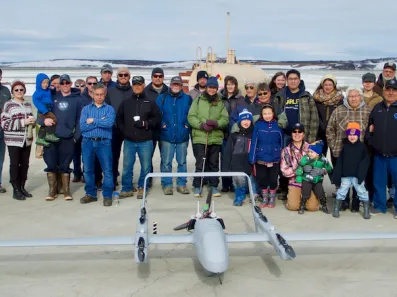
Carson Witte holds a Ph.D. from Columbia University, where he studied Air-Sea Interaction under the mentorship of Christopher Zappa. He holds a B.A. in Physics & Engineering from Pomona College and a M.A. and M.Phil. in Ocean & Climate Physics from Columbia University. He has spent the past several years working on Ikaaġvik Sikukun, a knowledge co-production project conducted in partnership with Indigenous Elders in the Alaskan village of Kotzebue. He is now working on an observational study of the influence of algae blooms on air-sea heat exchange from Research Vessel Falkor, and is also an AGU Thriving Earth Exchange Community Science Fellow working with communities in South Carolina to address the causes and consequences of unprecedented flooding that has occurred in the past few years. He is interested in using observational techniques in pursuit of community-led goals, bridging the scales of direct observation to wider spatiotemporal domains, and constantly asking questions of the cultural context in which scientific research is conducted and results interpreted. Carson also enjoys pretty much all types of outdoor recreation, is passionate about music, and loves to cook.
I am a field-going physical oceanographer, an observationalist. My research is directed at the ocean's stratification, circulation and mixing and its role in Earth's climate system. I study the transfer of heat and freshwater within the ocean and between the ocean, cryosphere and atmosphere. I view the ocean as a global system, with specific attention to interocean exchange and to ventilation of the deep ocean interior through sea-air-ice interaction. Comparison and extension of observational data with model results are an increasingly important part of my research. Historically much of my research deals with the Southern Ocean and South Atlantic, but research within the warmer waters of the Maritime Continent and Indian Ocean now compose most of my research program. Recently my focus is on the role of the ocean mesoscale in the transfer of heat and freshwater to compensate for net sea-air flux. I tend to go to areas that have been neglected by the research community, but have the potential of being key players in the global system.
Andrew is a PhD student working with Dr. Dhruv Balwada at Lamont-Doherty Earth Observatory. His research interests are in (sub)mesoscale physical oceanography, and he is currently studying eddy stirring and turbulence using Argo float data. Andrew is also interested in climate education and advocacy and is a Youth Advisory Board member at The Wild Center, a science and nature museum in the Adirondacks.
Andreas Thurnherr has degrees in Computer Science and Engineering from ETH Zurich (Switzerland), and in Physical Oceanography from the University of Southampton (UK). He has been working as an observational physical oceanographer at the Lamont-Doherty Earth Observatory of Columbia University since 2003 and he also holds an adjunct position at the Woods Hole Oceanographic Institution.
My research focuses on climate variability, predictability, and prediction, as well as the development of novel methods for studying such phenomena. Therefore, I work on historical climate analyses, paleoclimatic reconstructions, data assimilation, and studies of error dynamics in the ocean and coupled climate models. A significant portion of my work relates modern sea surface temperature observations to their historical measurements over the past two centuries.
Adam H. Sobel studies weather and climate, with a focus on extreme weather events and a particular interest in the tropics. Phenomena include tropical cyclones, intraseasonal variability, precipitation, severe convection, and climate change, as well as a substantial effort in recent years in climate risk and impacts. Sobel’s research spans basic and applied prediction and risk assessment, and uses observations, theory, and numerical simulations with models spanning a hierarchy in complexity. He is particularly interested in the interactions between turbulent deep convection and large-scale atmospheric dynamics, as these are key to the qualitative and quantitative understanding and prediction of many modes of atmospheric behavior, including extreme precipitation events. He has developed novel methods for diagnosing these interactions, connecting high-resolution explicit simulations of cloud systems to simple theoretical representations of large-scale dynamics in order to extract essential mechanisms and understand the connections between weather and climate. In another line of work, with colleagues in both academia and the insurance industry, Sobel has been developing hybrid statistical-dynamical models, combining mechanistic understanding with inference from observational data, to assess the risk of rare but extremely damaging extreme weather events, particularly tropical cyclones, but also tornadoes and hail, extreme precipitation, and others.
Sobel also has a strong interest in science communication. He has written many op-eds for the mainstream media, as well as a book, Storm Surge (Harper-Collins, 2014) about Hurricane Sandy. Currently he hosts a podcast, Deep Convection, featuring wide-ranging conversations with other climate scientists.
Sobel received a BA in physics and music from Wesleyan in 1989 and a PhD in meteorology from the Massachusetts Institute of Technology in 1998. He has received the Meisinger Award (2010) and Louis J. Battan Author’s Award (2014) from the American Meteorological Society, the Ascent Award from the Atmospheric Sciences Section of the American Geophysical Union (2014), and the Lamont-Doherty Award for Excellence in Mentoring (2010).