
“Our public outreach and service to the nation are as much a part of our mission as is our basic research.”
Seismology, Geology and Tectonophysics Division (SG&T) researchers are at the forefront of theoretical and observational seismology, solid earth dynamics, rock mechanics, structural geology and tectonics, and sedimentary geology, and are making lasting contributions to the study of earthquakes, the structure of the Earth’s crust, mantle, and core, and the large-scale motions and deformation of the tectonic plates.
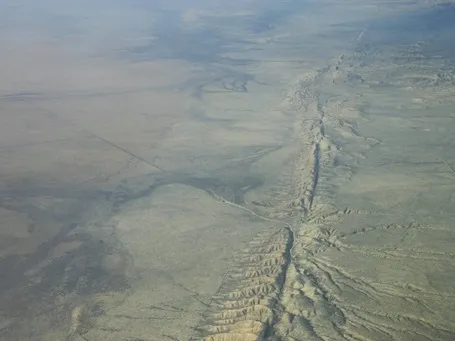
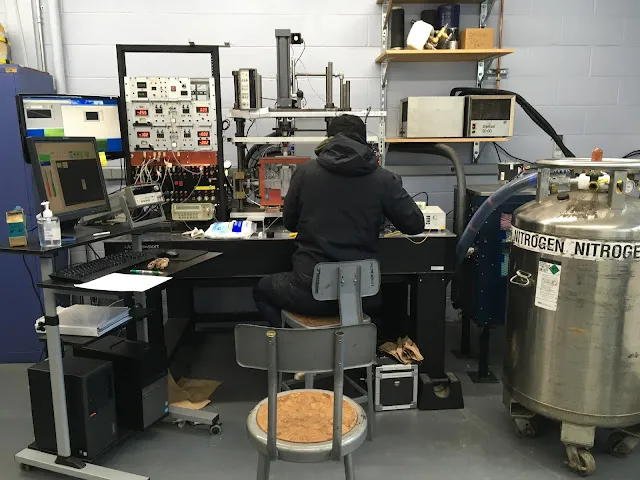
Using a broad spectrum of tools and techniques, SG&T scientists strive to develop a better understanding of the mechanics and dynamics of earthquakes and faulting. These techniques include laboratory and experimental studies of rock and fault mechanics, numerical models of earthquake dynamics, and observational studies of earthquake nucleation, seismic slip, and ground shaking.
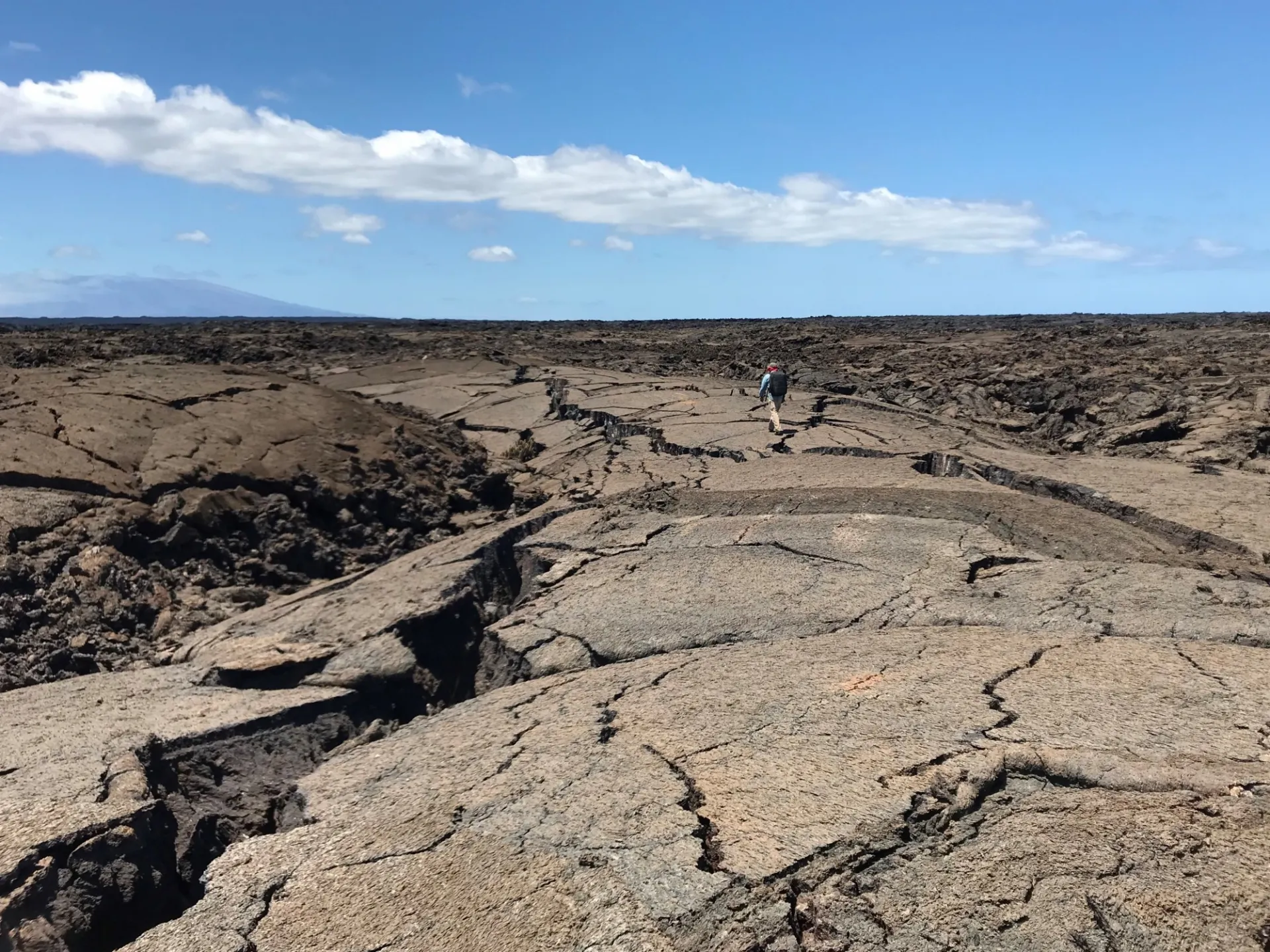
Geodynamics research focuses on the forces that drive deformation and tectonism in the solid Earth, and the role that rock rheology, physical state (solid or partially molten), and composition play in controlling such deformation. The techniques include computational and laboratory studies of deformation and melt migration, and the application of observational geodetic and seismic techniques to probe these processes at the field scale
SG&T scientists also serve the nation and the world by pursuing applied research and providing advice to national and international organizations in two critical areas: reducing society's vulnerability to natural hazards, and verifying international treaties governing nuclear weapons testing.
Many of our efforts are enriched by our research partnerships with scientific institutions and individual scientists, both in the U.S. and abroad. We are particularly proud of our track record in international cooperation, having a record of successful experiments on every continent. Each year, we host many visitors from abroad. These visits not only produce good science; they also generate lasting friendships that are the basis for cooperative research on the most interesting problems on (or in!) Earth.
Finally, we are proud to be a part of the metropolitan New York community. Our scientists and students reach out actively to our local schools, by providing resources and expertise in solid earth science. Our seismological network operations include partnerships with primary and secondary schools, two- and four-year colleges, museums, and local, regional and state emergency management agencies. And we are often called upon by local and national media for information on earthquakes, or opinions on recent advances in our science. Our public outreach and service to the nation are as much a part of our mission as is our basic research.
Featured Video
Seismology, Geology & Tectonophysics Researchers & Staff
Geophysicist with broad interests in Earth structure (especially the lithosphere and asthenosphere), geodynamcis, seismic wave propagation and inverse theory.
Fieldwork in Iceland, New England, California, Axial Seamount, and Lau Basin.
Textbooks in inverse theory, environmental data analysis and geophysics.
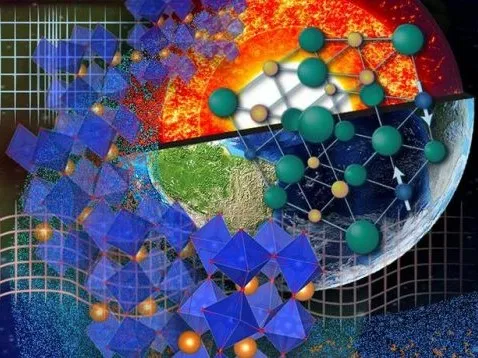
Vishal (Vishy) Manve is the Project Coordinator at Columbia University's Lamont-Doherty Earth Observatory (LDEO), within the Seismology, Geology, and Tectonophysics division. In this role, he supports the coordination of the Modeling Earth from Atomic to Global Scale (MINERALS) initiative, facilitating collaboration across interdisciplinary research teams and contributing to integrated Earth system modeling and sustainability goals.
Vishy brings over nine years of cross-sectoral experience spanning journalism, international climate policy, and multilateral engagement. Before joining Columbia, Vishy worked with the United Nations Framework Convention on Climate Change (UNFCCC), Growald Climate Fund, and the UN-SDG Evaluation Office, advancing initiatives at the intersection of climate finance, program evaluation, and global development.
He has authored over 400 published pieces across AFP, BBC, Global Voices, and The Diplomat, and has spoken internationally on climate and equity issues at forums such as the Carnegie Council for Ethics in International Affairs and the International Journalism Festival in Perugia, Italy.
He holds dual Master’s degrees from The Fletcher School at Tufts University and Columbia Climate School, specializing in climate finance, disaster risk management, and global climate governance. He is passionate about integrating research, policy, and equity to drive just and inclusive climate action.
Timothy Liao is a postdoctoral researcher at Columbia University working at the intersection of computational materials and geophysics. He received his Ph.D. in Physics from the University of Texas at Austin, where he developed machine learning–guided frameworks for the discovery and design of rare-earth-free magnetic materials. His current research focuses on modeling the thermodynamic stability and thermoelastic properties of hydrous minerals, particularly serpentines, using first-principles calculations, molecular dynamics, and machine learning interatomic potentials. His work aims to bridge atomistic simulations with geophysical observations by providing quantitative constraints on phase stability, elasticity, and seismic signatures under Earth’s interior conditions.
Gentleman Adventurer, 1969-present.
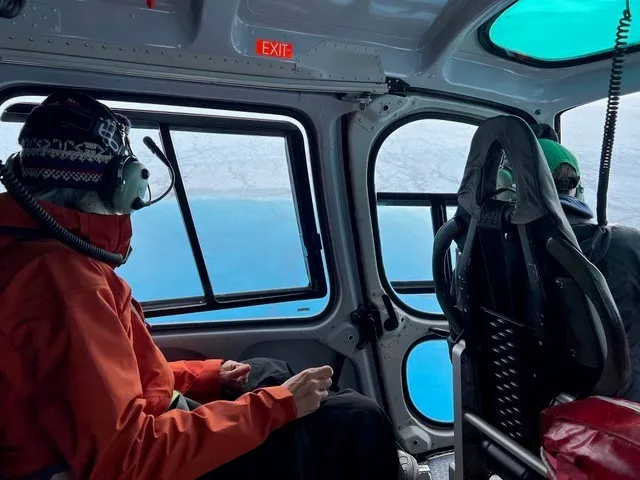
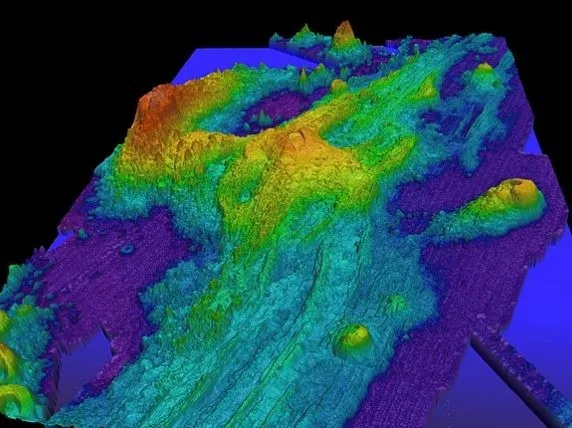
Spahr Webb holds the Jerome M. Paros/Lamont Research professorship in Observational Sciences at the Lamont Doherty Earth Observatory which Is part of Columbia University’s new Climate School. He is also an Adjunct Professor within the Department of Earth and Environmental Sciences Department of the Columbia University. His group develops instrumentation to better observe geophysical and oceanographic processes. A principle focus now is on subduction zones and the hazards of megathrust earthquakes with an emphasis on observing slow slip events (SSEs or slow earthquakes). The distribution of slip in SSEs should inform on the coupling behavior of megathrust faults. SSEs have preceded several recent giant earthquakes, and thus may provide the potential for early warning. Other efforts include measuring deformation near the trench of subduction zones using GPS-acoustic techniques, and monitoring magma chamber processes beneath Axial volcano using the compliance method.
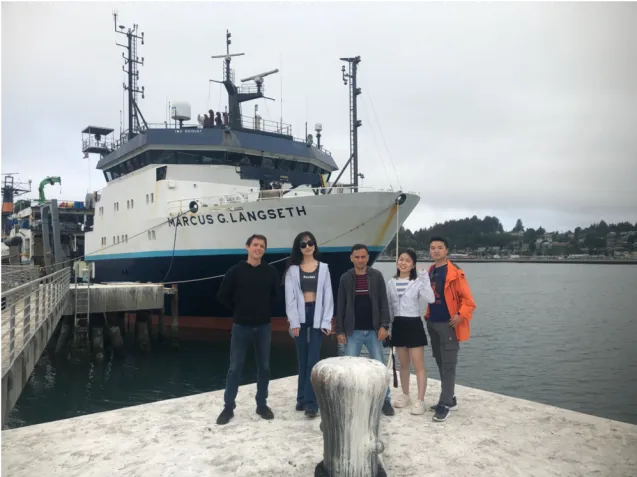
In October 2025, we recovered a deployment of 50 seafloor instrurments including drift corrected (A-0-A) absolute pressure gauges, seismometers and oceanographic instrumentation. Seafloor instruments from the US, Japan, New Zealand and Germany and on shore and offshore geodetic observations were deployed to observe slow slip events (earthquakes) offshore of New Zealand. Three SSEs occurred in the region of the array in 2025.
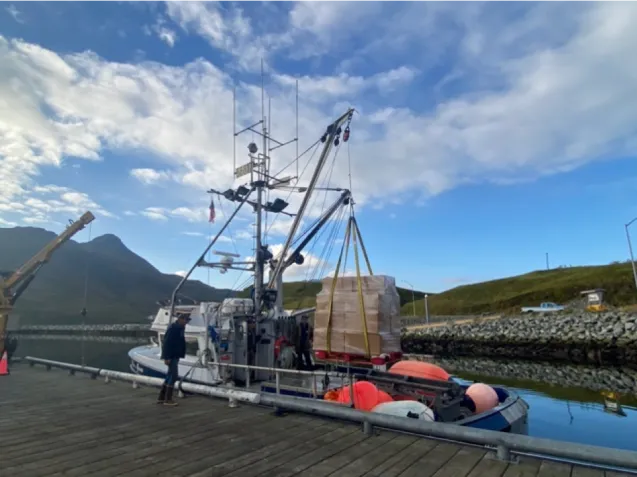
A group of three GPS-A (GPS acoustic) geodetic sites were established offshore the Aleutian subduction zone in 2018 in the Shumagin seismic gap region about 70km from the trench. The sites were used to measure interseismic strain accumulation and then also the seafloor displacements caused by the huge 2021 Sand Point and Simenof and 2022 Chignik earthquakes that occured beneath the array.
Three instruments will be deployed for two years in September 2026 that will measure seafloor compliance to investigate the evolution of the magma chamber beneath Axial Volcano offshore of Oregon in anticipation of an eruption of this volcano in the next year or two.
Spahr Webb hold B.S. degrees in Physics and also Earth and Planetary Sciences from MIT and a PhD in oceanography from the Scripps Institution of Oceanography.
Sean Solomon is a Doherty Senior Scholar at Columbia University’s Lamont-Doherty Earth Observatory, where he served as Director and William B. Ransford Professor of Earth and Planetary Science from 2012 to 2020. Prior to coming to Columbia, Solomon held appointments from 1972 to 1992 as Assistant Professor to Professor of Geophysics in the Department of Earth, Atmospheric, and Planetary Sciences at the Massachusetts Institute of Technology, and from 1992 to 2011 as Director of the Department of Terrestrial Magnetism of the Carnegie Institution of Washington.
Solomon’s research has spanned a range of topics in Earth and planetary science. He has applied the tools of seismology and marine geophysics to address the formation and tectonic evolution of oceanic crust and lithosphere at mid-ocean ridges and transform faults, the nature and causes of intraplate stress, and the deep seismic structure of oceanic hotspots. Through spacecraft observations and theoretical analyses, he has sought to understand the internal structure and geophysical evolution of the solar system’s inner planets. A member of the science teams for the Magellan mission to Venus, the Mars Global Surveyor mission, and the GRAIL mission to the Moon, Solomon was the principal investigator for NASA’s MESSENGER mission, which sent the first spacecraft to orbit Mercury and study the planet’s composition, geology, topography, gravity and magnetic fields, exosphere, magnetosphere, and heliospheric environment.
A former Hertz Fellow, Sloan Research Fellow, and Guggenheim Fellow, Solomon was President of the American Geophysical Union from 1996 to 1998. He is a member of the National Academy of Sciences and the International Academy of Astronautics and a Fellow of the American Academy of Arts and Sciences, the American Association for the Advancement of Science, the American Geophysical Union, and the Geological Society of America. He is a recipient of the G. K. Gilbert Award from the Geological Society of America, the Arthur L. Day Prize from the National Academy of Sciences, the Public Service Medal from NASA, the Harry H. Hess Medal from the American Geophysical Union, and the Distinguished Alumni Award from the California Institute of Technology. In 2014 he was awarded the National Medal of Science by President Barack Obama.
Renata Wentzcovitch is a Professor of Materials Science and Engineering in the Applied Physics and Applied Mathematics Department, Earth and Environmental Sciences, and Lamont-Doherty Earth Observatory at Columbia University. Her research is devoted to computational quantum mechanical studies of materials at extreme conditions, especially planetary materials. She addresses electronic, structural, and vibrational properties from a fundamental and interrelated perspective.
Paul Richards has taught at Columbia University since 1971, where he has conducted research on the theory of seismic wave propagation, the physics of earthquakes, the interior structure of the Earth, and the application of seismological methods to explosion and earthquake monitoring. He is a co-author of the advanced text “Quantitative Seismology” (available in Russian, Chinese, Japanese as well as English), and co-discoverer of evidence for super-rotation of the Earth’s inner core. He has been emeritus Professor of Natural Sciences since 2008, and is currently Special Research Scientist at Columbia where he continues to conduct research on methods to improve the monitoring of earthquakes and explosions.
He has held Guggenheim and MacArthur Fellowships, chaired Columbia’s Department of Geological Sciences from 1979 to 1983, served terms as a visiting scholar at the U.S. Arms Control and Disarmament Agency in 1984 and 1993, was elected (1992) to membership in the Council on Foreign Relations, participated for the United States delegation in Geneva in CTBT negotiations, is a Fellow of the American Academy of Arts and Sciences. He received the Seismological Society of America’s 2009 medal for outstanding contributions in seismology.
See this for a list of publications, and this for other general information.
Educated in Britain, and groomed at an American plate boundary, Christie-Blick’s research deals with sedimentation processes, crustal deformation, and deep-time Earth history – currently with emphasis on the geology of the Neoproterozoic Earth. He is known also for his work in seismic and sequence stratigraphy, and the paradox of low-angle normal faulting. Several of those themes came together in a popular Spring Break excursion to Death Valley, California for first- and second-year undergraduates. For 40 years, Christie-Blick also taught courses in sedimentary geology and tectonics, receiving the Best Teacher Award from both graduate and undergraduate students. From 2008-2014, he was an instructor and course chair for Frontiers of Science, an interdisciplinary science course in Columbia's famed Core Curriculum.
Meritxell is a 4th year PhD Candidate working with Dr. Folarin Kolawole at the Crustal Deformation Lab at Columbia University. Her research focuses on multi-scale crustal structure and modes of strain release along evolving continental divergent plate boundaries. Her current projects explore the initiation of microplates, the relationship between long-term evolution of rift border faults on earthquake processes, and active tectono-magmatic processes. Her research approach integrates field structural geology and seismology, and her current research areas include the East African Rift System (Tanzania and Congo), and Axial Seamount (offshore Oregon, US).
Marc Spiegelman holds a joint position in the Departments of Earth & Environmental Sciences and Applied Physics & Applied Mathematics at Columbia University. He obtained a BA in Geology (1985) from Harvard University and a PhD in Geology and Geophysics from Cambridge University (1989). He was then a Lamont Post-doctoral Fellow in Columbia University, and a Research Scientist and also Lecturer at the Lamont-Doherty Earth Observatory. He joined the faculty of Columbia University in 2000 and became full Professor in 2008.
Professor Spiegelman’s research interests include understanding the dynamics and observable consequences of fluid flow in strongly deformable porous media. His current computational research focuses on methods and software for more flexible exploration and solution of multi-physics problems including using tools for automatic code generation for multi-physics problems (FEniCS) and rapid composition of physics-based preconditioners using PETSc.
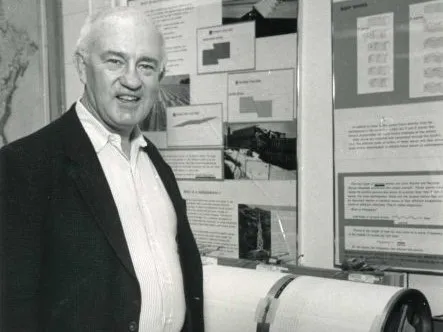
Lynn Sykes has been involved for 55 years in the verification of underground nuclear testing and the long battle to obtain a total ban on nuclear testing. In 1986 the Federation of American Scientists presented him and two colleagues with its Public Service Award for working to revive scientific and public interest in a comprehensive nuclear test ban treaty. He along with Walter Pitman from the Lamont-Doherty Earth Observatory of Columbia University and Jason Morgan of Princeton showed unequivocally that the earth’s outermost layers consist of nearly rigid plates that move over the surface of the earth. That major revolution is called plate tectonics.
Sykes, a long time resident of Palisades New York became a member of the Lamont Staff in 1965 after graduating from M.I. T. followed by a PhD at Columbia. He has authored more than 135 scientific articles, including 35 on the nuclear testing. He was a member of the U.S. delegation that traveled to the Soviet Union in 1974 to negotiate the Threshold Test Ban Treaty. He testified before the U.S. Congress numerous times as an expert on nuclear-test verification, a subject with large scientific and public policy components.
Plate tectonics revolutionized the study of the earth’s crust, providing a understanding of the formation of mountain ranges, the drifting of the continents, volcanoes, earthquakes, ocean basins, mid-oceanic ridges, deep sea trenches, the evolution of climate and the distribution of natural resources. Sykes proved the importance of great faults that intersect mid-ocean ridges in accommodating plate motion. Dr. Marcia McNutt a geophysicist and President of the U.S. National Academy of Sciences called the discovery of plate tectonics “one of the top ten scientific accomplishments of the second half of the 20th Century.”
Sykes is a member of the National Academy of Sciences, the American Academy of Arts and Sciences, a Fellow of the Geological Society of America and of the American Geophysical Union, which honored him with its Macelwane and Bucher awards. He also received the Seismological Society of America’s most prestigious H.F. Reid medal. He received an honorary degree from Columbia University in 2018. While officially retired, he continues his research on earthquakes and explosions. He was born in Pittsburgh Pennsylvania in 1937 and grew up near Washington DC.
Lauren Lewright is a PhD student studying interactions between the ice sheets, the solid Earth, and sea level over a range of timescales.
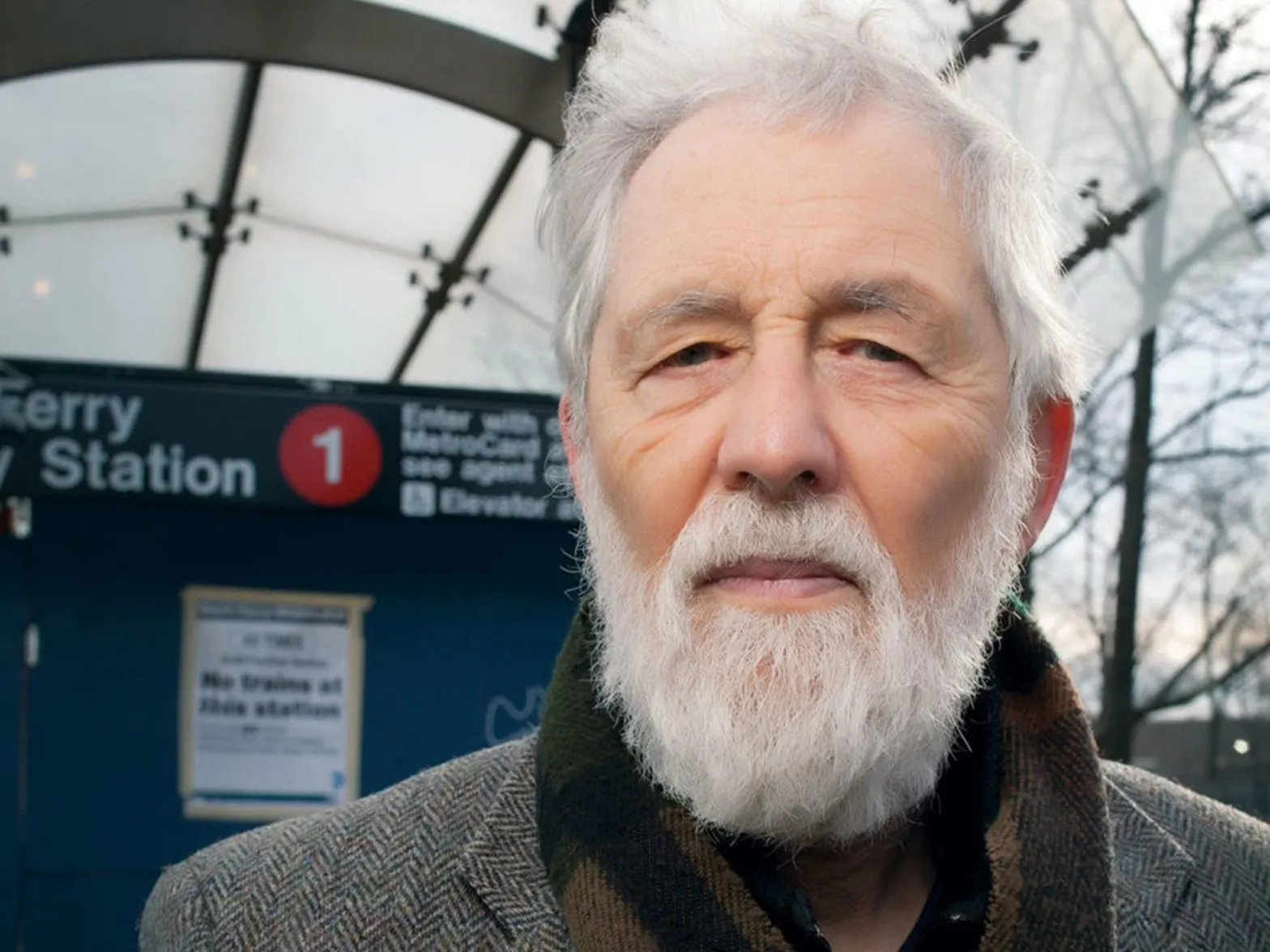
Klaus H. Jacob, Ph.D., is a geophysicist and a rebuilder. He has worked at Columbia University’s Lamont-Doherty Earth Observatory for over 50 years, and is a renowned earthquake, disaster and climate expert. He has a focus on disaster risk management, with most current research on rising sea levels, climate change and disaster resilient megacities.
Jacob served on the Mayor’s New York City Panel on Climate Change (NPCC, 2008-2019); the NY State’s ClimAID project; and the post-Sandy, HUD-sponsored Rebuild by Design (RBD) research advisory group. TIME Magazine named him one of 50 “people who mattered in 2012” for forecasting consequences of a SANDY-like storm on New York City a year before SANDY hit. He developed for the NY MTA and specifically for its NYC-Transit subway system a climate change adaptation model plan.
Jacob taught courses in disaster risk management at Columbia's School of International and Public Affairs; in the Sustainability Management Program of the CU School of Professional Studies; and at Barnard College. He co-led with CU GSAPP faculty international urban planning studios to make cities disaster resilient with focus on Caracas, Venezuela; Istanbul, Turkey; Accra, Ghana; CanTho, Vietnam; and Pune, Maharashtra/India; amongst other locations.
Prior to 2000, his basic and applied research focused largely on earthquake and volcano hazards in Alaska, and many regions on five continents, including Pakistan, Singapore, Australia, Egypt, El Salvador and others. He was a co-founder of the National Center for Earthquake Engineering Research (NCEER/MCEER), and a contributor to the Seismic Building and Bridge Construction Codes for the US, NY State, and NYC.
Jaocb often interacts with the media and professional organizations (architects; urban planners and designers; engineers, journalists) to raise public and professional awareness towards disaster and climates risks, and to achieve sustainable resilience.
Kate Scholz is an NSF Postdoctoral Fellow in the Seismology, Geology and Tectonophysics Division of Lamont-Doherty Earth Observatory. At Lamont-Doherty Earth Observatory, She is working with Einat Lev and Roger Buck to explore how magmatic sill formation in extensional tectonic settings including at midocean ridges and contintinental rifts. During her Ph.D. at University of Oregon, Kate was advised by Meredith Towsend and Amanda Thomas. The through-line of her work is an interest in developing and utilizing physics-based models of magmatic processes to understand how compositional, mechanical, and thermal conditions interact and modulate the mechanisms and timescales by which magma and other magmatic fluids are stored and moved through the crust.
Space Geodesy Group Leader at the Smithsonian Astrophysical Observatory for over 20 years before moving to the Lamont-Doherty Earth Observatory in 2010. Associate Director for the Seismology, Geology, and Tectonophysics Division since 2019. Over one hundred refereed papers.
Jacqueline Austermann is an Associate Professor at Columbia University and part of the Seismology, Geology and Tectonophysics Division of Lamont-Doherty Earth Observatory. In her research, she studies sea level changes ranging from the past glacial cycles to Millions of years ago in order to infer ice mass changes and ice sheet stability as well as constrain the Earth's rheology. Austermann also works on geodynamic and plate tectonic problems dealing with plate driving forces and dynamics of the Earth's deep interior.
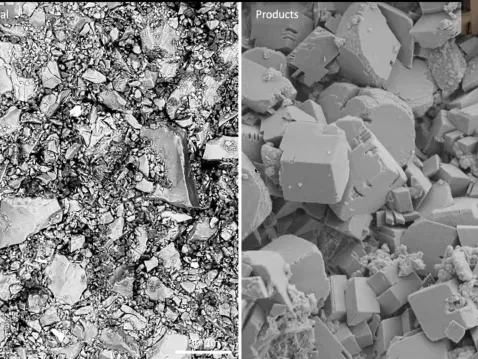
I use laboratory experiments to investigate the feedback between deformation processes and material properties. My work includes use of microstructural tools (electron microscopy, mass spectrometry, and FT-IR spectroscopy) and in situ measurements (ultrasonic wave analyses, permeability, stress, and strain) to derive mathematical models of deformation phenomenon. My interests include reaction-driven cracking during carbon mineralization of rocks, hydrolytic weakening in minerals, and shock induced deformation of ceramics.
Ekström was born and grew up outside Stockholm, Sweden. He graduated from Swarthmore College in 1981 with a degree in physics and did post baccalaureate work in seismology at Moscow State University, USSR. He graduated from Harvard University in 1987 with a Ph.D. in geophysics. After postdoctoral work at Columbia University, he joined the faculty at Harvard in 1990 as professor of geology and geophysics. In 2006 Ekström moved to Columbia University where he is professor of Earth and environmental sciences. His teaching includes environmental hazards and risk assessment. Ekström has served as chair of the Incorporated Research Institutions for Seismology, the EarthScope Steering Committee, the International Federation of Digital Seismographic Networks, and the International Seismological Centre executive committee. In 2015 he was awarded the Beno Gutenberg Medal by the European Geophysical Union for his outstanding contributions to seismology.
Folarin Kolawole is a structural geologist whose research involves the integration of field observation, subsurface geophysical imaging, and geomechanics to investigate research problems related to the evolution of early-stage continental rift zones and fault reactivation in intraplate settings of natural and induced seismicity. He studies continental rift evolution in East Africa, southeast Brazilian rifted margin, and the Rio Grande Rift (U.S.), and investigates intraplate seismicity in central and eastern U.S., southern Africa (Botswana), and western Africa.
My current research interests focus on studying the behavior of fault systems using the statistical analysis of earthquake catalogs, from the production of detailed catalogs of small magnitude earthquakes to their analysis and development of new models. The collective properties of the numerous, ever-occurring small earthquakes give information on the rheology of the faults, and more generally the properties of the crust, that hosted them. One of the most noticeable applications of this statistical approach is the search for temporal variations of statistical properties before large earthquakes that could help us identify their preparation phase.
Einat Lev is an Associate Research Professor at the Seismology, Geodynamics and Tectonics (SGT) group at Lamont-Doherty Earth Observatory ( LDEO), of Columbia University. Her research focus is physical volcanology, including numerical modeling, geologic fluid mechanics, field work at active volcanoes, laboratory experiments, image and video analysis, and anything else that can help us understand how the mechanical properties of geologic viscous fluids affect their deformation.
My research has involved applying massive waveform cross correlation to earthquake location, earthquake detection, repeating events, measuring temporal changes in the crust associated with large earthquakes, testing competing models of foreshock occurrence, studying the earthquake source using empirical Green’s functions, and nuclear monitoring.
I joined the research staff at LDEO in 1968 and was Appointed Associate Professor in 1973 and Professor in 1977. I study the brittle deformation of the earth, both on the short term: earthquake physics, and the long term: fault mechanics. My work includes experimental rock mechanics, field studies of faulting, and theoretical studies. I have co-authored with students and colleagues over 300 papers on these subjects, and am the author of the leading treatise in this field, now in its third edition: The Mechanics of Earthquakes and Faulting, 3rd ed. Cambridge Univ. Press, 2019. Earlier editions were translated into Japanese and Chinese.
I am a Fellow of the American Geophysical Union and have been awarded the Murchison Medal of the Geological Society (London) and the Harry Fielding Reid Medal of the Seismological Society of America.
My research explores the way that micro-features control macro-behavior. Defects in the structure of crystalline materials, such as impurities, dislocations, grain boundaries, and partial melt, all affect the way that seismic waves are damped in the mantle, for instance, or how tidal energy is turned into heat within an icy moon's outer shell. In order to better interpret seismic data and provide better constraints for goephysical modeling, I design experiments to isolate and scrutinize the underlying microphysics of defect-controlled processes such that resultant laboratory data can be scaled up to macroscopic settings. With material properties being the constant element, my work spans a variety of time and length scales and geologic contexts: from the deep earth, to the cryosphere, to the outer solar system.
Dr. Cheng Mei is the Lamont–Brinson Postdoctoral Fellow at the Lamont-Doherty Earth Observatory of Columbia University. Previously, he was a postdoctoral scholar at Stanford University and Northwestern University. He earned his Ph.D. from Nanyang Technological University. His research focuses on geophysics and geomechanics, with an emphasis on earthquakes, induced seismicity, geothermal energy, landslides, underground excavation, and rock-fluid interactions. His work integrates theoretical analysis, numerical modeling, and laboratory experiments to address fundamental and applied problems in the Earth system.
Charlotte Bate works with Christine McCarthy in the Rock and Ice Mechanics Lab at LDEO. She investigates fault mechanics and glaciology via ice deformation experiments. More specifically, she studies frictional mechanisms and the effect of temperate ice on the basal dynamics of ice streams. Charlotte graduated with a joint major in physics and geophysics from McGill University and earned an MSc in structural geology from the University of Wisconsin–Madison. Before starting at Columbia, she worked as instrumentation specialist in the Rock Mechanics Lab at UW–Madison. She also worked in the Rock and Soil Mechanics Lab at Penn State and the Experimental Glaciology Lab at Iowa State.
I'm a postdoctoral research fellow at the Lamont-Doherty Earth Observatory and I am interested in using glacial geomorphology and geochronology to investigate the mechanisms of past ice sheet retreat. At Lamont-Doherty Earth Observatory I am working with Jacky Austermann, Nicolás Young, and Jonny Kingslake to reconstruct the proglacial lakes that formed along the margin of the ice sheets that covered North America during the last glaciation (25,000 years ago to the present day). In this work I will combine geological observations with numerical modelling simulations of glacial lake evolution to better understand whether glacial lakes can drive the rapid retreat of ice sheet margins.
My previous research has spanned North America, the British Isles and Svalbard. During my master's research, I investigated the drainage system beneath the former Irish Ice Sheet using ground penetrating radar and and high-resolution geomorphological mapping. While my PhD research focused on understanding the instability mechanisms that may have drove the retreat of the northwestern sector of the Laurentide Ice Sheet in the Northwest Territories, Canada, using a combination of cosmogenic nuclide dating and glacial geomorphological mapping.
I’m a laboratory manager and researcher in the LDEO Rock and Ice Mechanics Lab. My research focuses on using methods in experimental rock deformation, structural geology, and geochemistry to understand brittle deformation processes, earthquake mechanics and hazards, and chemical and physical interactions between rocks and fluids. Applications range from subduction zone fault slip and fluid transport to geologic carbon storage and geothermal energy extraction.
A seismologist, Arthur Lerner-Lam has led scientific expeditions in the Middle East, Europe, Central and South Asia, the Southwest Pacific, and throughout the United States. Over the last 20 years, he has lectured and written widely on natural hazard risk identification, assessment and management. At Columbia, Lerner-Lam directs the masters programs in sustainability science and environmental science and policy. These programs provide a broad and quantitative understanding of the environment, including Earth’s climate, and foster critical thinking about the public policies and private sector management principles needed for resiliency and sustainability. With colleagues from political science, economics and international affairs, Lerner-Lam also has developed related curricula on sustainability management and sustainable investing suited for intensive executive education certificate programs. Lerner-Lam received his undergraduate degree in geological sciences from Princeton University, and his doctorate in geophysical sciences from the Scripps Institution of Oceanography at the University of California, San Diego. He has held Post-doctoral positions at Scripps and the Massachusetts Institute of Technology, and has been at Lamont-Doherty since 1985. He has been on numerous scientific advisory committees and editorial boards including as a member on the Federal Scientific Earthquake Studies Advisory Committee for the U.S. Geological Survey, as a consultant to the U.S. Trade and Development Agency and as a contributing author to the U.N.’s Global Risk Update and the World Bank’s Global Hotspots Report. He has consulted on environmental and natural hazard resilience for the governments of Haiti, the Dominican Republic, Chile, India, China, Thailand, Turkey and Venezuela. He has testified before the U.S. Congress on the Nation’s preparedness for natural disasters.
I use state-of-the-art methodologies from the field of seismology and high-performance computing to image Earth’s elastic structure as well as adapt and develop analogous methods to image Earth’s 3D viscosity structure using observations of Glacial Isostatic Adjustment (GIA). Through this lens of data driven inversions, I am keen to improve images of Earth’s 3D structural properties (e.g., elastic, anisotropic, anelastic, viscous) and to better characterize source properties (e.g., earthquakes and ice sheets). My results allow me to better understand geodynamic and tectonic processes as well as the interactions of the solid Earth and the cryosphere/hydrosphere. Another dimension of my research involves the deployment of autonomous seismic and GPS stations in Antarctica and I plan to continue and expand these efforts either directly or through collaborations to aid my research. Overall, my aspiration is to revolutionize how GIA related observations are assimilated and research questions tackled, by developing inverse methods akin to those of seismology and interdisciplinary geophysical joint inversions (e.g., seismology and GIA).