
Lamont in the Media

Earth & Climate Science News
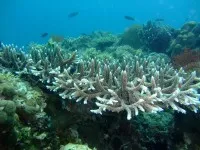
With coral bleaching spreading, a new project and app called Bleach Patrol is putting surfers, divers and snorkelers to work as citizen scientists, keeping an eye on the world's coral reefs.
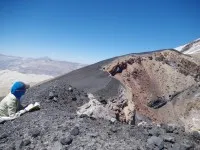
In their quest to unravel the physical and chemical processes controlling volcanic eruptions, Einat Lev and colleagues headed to South America and the volcanoes of Chile.
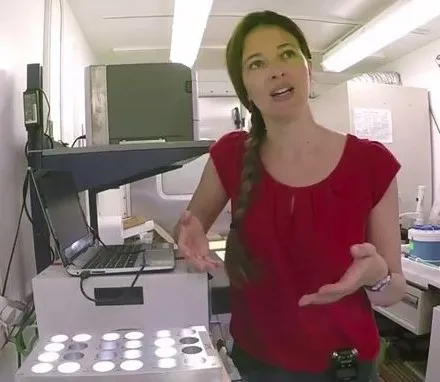
Vast portions of the oceans contain low levels of the nutrients that normally sustain life. Yet these areas are not devoid of life. Once thought to be biological deserts, recent research has shown that such nutrient-poor marine systems could significantly contribute to the amount of carbon dioxide that is trapped into the deep ocean, influencing Earth’s climate.
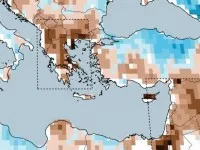
“If climate change is having an impact and is making droughts worse, then we should see this in the record over several centuries—and we do,” said the study's author, Benjamin Cook.
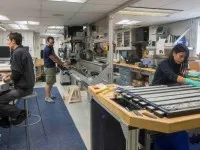
Trying to drill sediment cores while the ship rides large ocean swells off the coast of Africa isn't easy, but it's paying off for science, writes Sidney Hemming.
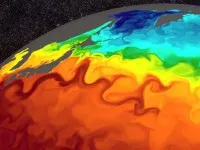
When you examine the behavior of the global oceans closely—really closely, at scales smaller than 100 kilometers—eddies and jets and fronts start to appear. For Ryan Abernathey, this is where ocean physics gets interesting.
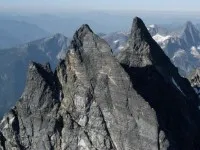
Scientists have long believed that continental crust forms in volcanic arcs. The lingering question has been how exactly that happens.
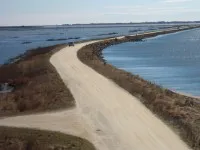
Globally, the tool estimates at least 11 inches of sea level rise this century with ambitious efforts to lower greenhouse gas emissions and as much as 52 inches if greenhouse gas emissions continue to grow unchecked.
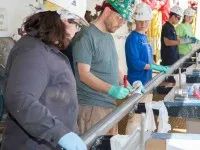
The team aboard the JOIDES Resolution just finished at their first coring site off southern Africa. The first results? "Awesome." Sidney Hemming describes the process in words and photos.
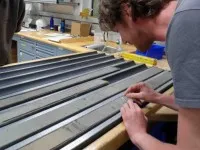
Sidney Hemming and her team have started examining their first sediment core from off southern Africa. It appears to contain about 6 million years of history.
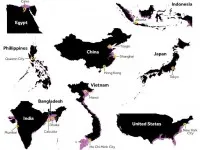
Humans have been burning fossil fuels for only about 150 years, yet that has started a cascade of profound changes that at their current pace will still be felt 10,000 years from now, a new study shows.
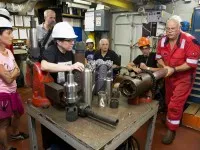
As they get to know their ship, the scientists aboard the JOIDES Resolution prepare to drill their first sediment cores along the Natal Valley off the coast of southern Africa.