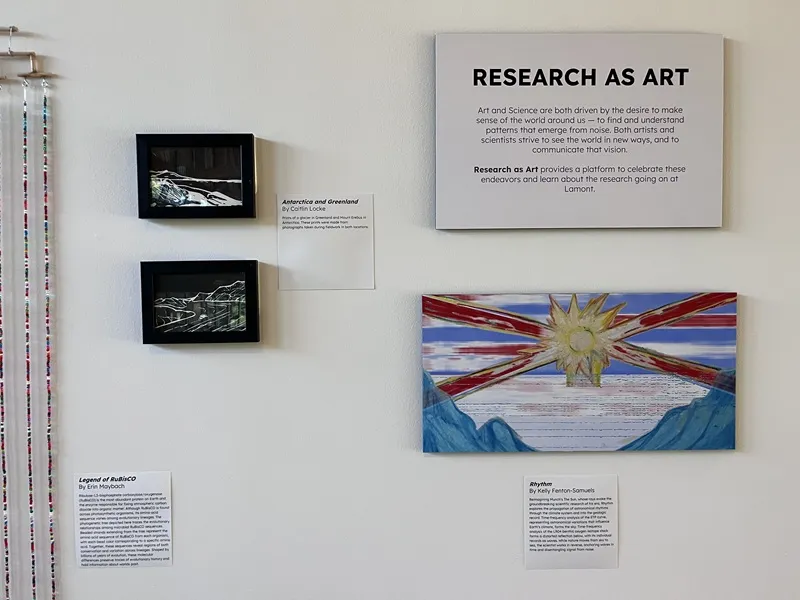
Art and science are both driven by the desire to make sense of the world around us — to find and understand patterns that emerge from noise. Both artists and scientists strive to see the world in new ways, and to communicate that vision.
Lamont's Research as Art 2025—organized by Ally Peccia, Aviva Intveld, Caitlin Locke, Hanna Anderson, Lindsay Hogan, and Phoebe Salowey—provides a platform to celebrate these endeavors and learn about the research going on at Lamont-Doherty Earth Observatory. The 2025 exhibit remains on display in the the Monell Building through October 15, 2026.
🎥 Intro from the Research as Art Organizers
Learn more about how Art Meets Science at Lamont and our in-person exhibits on display.
Jump to:
Reimagining Scientific Data
Unhelpful velocity plot no. 128
By Hannah Mark
This image shows crustal velocity-depth profiles at 1 km intervals along-strike of the Andreanof segment of the Aleutian Arc. It also shows, indirectly, the frustration of the artist at trying to visualize elements of a semi-3D velocity model in a 2D medium.
Lambert equal-area projection centered at 160W
By Hannah Mark
Red Xs on this Pacific-centered map show the locations of ocean-bottom seismic experiments conducted over the last few decades. These experiments span a wide range of seafloor ages, but still only sample a tiny fraction of a vast tectonic plate. Divergent plate boundaries and the 5000 m isobath are quilted in black and white thread, respectively. This map was made with assistance from GMT (Wessel et al. 2019) and GMRT (Ryan et al. 2009).
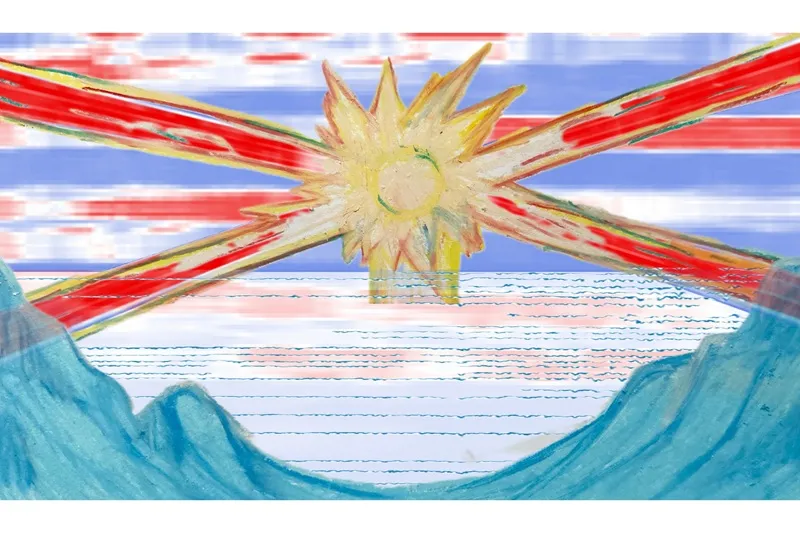
The structure of the Sahel rainfall predictors’ space, spanned by sea surface temperature indices for the global tropics and the North Atlantic Ocean
By Alexey Kaplan & Alessandra Giannini
The somewhat psychedelic qualities of this figure seem to remind one of Nietzsche’s phrase, “if you gaze long enough into an abyss, the abyss will gaze back into you.”
Characterization of the Sahel rainfall predictors’ space, spanned by sea surface temperature indices for the global tropics and the North Atlantic Ocean, based on model runs and observations. The figure displays the rotation angle for the principal component axes (white contours) and the percentage of the total variance not explained by the primary principal component (color shading) as a function of the correlation coefficient between predictors and their ratio of standard deviations (horizontal and vertical axes, respectively). White markers (closed and open circles, a square, and a triangle) identify points corresponding to the multi-model means of the ensembles of model runs generated by the Coupled Model Intercomparison Project from the Fifth IPCC Assessment Report for the pre-Industrial control, historical, and strong warming scenario simulations and to the observations, respectively [from Giannini and Kaplan, 2019].
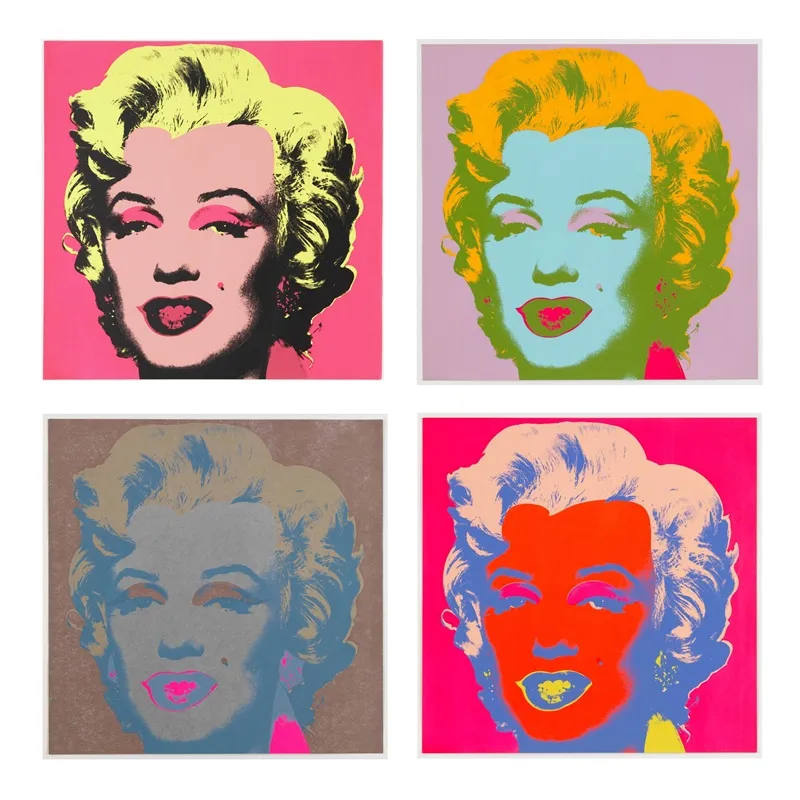
Thirty swords of global warming
By Alessandra Giannini & Alexey Kaplan
[Represents a modest tribute to Andy Warhol]
Scatterplots of sub-tropical North Atlantic and global tropical ocean temperatures from the ensembles of model runs for the 100 years of pre-Industrial control experiments (green circles), the twentieth century/historical simulations (blue dots), and the twenty-first century projections for the strong warming scenario (red squares), produced within the Coupled Model Intercomparison Project for the Fifth IPCC Assessment Report. The first 29 panels display the individual models’ ensemble means, and the last one (in the lower right corner) corresponds to the mean of the entire multi-model ensemble. [From Giannini and Kaplan (2019)].
Inside a geyser conduit
By Einat Lev
A video showing the flow inside a lab geyser conduit before and during an eruption.
DECIPHERING THE PAST, UNVEILING THE MICROCOSM
By Anushka Agarwal
Ancient inscriptions carved in stone and the microscopic forms of marine phytoplankton both carry hidden codes of culture and nature. Using computer vision to study them side by side, this work reveals a shared visual vocabulary: echoes of human history and living scripts of the sea. Together, they highlight the deep connections between language and life, memory and ecology.
September Arctic Sea Ice Volume Change
By Carson Witte
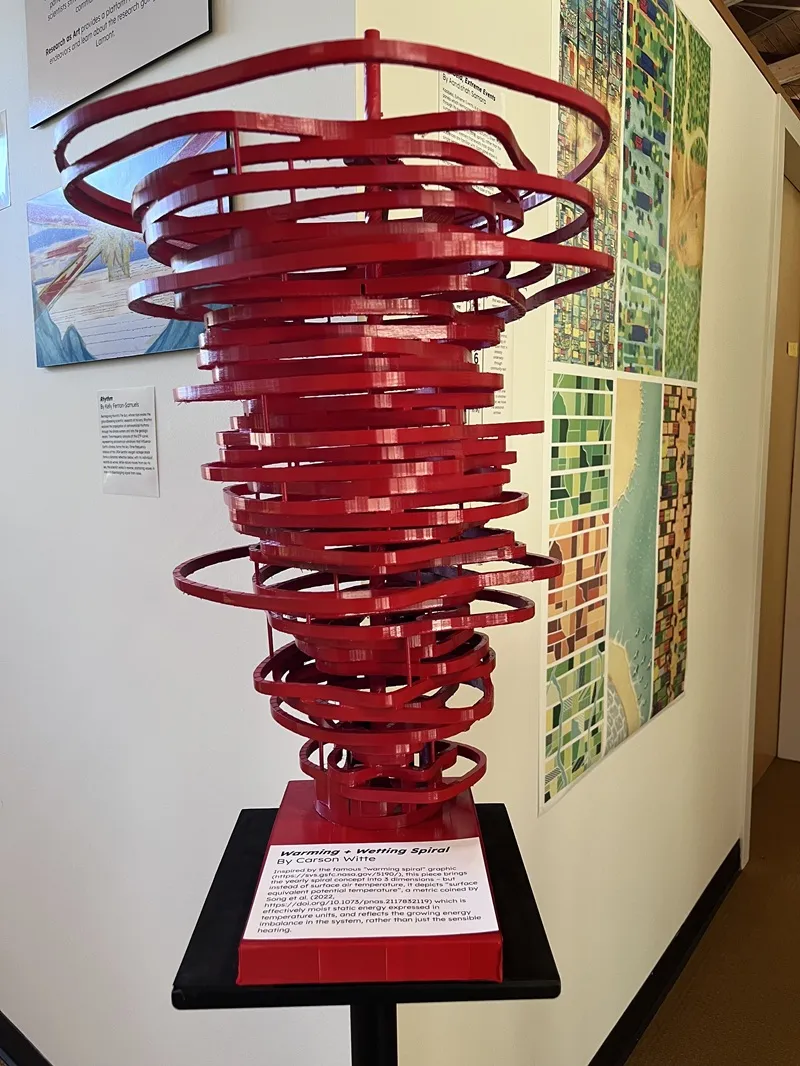
The layers in this sculpture depict September Arctic Sea Ice volume for each year since the start of the satellite record in 1979. Two dimensions show mean areal extent, while the third dimension shows mean ice thickness.
Bleeding of Greenland
By Marco Tedesco
Surface meltwater over Greenland (background image) covered with a time series of Greenland mass loss from the GRACE satellite.
The Hidden World of Micro and Nanoplastics
By Huiping Deng
Stimulated Raman Scattering (SRS) is an instrument that has both chemical specificity and size sensitivity, allowing us to quantify a world of nanoplastics that was not possible before. This art piece combines acrylic painting, digital art, and 3D textures. The piece illustrates the ability of SRS to uncover the world that is hidden to the naked eye.
As scientists, we need to be curious about both the visible and the invisible. We need to use curiosity to further explore the known and unknown. Inside the pupil, there is an image of a plastic particle obtained through SRS. The eyelashes are spectra of common plastics such as polyethylene (PE), polypropylene (PP), and polyvinyl chloride (PVC). The whole painting is covered by a layer of plastic film to resemble a veil that adds mystery and texture.
Under the Pacific, in 14 sq. inches
By Ally Peccia
Sample preparation is a job requirement for geochemists. Though this looks different for each, it often involves hours of meticulous and laborious crafting.
These trays contain representative samples of subducting sediment packages that span the Pacific Ring of Fire, wrapped in tiny x-ray tape tubes, and pressed into a 3D printed 8-slot sample holder (made by Ryan Harris in the LDEO Machine Shop). They were analyzed at the Stanford Synchrotron Radiation Lightsource in July 2025. Though their utility as scientific research material is transient, my attachment to them remains steadfast.
Mid 19th century data on world's major rivers, mountains and snow line elevations
Presented by Steve Chillrud
Map of the world's major rivers, mountains and snow line elevations with updated data from that era. Note Nile being estimated as 5th longest river. Hand colored steel engraving or lithograph by George Aikman, published in A. &. C. Black's General Atlas of the World, probably from the 1853 edition.
Good Versus Evil: the Struggle Against Microcystis
By Mira Agarwal
Harmful and keystone species in Morningside Park.
Hidden beauties
By Mira Agarwal
Close-up of Chlamydomonas and Pediastrum from Morningside pond.
Citizen science in a Peruvian mining town
By Lex van Geen
This is an image of the open pit of Cerro de Pasco (alt. 4,300 m; pop. 70,000) and surrounding areas where the ore is processed and people live. The markers indicate where students from several local high schools collected soil and screened it for leachable Pb using a kit designed at Lamont. The darkest purple indicates a risk of exposure to toxic levels of Pb for a child playing in the dirt. This information was conveyed to local families and the municipality. We have entered discussions with the Ministry of Education to extend the teaching module developed as part of this project funded by USAID to hundreds of other mining towns of Peru.
Coral as Living Climate Archives
By Kayla Tozier
A magnified cross-section of a coral skeleton reveals its layered growth bands beneath a thin golden layer of what was living tissue when cored. Like tree rings, these layers record centuries of ocean and climate history, archiving shifts in temperature, rainfall, and seawater chemistry in the tropical South Pacific.
Experiencing the rain
By Alan García
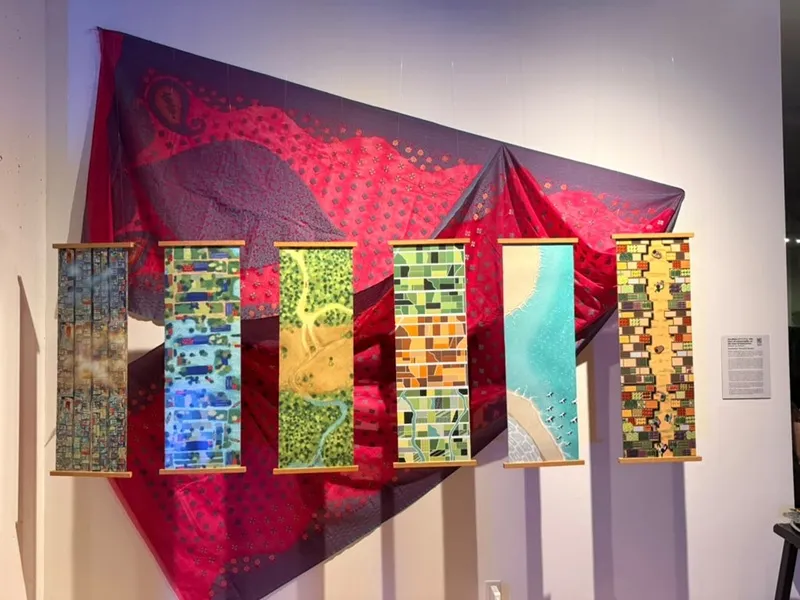
Over the past year, I have been taking photos of convective clouds while traveling because I wanted to connect what I experience with what I research. Here I show the annual rainfall cycle at each location where a photo was taken. In the corner images, I highlighted the weeks when I was in those places. From an abstract perspective, these lines reflect the idea that data enable us to analyze and understand something as important as rain in remote places without being there. Nevertheless, sometimes we do experience rain in those places, because life somehow takes us there. The pictures in the middle are from places I have lived—New York City and Guatemala City—taken on rainy days, where I have experienced the full annual cycle of rain. The inspiration for this composition comes from the realization that science has taken me to many different places and given me snapshots of cultures, people, and landscapes; these may be incomplete pictures, but they still represent fascinating experiences. I feel privileged to do science and to travel because of it, and I wanted this piece to remind me of that feeling. The CHIRPS daily rainfall dataset was used for, in clockwise order from the top-left corner, Honolulu (Hawaii), New York City, Tucson (Arizona), Tulum (Mexico), Guatemala City (Guatemala), and Arusha (Tanzania).
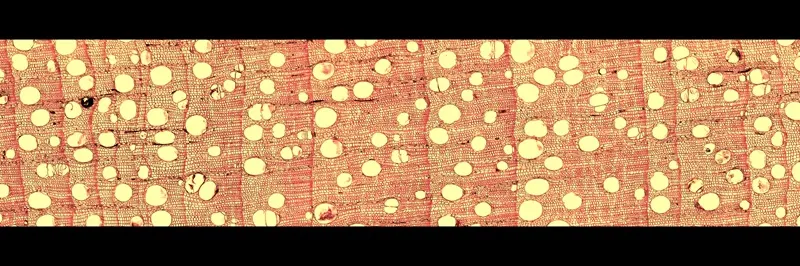
Wood Anatomy Imagery
By Arturo Pacheco Solana, Caroline Leland, Nicole Davi
Example of vessel segmentation workflow in ROXAS. The left panel shows the original raw image of a wood microsection. The central panel displays the result after fully automated analysis in ROXAS, where many vessels affected by tyloses are only partially recognized, leading to underestimation of vessel lumen area. The right panel shows the same image after manual editing of vessel contours to correct for segmentation errors and ensure accurate anatomical measurements.
Ouroboros
By Hanna Anderson
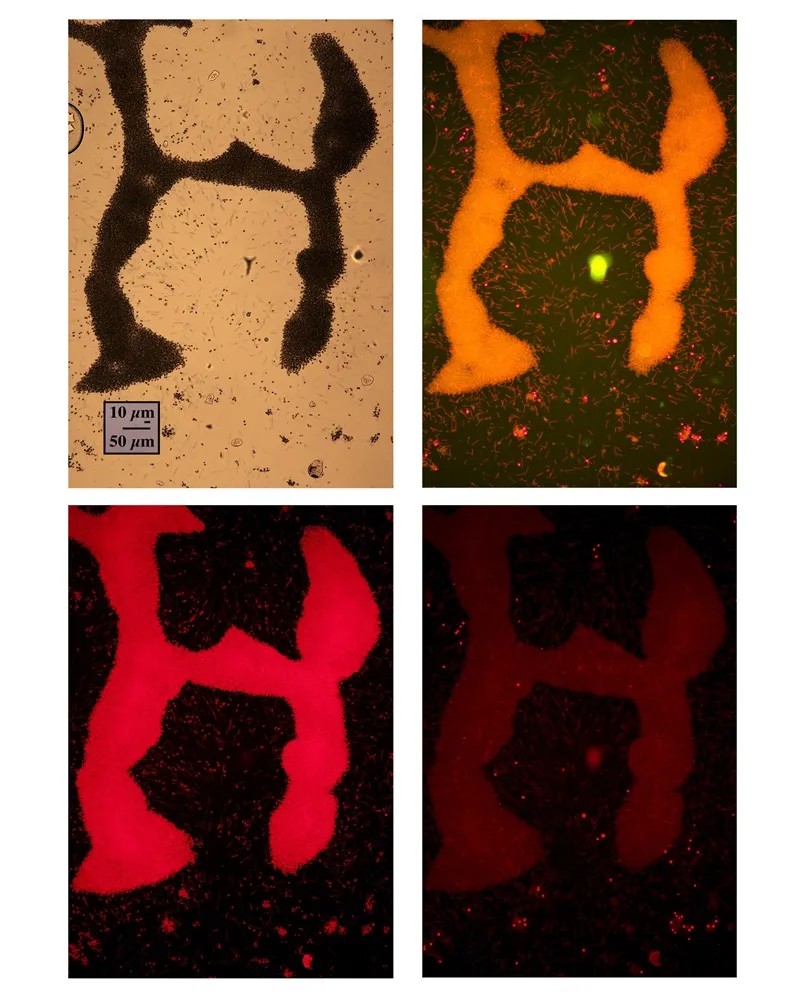
These are images of a chain-forming diatom, Hemiaulus, and its internal symbiont Richelia, a nitrogen-fixing cyanobacteria. Here, a 9-cell Hemiaulus chain forms a circle, and these images reminded me of a snake eating its own tail. The ecological symbiosis here, where Richelia provides fixed nitrogen to its Hemiaulus host in exchange for carbon substrates, replicates the concepts of renewal, interconnectedness, and an eternal cycling often associated with the ouroboros. Richelia cells fluoresce in orange/yellow, most visible in the top center panel. Hemiaulus pigments fluoresce red, most striking in the top right and left panels. Images taken using a Zeiss Axioscope Imager Z2 fluorescence microscope and processed in ImageJ; special thanks to Jill Paquette for lending her photographic eye.
Spilling the beans
By Hanna Anderson
These are images of a diatom-diazotroph association, a symbiotic relationship between a larger diatom cell (Hemiaulus) and a smaller, internal nitrogen-fixer (Richelia). These images capture the Hemiaulus cells in a state of lysis, and you can see that the previously intracellular pigments are still fluorescing in the second panel. The Richelia chains look a bit like dumbbells, and are the sole fluorescent cells in the final panels. In the top panels, a Richelia chain has broken along with the diatom cell it is internal to. Cell lysis here was likely caused by user handling-- I probably broke them when pipetting or vortexing my sample. Something about this static state of lysis, and the beauty of something so unpublishable, made me want to share these images. Images taken using a Zeiss Axioscope Imager Z2 fluorescence microscope and processed in ImageJ; special thanks to Jill Paquette for lending her photographic eye.
Tech Tonic Plates is an electronic composition conceptually based on the geological phenomena associated with tectonic plates. The sounds are a combination of found samples, manipulated data relating to the movement of the plates, and synthesized sounds. Recordings of earthquakes, underwater gaseous jets, and the movements of glaciers are used as unmanipulated samples. Tectonic plate-related data made hearable through the process of sonification, including seismic data from an eruption of Mt. Etna, are also used as source material.
The sounds for Tech Tonic Plates were composed by Evelyn Saylor in Summer 2012 upon receipt of the Mellon Elemental Arts Initiative Summer Experience in the Arts Award.
Paul Olsen Gallery: Imagining Ancient Life & Understanding Evolution
Three crocs
By Paul Olsen
The three living groups of crocodylians: the Gavialidae (gharial and false gharial; the Alligatoridae (alligators and caimans), and the Crocodylidae (true crocodiles).
Giant arms of Deinocheirus
By Paul Olsen
The giant Deinocheirus arms on display at the American Museum of Natural History, each measuring approximately 2.4 meters (7.9 feet) in length from shoulder to fingertip.
Stinkbird
By Paul Olsen
The hoatzin's unique digestive system ferments vegetation like a cow’s. It is the only bird in the world that digests food by foregut fermentation, with the help of bacteria, producing a strong, manure-like odor earning it the nickname “stinkbird”. The Hoatzin playied an important role in understanding bird evolution because the chicks possess functional claws on their wing digits, allowing them to climb branches.
Sexual dimorphism in dinosaurs
By Paul Olsen
Possible sexual dimorphism in the duckbilled dinosaur Parasaurolophus (Cretaceous) of western North America.
Local fish makes good
By Paul Olsen
Pen and ink renderings of the Early Jurassic fish Semionotus elagans from Boonton New Jersey. The structure of the skull was key to showing the origin of the enigmatic group of living fishes, the gars.
Fin de siècle tyrants
By Paul Olsen
The terminal Cretaceous, very closely related, dinosaurs Tarbosaurus and Tyrannosaurus were giant Asian and western US carnivorous dinosaurs, the last of their kind at the end of Mesozoic.
State of Science
When Icebergs Come
By Kelly Fenton-Samuels
From the deep sea below Antarctica's Iceberg Alley, these ice-rafted garnets and rose quartz were chosen from the "pretty well," our lab's collection of the most beautiful grains. When science, like an iceberg, feels fractured and adrift, the awe beneath the surface must keep us afloat.
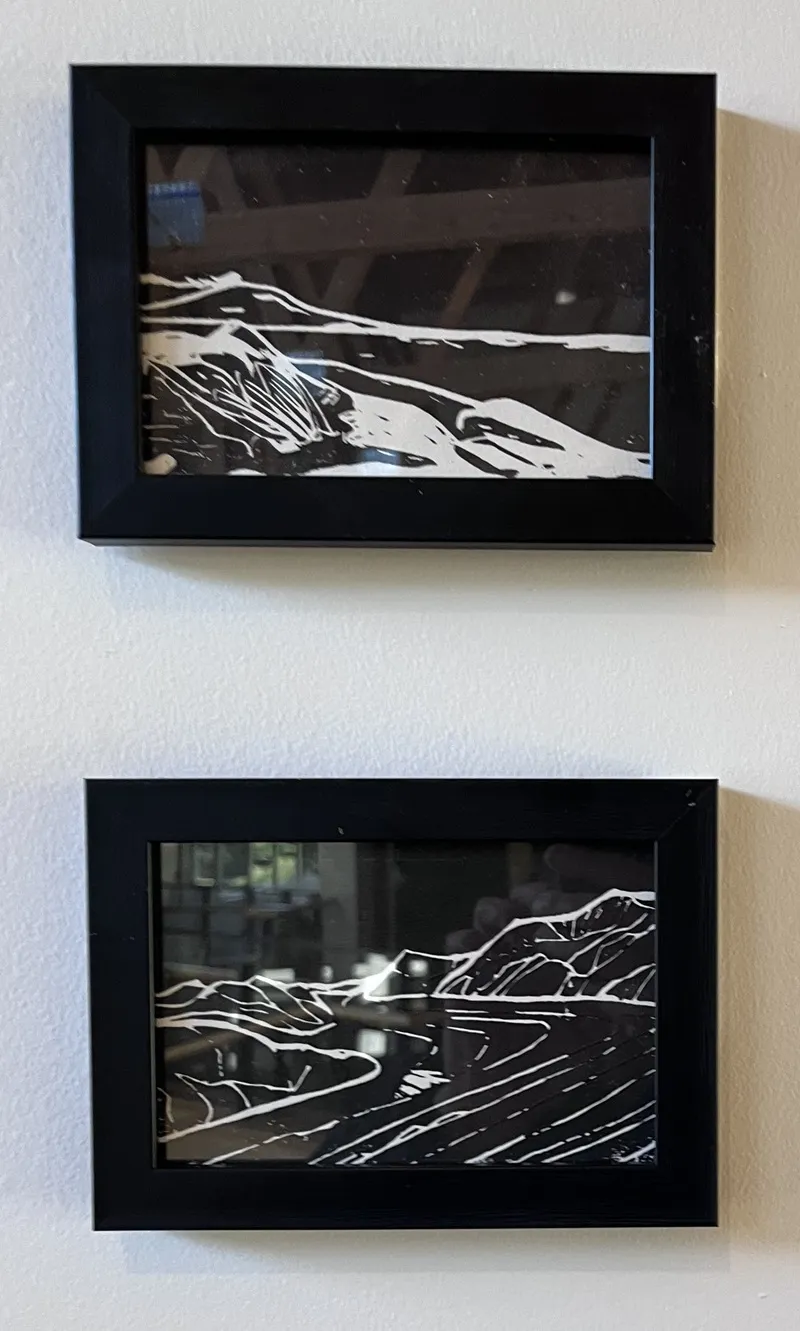
Erasure
By Caitlin Locke
e·ra·sure: the act of removing or destroying something, especially something that shows that that person or thing ever existed or happened (Cambridge Dictionary).
An image from Williams Field, Antarctica. With each panel, the infrastructure and people are slowly removed.
In darkness, incandescence
By Einat Lev
When darkness and clouds threaten to take over, look for Earth's glowing heart. Poás volcano, Costa Rica, August 2025.
The hidden network: Where plastics hide
By Cuizhu Chloe Ma
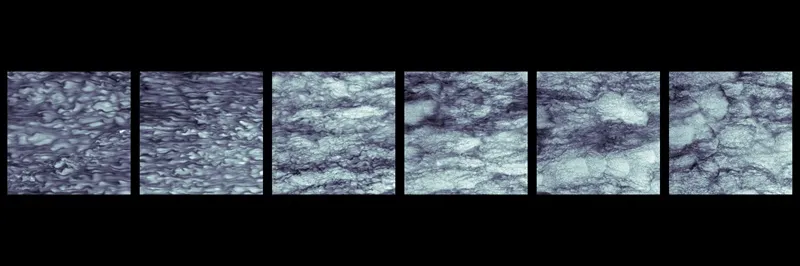
Filtered Antarctic snow reveals a hidden network within a silver membrane. What appears as webs and cavernous pores reflects the challenge of tracing plastic particles in the polar environment.
Climate
Coordinated by Margie Turrin
Over the summer the Polar Climate Ambassador Program (CAP) interns were inspired by the University of Reading Climate Stripes project and chose to develop their own outreach projects around this theme. Projects ranged from climate fans (Nelida), a climate weaving (Josie), climate flowers (Emily), Greenland climate puzzle (Eva) and even beaded bracelets (Eva) that reached across the ages with their appeal and communication potential.
Life at the Laurentide Glacial Margin
By Adrian Puga
Macrofossils, such as seeds, moss, and charcoal, recovered from the glaciogenic clays of a lake core from Budd Lake, NJ. Each fossil tells of a shifting ecosystem local to the Laurentide's terminus as the Earth exited the last ice age.
Collection vial
By Adelina Rolea & Hadeel Assali
A bottle of contact solution was used to collect and transport a drinking water sample from a groundwater source in Gaza (March 2025). Elevated sodium measured in the water is consistent with known saltwater intrusion in the region. We hope to characterize the extent of this ecocide, which is just one component of the genocide. The difficulty inherent to obtaining environmental samples from Gaza, currently, contrasts from the usual challenges and logistics we expect in earth science fieldwork.
Conceptual Frameworks of System Science
A year in the life of the Lamont Sanctuary forest
By Mukund Rao
A compilation of digital repeat photographs of the Lamont Sanctuary in 2021. These data are being used to understand how forest phenology is changing under climate change.
See the LDEO phenocam views.
A Synoptic View of Our Crustal Needs for the Energy Transition
By Ben Holtzman
It is a synoptic view of the crust to illustrate various resources that are essential for the energy transition and climate adaptation: fresh water aquifers mafic intrusions for carbon sequestration and possible hydrogen sources heat for geothermal energy magma-derived fluid intrusions for critical minerals...
Paint Pours
As part of Lamont's Research as Art 2025, visual artist Kate Doyle facilitated a paint pour where the community worked together to create collaborative art pieces where "you have the intellect and the heart represented together."
In her work, including as artist-in-residence at NASA Goddard Institute for Space Studies, Doyle explores the beauty and impact of natural systems. She questions human relationships with nature, with preservation, and with the prospects of climate change.
Paint Pour #1
By Xiaojun Yuan, Annika Gomez, Laisa Sevilla, Keylen Lucero, Adelina Rolea, Row Dirks, Phoebe Salowey
Paint Pour #2
By Caitlin Locke, Ally Peccia, Hanna Anderson, Bennett Slibeck, Emily Glazer, Hannah Mark, Einat Lev, Yasmin Yabyabin
Paint Pour #3
By Lindsay Hogan, Carson Witte, Mackenzie Blanusa, Sheean Haley, Miriam Cinquegrana, Eden Halpert, Aviva Intveld, Linh Vu, Kelly Fenton-Samuels, Carl Brenner