

Lamont in the Media
Earth & Climate Science News
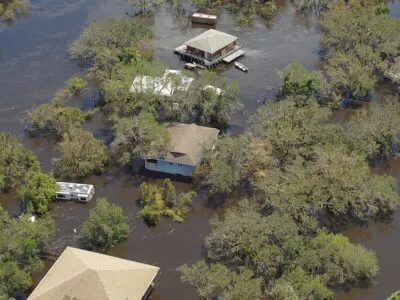
Why are extreme weather events worsening? How is climate change contributing to this development? And what measures are being taken to adapt to this new reality?

Galen McKinley and her research group are quantifying how much carbon the ocean removes from the atmosphere—and how much it fluctuates—to better understand climate change.
Logan Brenner, a scientist at Columbia’s Lamont-Doherty Earth Observatory, is part of an international collaboration to drill into the ocean’s past.

Lamont research professor Alexander van Geen is testing a new kit that detects lead in old paint.
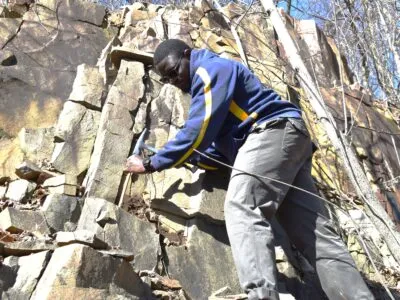
Like the tips of icebergs, small outcrops of volcanic basalt in highly populous areas may be representative of rocks under the nearby ocean that could be used in massive carbon-storage projects.
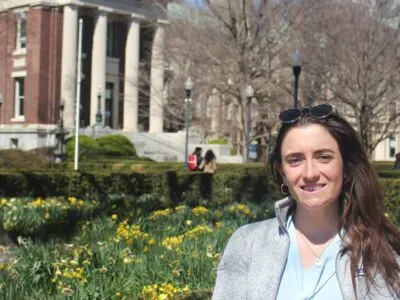
Olivia Colton reflects on her experience in the military and how it connects with her education in environmental conservation.
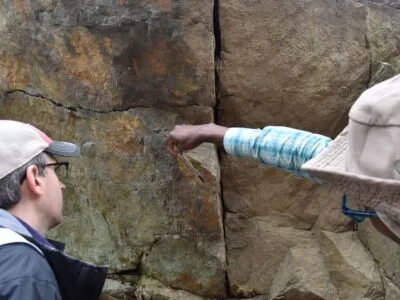
Geologists are combing the New Jersey countryside for signs of earthquakes past and present.
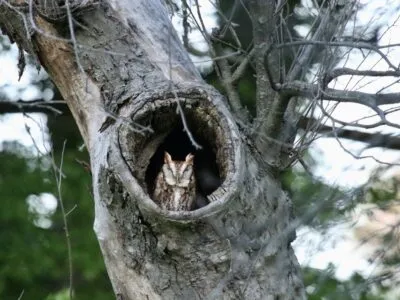
Each year, we honor Earth Day by sharing some amazing photos celebrating the beauty and magic of our planet from our campuses to the far corners of the world as captured by the Columbia community.

Laundry is the biggest source of microplastic fibers in our waterways. These Columbia researchers are working on a solution.
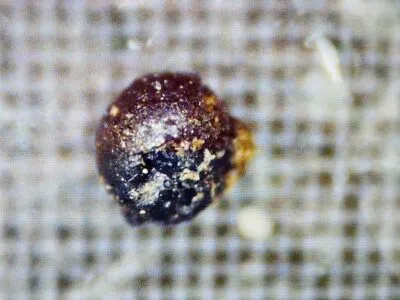
A Harvard astronomer says a meteor came from beyond our solar system. A new study questions whether his data includes a more obvious explanation.

Think global, fight local: In honor of Earth Day, here are some tips to reduce your plastic footprint.