
Lamont in the Media
Earth & Climate Science News
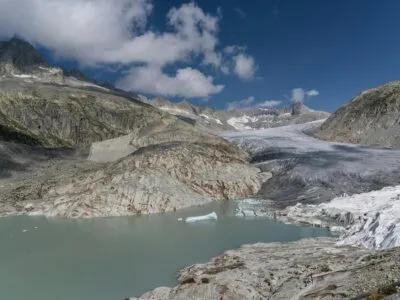
A Swiss government report reveals that efforts to locate major hydropower resources on land exposed by glacier retreat are entangled with ecological and legal challenges.

The issue is no longer whether AI matters for sustainable development, but how to apply it in ways that decrease costs, expand access, improve decision-making and avoid further deepening inequality.

Douglass's research uses lessons from the past to help communities understand how to adapt to climate change.

The EPA is proposing changes to the Mercury and Air Toxic Standards (MATS), which would weaken mercury emissions limits from U.S. fossil fuel power plants by 70 percent.
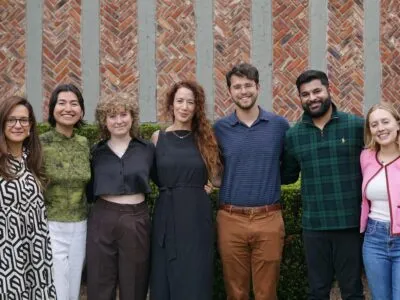
Faculty and students worked together on ideas for climate solutions, which were then presented at the Climate School showcase as part of Climate Week NYC.
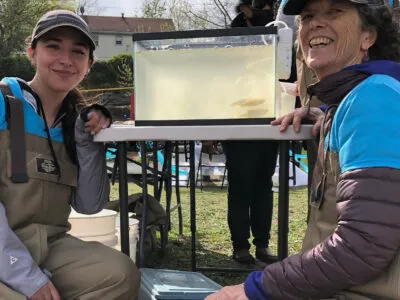
The Columbia Climate School will host the Ripple Effects: Water in a Warming World pre-college virtual workshop in fall 2025.
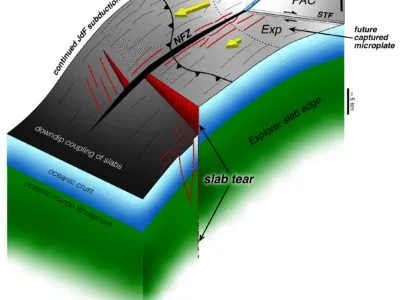
Using seismic reflection imaging—essentially an ultrasound of the Earth’s subsurface—and detailed earthquake records, researchers captured a subduction zone in the process of tearing itself apart.

As part of this year’s Climate Week NYC, the event included conversations between climate experts, interdisciplinary panels of researchers, and student presentations on the complex issues and possible solutions for the climate crisis.
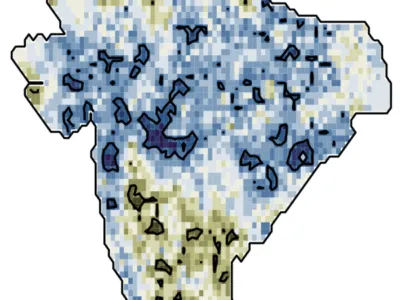
While El Niño often brings drought conditions to India, a new paper shows that it also increases the likelihood of devastating downpours in some of the country’s most heavily populated regions.
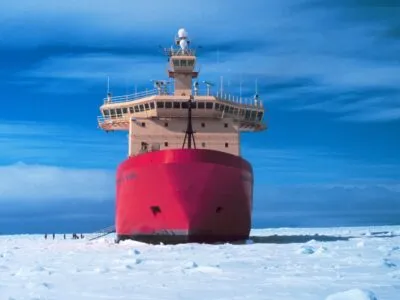
In a signed letter, 170 researchers, including 10 from Columbia University, urged Congress and National Science Foundation to continue the operation of the Nathaniel B. Palmer.
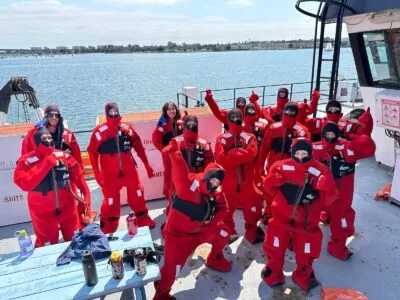
Aboard the R/V Marcus G. Langseth, 13 teachers traveled from San Diego to the Galápagos Islands this summer, learning about oceanography and collaboration along the way.