
Lamont in the Media

Earth & Climate Science News
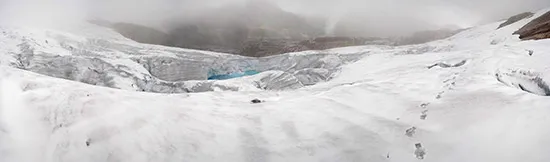
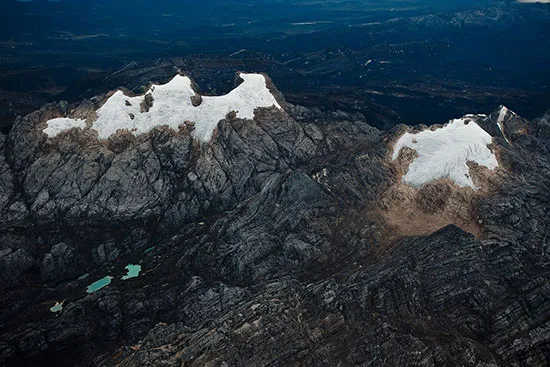
The glaciers around Puncak Jaya have long been in visible decline. From 1936 to 2006, they lost nearly 80 percent of their area–two-thirds of that since 1970, according to a new paper by glaciologist Michael Prentice of the Indiana Geological Survey, who has long been interested in the area. Satellite images show that from 2002 to 2006… read more
We are finally back from Greenland, bringing to a close the data collection piece of the spring 2010 Ice Bridge campaign. During my month-long piece in this campaign our time was split between two West Greenland base -camps, Kangerlussuaq and Thule (also known as Qaanaaq). Thule, at the northern end of Greenland, is the farthest… read more
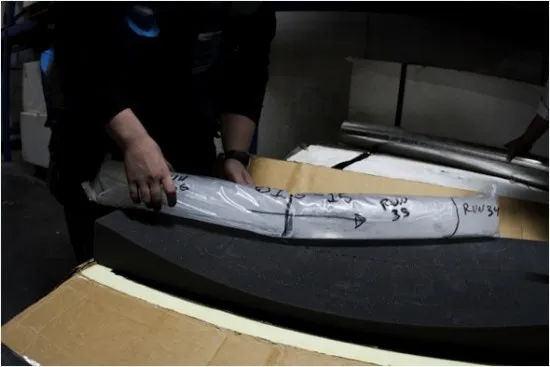
Maybe the most difficult thing about ice cores comes after the actual drilling: then you then have to get them out and transport them long distances, and make sure they don’t melt. Otherwise, all that work was for nothing. Here are some images showing how we handle them initially. (Courtesy David Christenson/Freeport McMoRan)
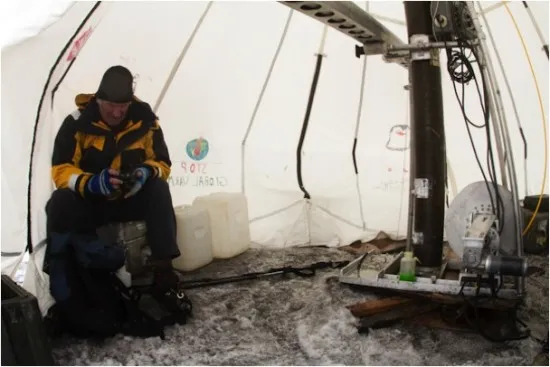
Here are some photos of the ice drilling, and the site where we are working. All come courtesy of David Christenson, Greg Chmura and Ario Samudro, the video/photography team from Freeport McMoRan, which has been helping us with all phases of logistics.
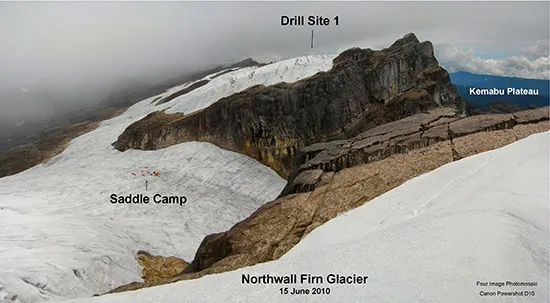
We have drilled a second core through the ice to bedrock, and are done at our first site. Unfortunately, the helicopter that we need to move the heavy pieces to our second planned spot is down for regular maintenance until next Monday, June 21. That means the team must wait it out at the relatively sheltered “saddle… read more
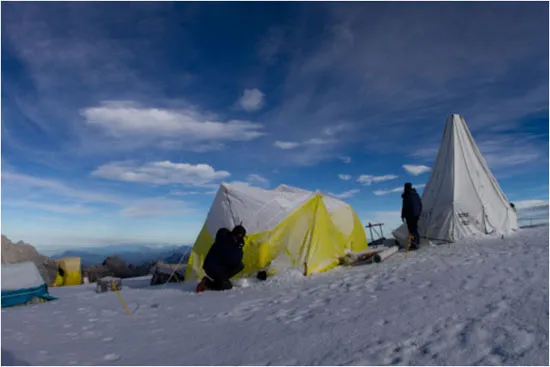
Yesterday we completed our first ice core at the Northwall Firn Glacier, down to bedrock, penetrating 30 meters through the glacier, until we hit bottom. The ice seems to contain visible layers all the way down–a sign that yearly accumulations have been preserved, instead of melding into each other. This means we should be able to… read more
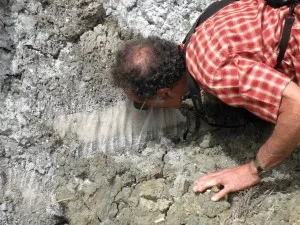
The Crotone Basin accumulated sediments for nine million years before the forearc uplifted above sea level. Each layer of sand, clay, and conglomerate in the basin contains information about the environment at the time that layer was deposited. About six million years ago, halite and gypsum were deposited in the Crotone Basin. Geologists refer to… read more
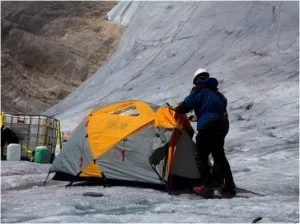
With the blessing of two wonderful days of clear weather, all our equipment was moved into place this morning. The ice coring can now begin. We anticipate finishing the drill assembly today and drilling by mid-morning tomorrow at three sites on the Northwall Firn glacier: the two “domes” and the saddle, where the team will… read more
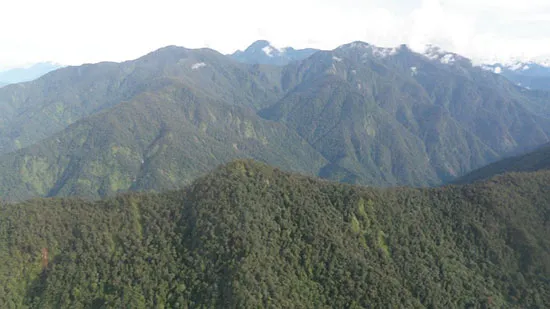
With the drills essential to our work apparently lost somewhere in transit, Lonnie and I finally backtracked to Jakarta–a five-hour flight–and found them sitting in an airline warehouse! Within 24 hours, we had them shipped to our staging site, and now we are ready to go.
This morning we were at our staging area at the Grasberg mine at 5 am, and were able to use the B3 helicopter to get ourselves set up. First trip up, our colleagues Keith Mountain and Vladimir Mikhalenko went to what we call the “saddle camp”—a spot between two peaks—where we will stage the first… read more
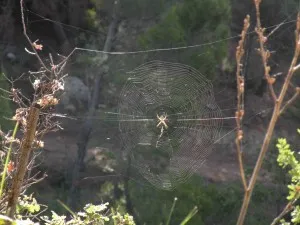
The climate of the Crotone Basin is marked by cold, wet winters and hot, dry summers. We arrived last year, on our first trip, in the middle of a six-month drought that lasted from April to September. I love how life figures out a way to flourish. Flowers in a riverbed; Snails on a thorn… read more