
Lamont in the Media
Earth & Climate Science News
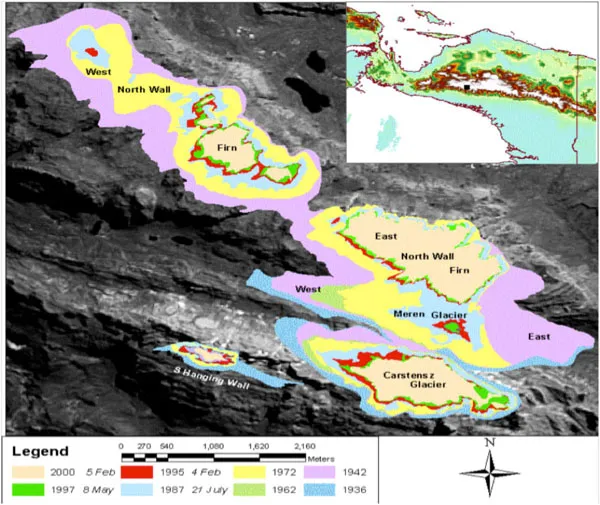
Our team is planning to recover and analyze ice cores from glaciers on opposite sides of the tropical Pacific Ocean: Puncak Jaya in Papua-Indonesia (4,884 meters above mean sea level) and Nevado Haulcán, Peru (6,100 meters.). Puncak Jaya offers the only potential opportunity to acquire an ice core history from the western side of what… read more
Nature is keeping us in check at every turn. With weather and volcanic ash clouds limiting visibility we have to regularly rearrange plans, but most days we are able to capture a fairly complete set of data.The flight over Russell Glacier in Southwest Greenland (just inland from Kanger) was a redirect from a mission aborted… read more
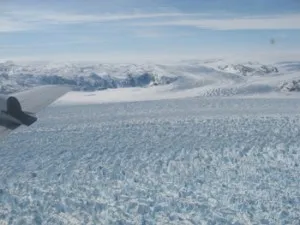
Today’s flight had to be carefully planned in order to avoid the volcanic ash plume still drifting from Iceland, so we flew to the east coast of Greenland to survey the Helheim glacier first. Glaciologists refer to Helheim glacier as one of ‘The big three’ in Greenland. The ‘big three’ (Helheim, Jakobshavn/Ilulissat and Kangerdlussuaq) are among… read more
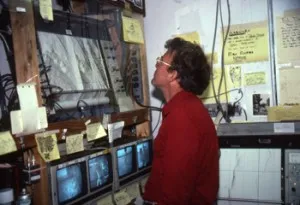
Last fall, Lamont-Doherty Earth Observatory, honored my former advisor and boss, Bill Ryan. As my small contribution, I offered this essay that ends with a story about Bill. “Triage” is a term originating with medical personnel in the military. Its original meaning was the process of dividing wounded on the battlefield into three groups: those… read more
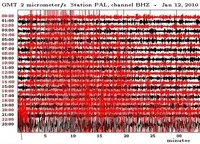
Every Friday afternoon, for as long as anyone can remember, the seismologists at Lamont-Doherty Earth Observatory have gathered for a lively session of discourse over materials. “Discourse over materials” is a phrase coined by scholars who use ethnographic techniques to study the behavior of scientists and science students as though they (we) were a recently-contacted… read more
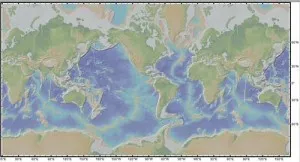
Several inherent attributes of ocean, atmosphere and solid earth sciences contribute to making these disciplines challenging to teach and learn at the K-14 level. These include the large spatial scale of important processes, the consequent reliance on models and representations rather than actual target phenomena in hands-on activities, the centrality of systems thinking and emergent… read more

Since the first week of the Spring Campaign we have had a planned flight from Thule to Fairbanks. This trans Arctic flight will provide a valuable overview of the icecap and the condition of the Northwest Passage. The weather has caused reschedules in that flight until we are down to the last days of the… read more

The United Nations has awarded Taro Takahashi, a geochemist at Lamont-Doherty Earth Observatory, its highest honor for environmental leadership, the Champions of the Earth award, for his research on the oceans’ uptake of carbon dioxide and its implications for global warming. He was presented with a trophy and a $40,000 prize on Thursday, April 22,… read more
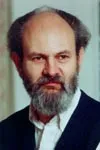
In a research career spanning more than four decades, Paul Richards, a seismologist at Lamont-Doherty Earth Observatory, has helped uncover Earth’s inner structure and advanced techniques for detecting nuclear explosions to ensure that bans on nuclear testing can be enforced. Richards will receive the Seismological Society of America’s Harry Fielding Reid medal at its annual… read more
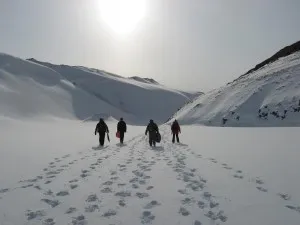
It’s amazing to think that Greenland is only hours from Baltimore’s BWI Airport, but the aircraft loaded at 2AM and we arrived in Greenland six hours later at 8 AM local time. The science teams are transported on an Air Mobility Command flight, the US Military’s “airline” for service men and women, contractors, and others… read more