
Lamont in the Media
Earth & Climate Science News
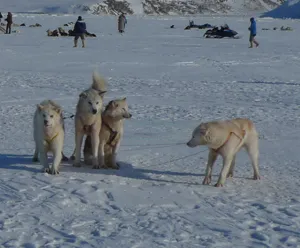
One of the events that Thule looks forward to hosting each year is Armed Forces Day. The festival attracts several hundred people, both Inuit families and Air Force personnel. Held on the ice of North Star Bay, the events include broomstick hockey, snowmobile rides, helicopter rides, children’s craft activities and dog sled races. The dog… read more
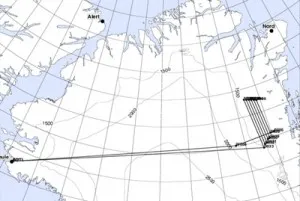
Taking off amidst snow flurries we are headed completely across the Greenland ice cap to the northeast corner of of the country. This flight will differ from most of the DC-8 flights during the Ice Bridge 2010 Greenland campaign. The DC-8 flights are mainly used to measure sea ice or surface mapping with high altitude… read more
We have flown three flights in the last week, with a fourth postponed as winds were too high for take off. Two of the flights have focused on sea ice in the Arctic. The first was flown north of Canada’s Ellsmere Island, where thick multiyear ice tends to accumulate. We examined the thickness of that… read more
Our ICE Bridge team of 34 scientists and NASA personnel has piled mounds of equipment, luggage, and emergency Arctic survival gear into the DC-8, setting off just before midnight for Thule, Greenland.All but two of the seats are filled, and every possible open area has been piled with our supplies for the next few weeks.Our… read more
Jim Cochran, Geophysicist, Lamont-Doherty Earth Observatory ICE Bridge scientists gathering at NASA’s Dryden Flight Research Center (DFRC) in Palmdale, CA for our upcoming Greenland mission were greeted in true California style. We were awakened by a magnitude 4.4 earthquake in the middle of the night! Although small by California standards the event was centered only about… read more
A new set of web pages describes the Earth Institute’s wide-ranging involvement in helping bring relief to quake-battered Haiti, as well as plans for long-term recovery, and associated environmental and economic issues. One major program, the Haiti Regeneration Initiative involves the Center for International Earth Science Information Network (CIESIN), Center for Research on Environmental Decisions, Tropical Agriculture… read more
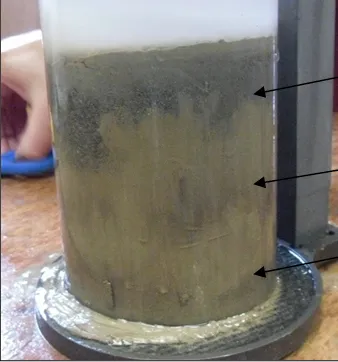
Scientists have been sailing off the coast of Haiti to assess the recent earthquake there, and the potential for more. The cruise is now complete; here is the final update, from reports by chief scientist Cecilia McHugh of Lamont-Doherty Earth Observatory and others. (Read the full story of the project, involving the Earth Institute and other major institutions.) The great January… read more
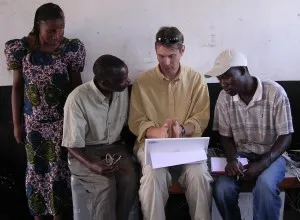
While installing our seismic network in Malawi, we interacted with everyone from scientists to schoolteachers, and journalists to villagers. The opportunity to provide information and education to Malawians has been the most rewarding aspect of our effort. We trained local scientists and technicians on seismic equipment and data analysis, and educated the public on earthquakes… read more
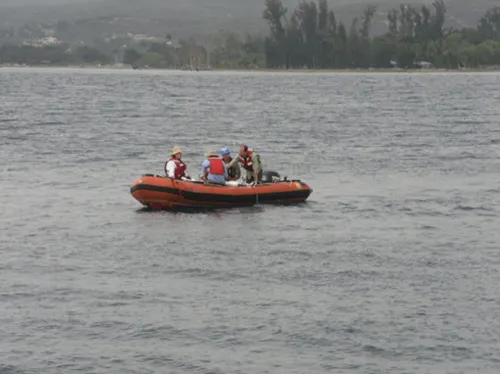
Scientists are sailing off the coast of Haiti to assess the recent earthquake there, and the potential for more. This is the latest update, emailed by chief scientist Cecilia McHugh from the research vessel Endeavor. (Read the full story of the project, involving the Earth Institute and other major institutions.) We had a successful day and were able to map… read more

Scientists are sailing off the coast of Haiti to assess the recent earthquake there, and the potential for more. This is the latest update, emailed by chief scientist Cecilia McHugh from the research vessel Endeavor. (Read the full story of the project, involving the Earth Institute and other major institutions.) Today we surveyed the Baie de Grand Goave, west of… read more
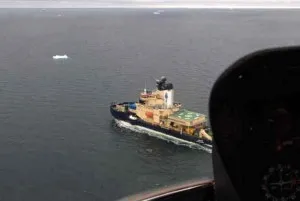
We successfully finished our scientific work in the Amundsen Sea and are now heading back to Punta Arenas, at the tip of South America. It will take eight to nine days to get there depending on the weather and winds. Just before we left the Amundsen Sea we passed the German ice-breaker ship, the Polarstern…. read more
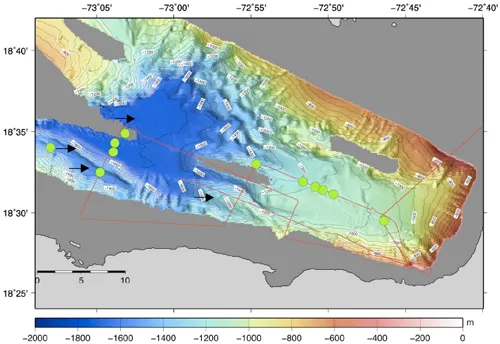
Scientists are now sailing off the coast of Haiti to assess the recent earthquake there, and the potential for more. This is the latest update, emailed by chief scientist Cecilia McHugh from the research vessel Endeavor. (Read the full story of the project, involving the Earth Institute and other major institutions.) The first part of the science program focused… read more