
New U.N. Resolution Urges Member States to Act for Glacier Preservation
The resolution, spearheaded by Tajikistan (along with Peru and Bhutan), marks a historic first for Central Asia. It emphasizes the importance of Indigenous populations affected by glacier loss.
In December 2025, the U.N. Environment Assembly (UNEA) passed a resolution in its seventh session, held in Nairobi, Kenya, acknowledging the impacts of a shrinking cryosphere and calling for member nations to take action. The proposed activities are meant to increase efforts to save glaciers and to incorporate the needs and voices of Indigenous peoples, local communities and other local stakeholders into cryosphere preservation efforts.
The resolution is the most recent in a string of projects at the U.N. to promote glacier protection. In December 2022, the U.N. General Assembly adopted a resolution declaring 2025 the International Year of Glaciers’ Preservation, and also establishing March 21 as the annual World Day for Glaciers. In 2024, the U.N. proclaimed 2025–2034 the Decade of Action for Cryospheric Sciences, pushing member states to dedicate existing resources and scientific research into addressing “the challenges associated with melting glaciers and changes to the cryosphere,” in order to advance global scientific cooperation about this pressing issue.
Under the session’s larger theme of “advancing sustainable solutions for a resilient planet,” the December 2025 resolution was tabled by Tajikistan and Peru and co-sponsored by Bhutan. A report by the International Institute for Sustainable Development noted that during the seventh session of the Open-ended Committee of Permanent Representatives, the intersessional subsidiary body that prepares draft resolutions held before the UNEA, Tajikistan and Peru led the writing of the resolution through bilateral consultations to help resolve any disagreement on the resolution’s contents. UNEA delegates then convened a series of off-the-record meetings, known as “informals,” and ultimately passed the resolution verbally, by acclamation.
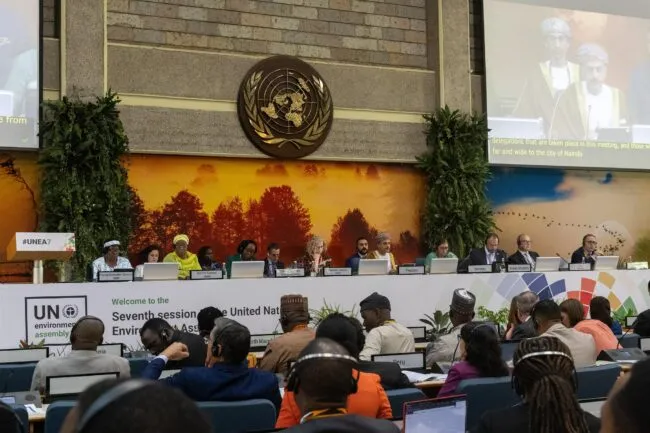
The resolution recognized the impacts of global cryosphere loss, such as biodiversity loss, desertification and rising sea levels. It draws attention to the need of U.N. member states to “respect, protect, and promote” the traditional knowledge of Indigenous peoples and communities, pushing for increased involvement of these stakeholders in environmental management, and also encourages member states to pay attention to the particular needs of indigenous populations, encouraging countries around the world to take “urgent action.”
Glaciers play an important role in the planet’s freshwater systems, acting as water reservoirs. “Glaciers can help even out variability [of water supply] from year to year,” said Andrew Barrett, senior associate scientist at the Cooperative Institute for Research in Environmental Sciences with the University of Colorado Boulder. In an interview with GlacierHub, he explained how seasonal snowmelt and glacier ice melt are vital water sources, feeding glacial lakes and supplying communities downstream.
Rebecca Gustine, a postdoctoral research fellow at Lamont-Doherty Earth Observatory, which is part of the Columbia Climate School, emphasized how many communities run on a “cryosphere-dependent system.” “Agriculture has become so efficient… based on historical normals in hydrology history,” she said. Most populations, especially local and Indigenous populations have agricultural systems set up based on the assumption that glaciers will continue to exist. The loss of these glaciers can turn dangerous when communities lack the necessary infrastructure to make up for reduced water supplies.
In Tajikistan, for example, mountains cover more than 90% of the country; it has been labeled the “water tower of Central Asia.” Since agriculture currently accounts for a large majority of the nation’s water use, the country’s low irrigation efficiency and aging infrastructure poses concerns as its glaciers rapidly melt. Similarly, Peru contains nearly three-quarters of the world’s tropical glaciers. There has been recently growing anxiety over the possibility of certain areas in the country becoming “ice-free” by the end of the century. Bhutan also relies heavily on hydroelectricity, which accounts for 99% of the nation’s electricity. The country’s many retreating glaciers also incentivized the nation to sponsor this cryosphere-focused resolution at the UNEA.
Gustine also underscored how for certain communities, glaciers are not just water supplies, they are also spiritual beings and important elements of local culture. In these regions, cryosphere loss takes on a socio-cultural dimension, raising questions of how local populations can adapt to the loss of their spirituality. Tajikistan’s role in sponsoring the resolution mirrors its previous actions on the global stage, which focused on mountains and glaciers. The resolution makes note of the May 2025 High-level International Conference on Glaciers’ Preservation in Dushanbe, Tajikistan’s capital, which ushered in the “International Year of Glaciers’ Preservation” and the “Decade of Action for Cryospheric Sciences.”
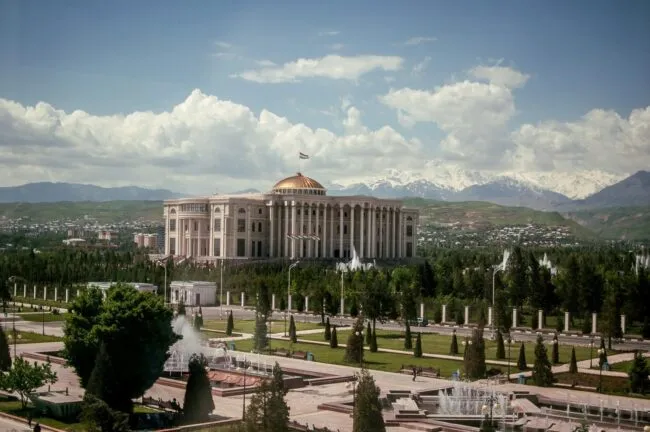
The December 2025 resolution also marked the first and only one in the history of the UNEA to be sponsored by a Central Asian country. As stated by Bahodur Sheralizoda, Chairman of Tajikistan’s Committee for Environmental Protection, “The UNEA-7 resolution sends a clear message: the protection of glaciers and the broader cryosphere is a shared global responsibility and a strategic investment in sustainable water resources management, ecological balance, resilience and human well-being.”
Since the resolution’s adoption, it has been promoted by the U.N. Environmental Programme as justification for the continued observance of the World Day for Glaciers, held annually on March 21. Other organizations such as the Food and Agriculture Organization and GRID-Arendal (a UNEP partner and non-profit based in Norway) have cited this resolution as one of the most recent acts of global solidarity against vanishing glaciers.
The passing of the resolution is a call to action for nation states around the world, publicly acknowledging the importance of adding Indigenous voices and local concerns to the discussion. It also invites smaller countries to the forefront of this international dialogue.