
Wildfire Smoke Returns: What to Know About This Week's Air Quality
Air pollution expert Dan Westervelt discusses this summer's wildfires and resulting air quality in New York City and beyond.
More than 100 wildfires are burning in Canada and several in Minnesota, triggering eerie, smoke-filled skies and unhealthy air quality alerts throughout the Upper Midwest and the Northeast U.S. this week. For many, these headlines feel like déjà vu—evoking the 2023 haze that covered swaths of the country for days. City and state officials in affected regions are now urging residents to stay inside when possible, reduce any strenuous outdoor activities and consider wearing a high-quality mask to avoid breathing in unhealthy particles from the smoke.
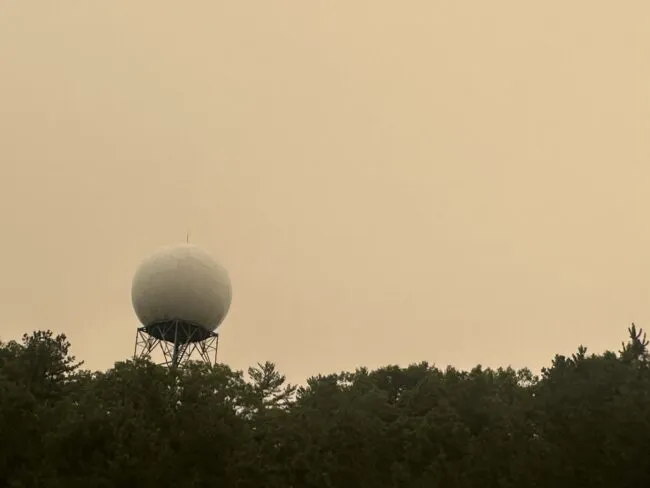
Here in New York City, “the alerts have been going from ‘unhealthy for sensitive groups’ to ‘unhealthy (for everyone).’ Particularly when it’s in that latter category, it’s important for everyone to take action, as there can be health impacts such as coughing, scratchy throat, irritated eyes, etc.,” says Dan Westervelt, associate research professor at Lamont-Doherty Earth Observatory, which is part of the Columbia Climate School. “We’re seeing the high numbers because the fire activity is quite intense and the weather patterns are transporting the smoke directly our way while also providing ideal conditions—hot weather—for downward mixing towards the surface where we are all breathing.”
Between this week’s heat wave and the hazardous air, many are wondering: is there a reprieve in sight? The answer seems to be yes, at least in the short term. “By Friday evening and Saturday morning, a cold front is coming through the area that will bring some relief from the smoke, with cooler temperatures and rain. However, as long as the fires are still burning, we could be in for another wave of smoke after that,” says Westervelt, who studies air pollution. “What we really need is rain in Ontario where the fires are burning.”
If it feels as though these events are happening more frequently, it’s because they are. “Research has shown that to be statistically robust,” says Westervelt. “Climate change was found to have doubled the likelihood of the 2023 event that many people remember. We should expect these to become more common in the future.”
Learn more about wildfires and air quality:
Get Ready for Smokier Air: Record 2023 Wildfire Smoke Marks Long-Term Shift in North American Air Quality
How Wildfire Smoke Can Travel Thousands of Miles, and How to Protect Yourself
A Climate Change Adaptation Expert on How To Reduce Fire Risk
What Do Wildfires Have to Do with Climate Change?
It’s Been One Year Since Wildfires Devastated Los Angeles. What Have We Learned?