
Lamont Researchers Receive Major Earth Science Honors from the American Geophysical Union
Five scientists affiliated with the Lamont-Doherty Earth Observatory have received major honors from the American Geophysical Union (AGU) this year, recognizing their contributions to our understanding of the structure of the ocean floor, deep Earth processes and sea-level change, dust and paleoclimate, the ocean carbon cycle, and the physics of Earth’s deep interior. AGU, one of the world’s largest organizations of Earth scientists, recognizes members each year for outstanding accomplishments in research, education, science communication and outreach. All five will be recognized at AGU26, the union’s annual meeting, Dec. 7–11 in San Francisco, with the honors ceremony on December 9.
They join three Lamont colleagues who received major honors from other organizations earlier this year: Maureen Raymo (Nemmers Prize in Earth Science), Michael Kaplan (Guggenheim Fellowship) and Folarin Kolawole (awards from National Geographic, the Geological Society of America and the National Association of Black Geoscientists).
William B. F. Ryan — Maurice Ewing Medal
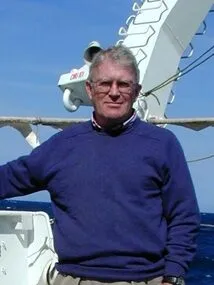
William B. F. Ryan, Doherty Senior Scholar and special research scientist in marine and polar geophysics at Lamont, has received the Maurice Ewing Medal, among AGU’s highest honors. Each year it goes to one senior scientist for a career of contributions to the ocean sciences, from original research and new technology to leadership and mentoring.
The medal carries special significance at Lamont, as it is named for Maurice “Doc” Ewing, the pioneering geophysicist who founded the observatory. Ryan has spent more than six decades at Lamont, using marine geophysics to investigate the structure and history of the ocean floor. He helped uncover evidence that the Mediterranean Sea dried up some 6 million years ago, and he co-proposed that a catastrophic flood filled the Black Sea about 7,500 years ago. He has mapped submarine plate boundaries and built tools, including GeoMapApp, that put ocean and geophysical data in the hands of scientists, teachers and the public. Ryan has been an AGU member since 1974 and an AGU Fellow since 2002.
Read more about Ryan’s work: Talking With Bill Ryan, Detective of the Deeps
Jacqueline Austermann —
James B. Macelwane Medal
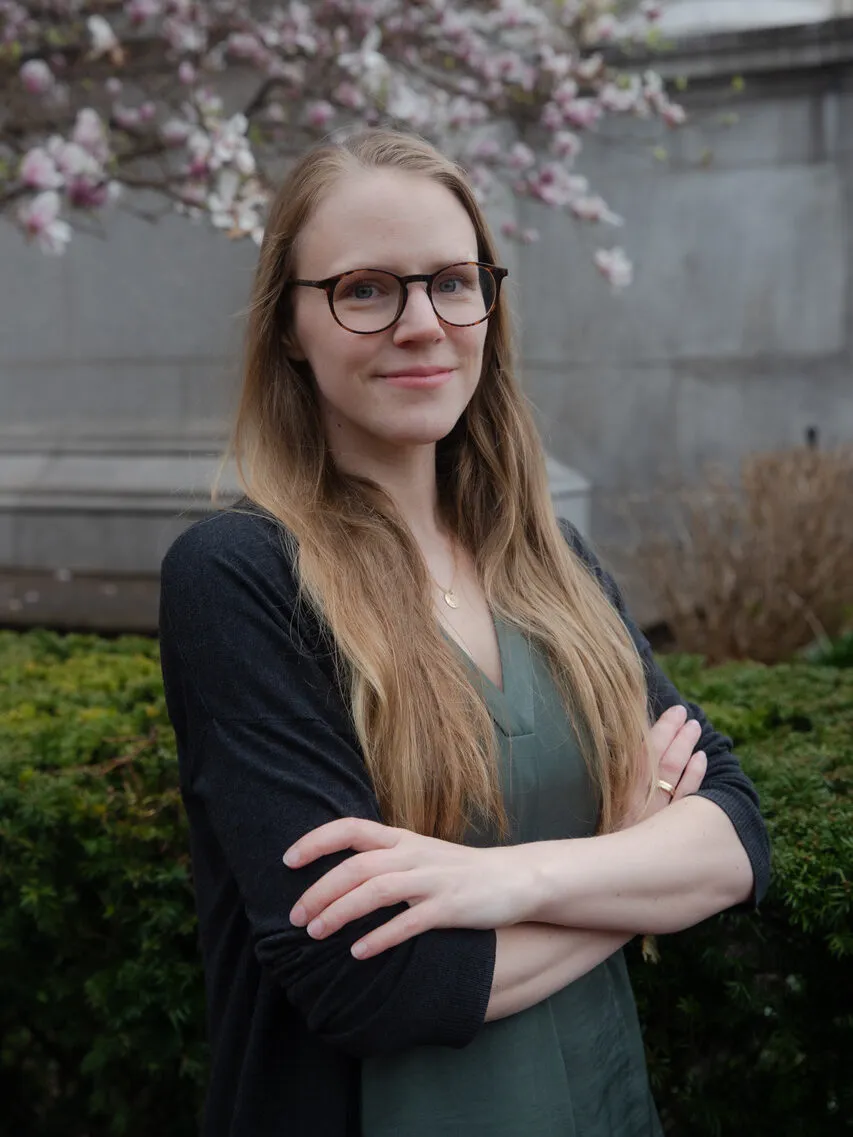
Jacqueline Austermann, associate professor in Columbia’s Department of Earth and Environmental Sciences and a researcher in Lamont’s Seismology, Geology and Tectonophysics Division, has received a James B. Macelwane Medal, AGU’s top honor for early-career scientists. Five scientists received the medal in 2026, and recipients also become AGU Fellows.
Austermann studies how processes within the Earth affect what happens at its surface, especially changes in ice sheets and sea level. Her work has shown that interpreting records of ancient sea levels requires accounting for movements and deformation within the Earth itself. Her research indicates that past sea levels are among the best clues to how ice sheets behaved during earlier warm periods, and how they may behave as the planet warms now.
Read more about Austermann’s work: What Can Fossil Corals in the Cook Islands Teach Us About Global Sea Level Rise?
Gisela Winckler — AGU Fellow
Gisela Winckler, professor of climate at the Columbia Climate School and a researcher in Lamont’s Geochemistry Division, has been elected a Fellow of the American Geophysical Union, a distinction granted each year to no more than 0.1% of AGU’s members.
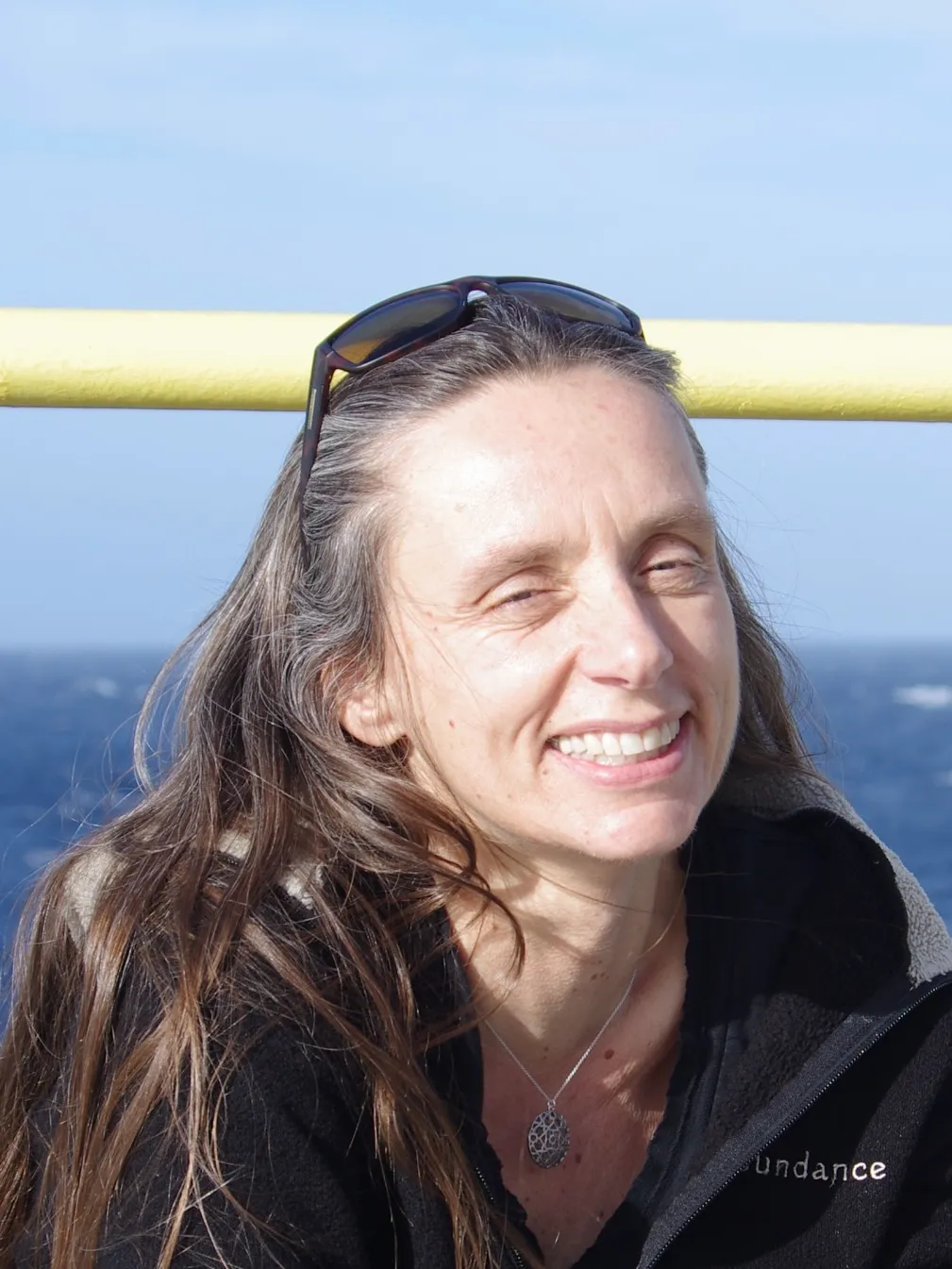
A geochemist and paleoclimatologist, Winckler reads Earth’s climate history in seafloor and lake mud and in ice cores, extending back millions of years. Winckler uses chemical tracers to investigate ocean circulation, atmospheric dust and interactions among the oceans, ice sheets and climate. By examining periods when Earth’s climate differed greatly from that of today, such records can reveal how major parts of the climate system respond to changing conditions.
Read a recent story about Winckler’s research: Unexpected Climate Feedback Links Antarctic Ice Sheet With Reduced Carbon Uptake
Galen McKinley — AGU Fellow
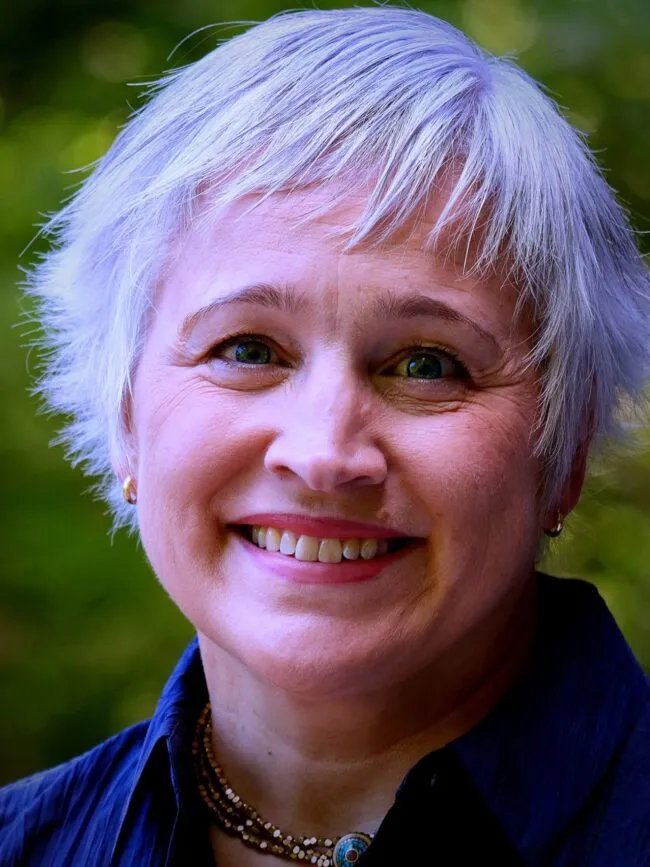
Galen McKinley, professor in Columbia’s Department of Earth and Environmental Sciences and a researcher in Lamont’s Geochemistry Division, was also elected a Fellow of the American Geophysical Union, recognizing exemplary scientific achievement and leadership.
McKinley is an oceanographer whose research addresses a central question in climate science: how much of the carbon dioxide released by human activities is absorbed by the ocean, and how that uptake may change as the climate warms. She combines observations, large datasets and computer models to untangle the physics, chemistry and biology that control how much carbon the ocean can take up and hold.
Read a recent story about McKinley’s work: Robot Sailboats Will Spend Five Years Measuring Carbon in the Southern Ocean
Renata Wentzcovitch —
AGU College of Fellows Distinguished Lecturer
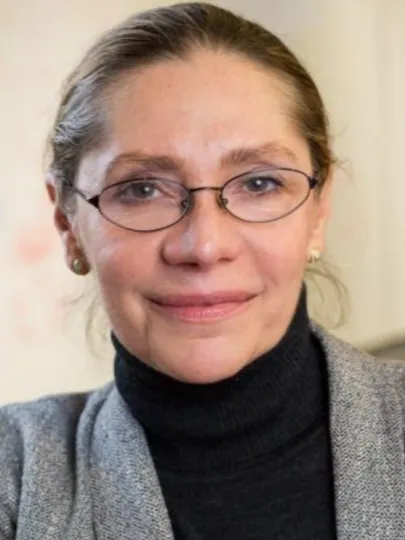
Renata Wentzcovitch, professor of materials science and engineering in Columbia Engineering’s Department of Applied Physics and Applied Mathematics, with appointments in Earth and environmental sciences and at Lamont, has been named a 2026–27 Distinguished Lecturer of the AGU College of Fellows, recognizing her leadership and contributions to geophysics, mineral physics and computational materials science.
The lecture series sends leading scientists to speak to students and researchers around the world about major areas of research and why they matter. Since no one can directly observe Earth’s mantle, Wentzcovitch rebuilds it inside a computer. She uses quantum mechanics and supercomputers to predict how minerals behave under the crushing pressures and searing temperatures deep inside planets. Her work helps connect processes occurring at the atomic scale with large-scale observations of Earth’s mantle and interior.
Wentzcovitch was also named a President’s International Fellowship (PIFI) Distinguished Scientist by the Chinese Academy of Sciences, in recognition of her longstanding contributions to computational mineral physics and her extensive record of scientific exchange, collaboration, and mentorship in China.