
A Career Spent Collecting Earth’s Seismic Clues
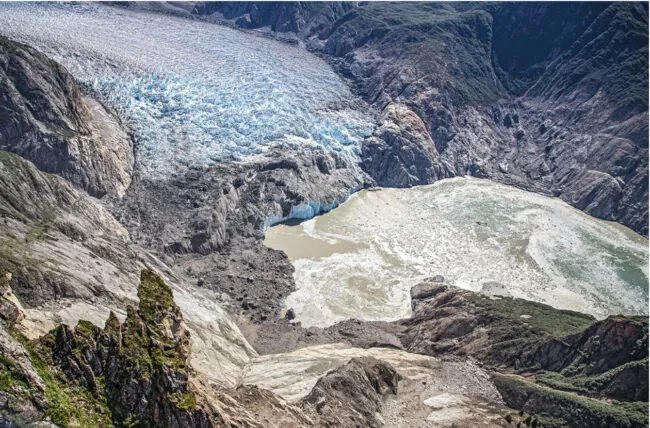
In the summer of 2025, a massive rock slope collapsed into the Tracy Arm fjord in southeast Alaska, causing a tsunami that sent water more than 1,500 feet up the fjord’s steep walls. No tourists were present in the fjord at the time, but they could have been: Cruise ships regularly conduct sightseeing tours there.
Göran Ekström is Newberry Professor of Earth and Environmental Sciences within the Faculty of Arts and Sciences, and a professor at Lamont-Doherty Earth Observatory, which is part of the Columbia Climate School. With colleagues from several institutions, he recently published research in the journal Science on the tsunami, why it happened, and what it means for future climate risk mitigation. Columbia News spoke to him about the paper’s findings, and his path to tracking landslides like this one around the world.
How would you describe what happened in the Tracy Arm fjord?
It was an outrageous event. Imagine a very steep-walled fjord, carved by a glacier. One whole side of that fjord, this huge rock slope, collapses into the water. When that mass hits, it pushes water up the opposite wall to extraordinary heights. Then the water falls back down, surges again up the other side, and sloshes back and forth down the fjord.
The wave was still high all the way down the fjord, and it left a visible scar where it stripped away big trees along the slopes. You can walk or fly along those walls and see the line where the forest used to be. It would not have been good to be there with a cruise ship carrying a thousand people…