
Next Generation of Hudson River Scientists and Educators 2026
The 2026 Next Generation of Hudson River Scientists and Educators High School Internship Program focused on considering the various ways that climate change, an ever-present challenge we face today, is impacting the Hudson River Estuary and its watershed. The interns explored local climate impacts and ecosystem disturbances through field-based explorations and data collection and worked with scientists to increase their understanding of climate change and current environmental issues. They shared back the information they learned through hosting a field trip at the Hudson River Field Station, in speaking with the public frequenting Piermont Pier and by participating in outreach events including Science Saturdays and the NYS DEC Great Fish Count to increase Hudson River knowledge, and climate literacy and awareness.
The 2026 cohort of Next Gen interns was composed of 12 passionate high school students from 10 schools throughout Rockland County, Westchester County and North Jersey including students from Nyack High School, Clarkstown South High School, Pearl River High School, Spring Valley High School, North Rockland High School, Suffern High School, Briarcliff Manor High School, Irvington High School, Northern Valley High School and Leonia High School. Over the summer the interns gained invaluable experiences building their communication and research skills, increasing their Hudson knowledge through hands-on experiences and grew together to become Hudson River stewards and climate advocates.
Hudson Focused Research
The Hudson River Field Station is situated at the end of Piermont Pier, a mile long pier that extends out into the Hudson River Estuary. The pier is adjacent to Piermont Marsh, the largest remaining brackish marsh on the Hudson River Estuary. The Field Station’s unique location allowed for the Next Gen interns to explore the Hudson Estuary’s biodiversity and understand the important role that Piermont Marsh plays in supporting a wide range of species.The Next Gen interns researched the local ecosystem, looking at the microscopic planktonic community, fish and macroinvertebrates, and water birds. Additionally, they considered how changing environmental factors such as climate change, and plastic pollution might impact these species.
The Hidden Life of the Hudson
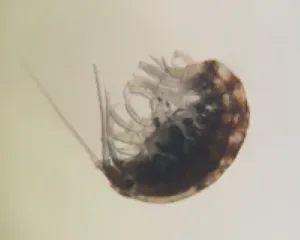
Plankton are small, often microscopic, floating organisms that comprise the base of the Hudson River’s ecosystem. Despite their small size, plankton play a crucial role in cycling nutrients and generating energy. Phytoplankton through the process of photosynthesis generate their own food or energy and release oxygen as a byproduct. Zooplankton provide a crucial link between primary producers and consumers in a food web by consuming phytoplankton and acting as an important source of food for fish and other aquatic species. Zooplankton consume detritus as part of their diet, cycling nutrients from decomposing matter back into the ecosystem. The Next Gen interns carefully identified and recorded plankton species that were collected in samples off of the pier to understand the planktonic community in the dynamic section of estuary where Piermont is situated. Diatoms including Melosira, Ankistrodesmus, Cyclotella, and Skeletonema accounted for the majority of phytoplankton seen in samples analyzed. Diatoms are characterized by their silica shell, and are one of the most dominant types of phytoplankton seen in aquatic ecosystems. Alongside the phytoplankton, zooplankton were seen zipping around samples, feeding on detritus and phytoplankton. Rotifers, barnacle nauplius, and copepods such as Acartia tonsa were common across samples.Some fun finds include aquatic snails at their larval planktonic stage, and a variety of aquatic worms! A few microscopic jellyfish were observed, their small tentacles and cilia distinguishing them from the rest of the zooplankton. These observations reflect both the biodiversity and the dynamic life cycles the Hudson River supports.
Exploring Fish and Invertebrates
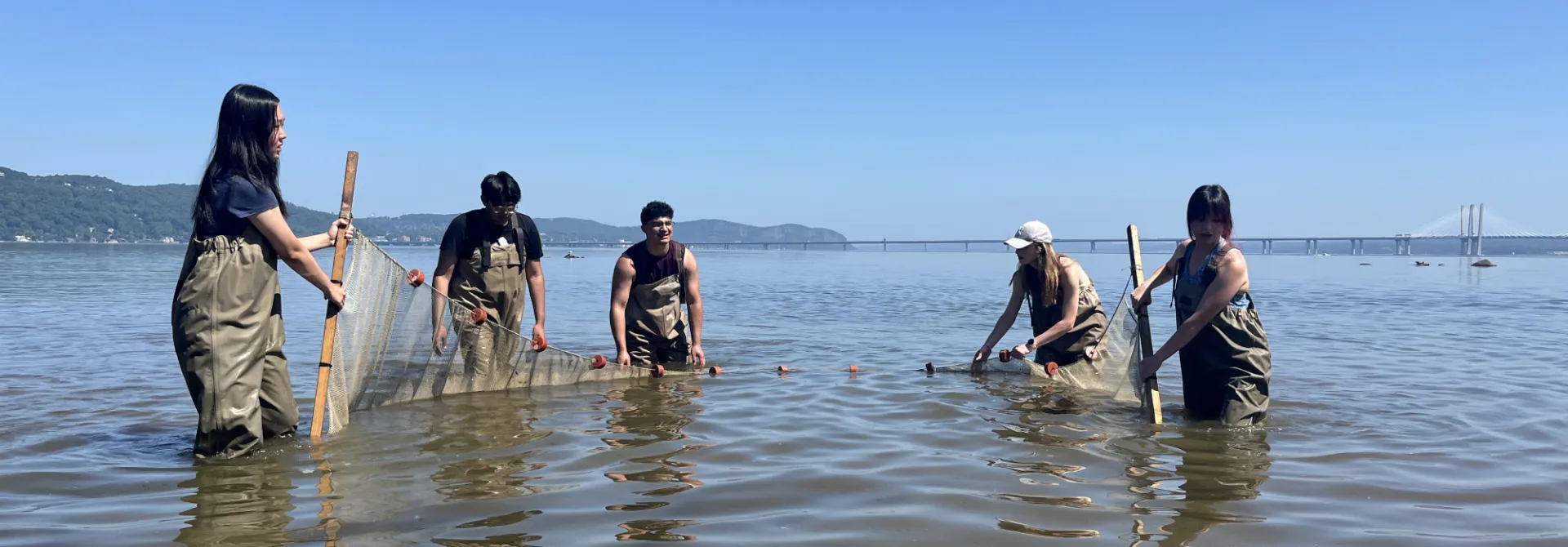
The Next Gen interns used a method of fishing called seining to identify fish and macroinvertebrate species in the waters surrounding the pier. Seining entails dragging a net through the water whose bottom edge is held down by weights and top edge buoyed by floats. Fish and macroinvertebrates were identified and counted before being submitted to our database.
Across 16 sampling days and 71 hauls, the interns caught 6,459 individuals of 12 different fish species. Atlantic silversides dominated our catches, totaling 5,683 individuals and comprising 88 percent of our yield. Silversides form large, shimmery schools and are an essential food source for larger predatory fish in the system. Other abundant schooling species included Atlantic menhaden, whose rising population has been essential for marine restoration, and blueback herring. These schooling species enticed in predatory fish species such as striped bass, the apex predator of the Hudson estuary, and bluefish, a predatory marine species that is nicknamed “snapper” by fisherman for their reputation for biting fisherman with their sharp teeth!
A few species were as interesting as they were scarce. Two drum species (Sciaenidae) came up in our nets, the Spot and Black Drum. Spots and Black Drums are known for their “drumming” or “croaking” vocalizations. The only flatfish caught by Next Gen interns was the hogchoker, a species of flatfish that closely resembles a flounder with two eyes situated on the right side of their body. Surprisingly, White Perch, a normally abundant species in seines off the pier, eluded our catches this summer despite being present in springtime seines.
In addition to fish, a diverse array of invertebrates was also featured in our catches. A total of 131 Blue crabs, 79 Harris mud crabs, and 200 amphipods (commonly known as scuds) ended up in hauls. Twenty-two grass shrimp ended up in our nets, with the majority of individuals having egg masses held close to their bellies. Finally, swathes of Moon jellyfish and Leidyi Comb Jellies lined our nets, most of which were Moon jellyfish at an estimated 2,728 individuals!
In addition to fish and invertebrates, numerous diamond back terrapins were observed swimming along the pier or resting on rocks!
The Next Gen interns' seining efforts contribute to long-term data collection on the diversity and behavior of aquatic species in the Hudson River. This data strengthens our knowledge of potential climate impacts, migratory patterns, and population dynamics.
Water Bird Surveys
The Hudson River Estuary is home to many species of water birds! Many species of birds, including shorebirds, seabirds, wading birds, and waterfowl can be seen foraging and hunting in the waters surrounding or the shorelines of Piermont Pier. In addition to many resident bird species, the Hudson River Corridor is an important stopover point for many migratory species. These migratory species stopover in Piermont to rest and feed before completing their migration either to or from their breeding locations.
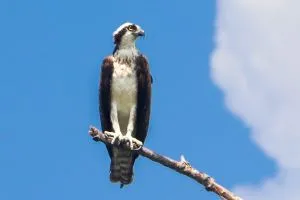
The Next Gen interns surveyed 3 sites along the pier, identifying species and recording the number of individual water birds present. Across 7 surveys, 22 species of birds were seen and documented, including 4 species of waterfowl, 6 species of gulls, 3 tern species, 2 species of wading birds, 2 sandpiper species, one plover species, one turnstone species, and 3 species of seabirds. The most commonly observed species were Ring bill gulls, Double crested cormorant, mallards, osprey, and Forster’s terns. Ospreys were observed soaring high above before diving down to catch schooling menhaden swimming below. While Forester’s tern’s loud vocalizations were heard as juveniles called out to their parents begging for a free fish meal! Juvenile Forster’s terns were seen practicing their hunting skills, diving down into the shallows. A few surprising migratory species were seen by Next Gen interns including a black scoter, likely stuck in the area due to an injury to its wingtips, and a red breasted merganser whose continued presence in Piermont is unexplained.
Visual observations of different species of birds help scientists understand the importance of Piermont as a stopover site for migratory species and an important habitat for resident species. Observations can help validate and support other methods of tracking bird populations and species in the Hudson River Estuary.
Water Chemistry
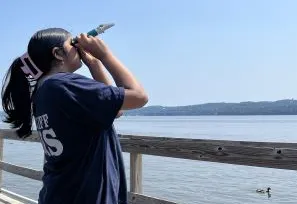
The Hudson River estuary’s chemical properties undergo constant fluctuation, which influences the entire ecosystem. Salinity levels rise and fall with the tides and the flow of freshwater from upstream, while temperature fluctuations occur with the seasons. Nutrients such as nitrogen and phosphate enter the river during rain events, and dissolved oxygen and pH fluctuate with reaeration, photosynthesis, and respiration. Each of these factors shapes the river’s biodiversity because plants, invertebrates, and fish rely on specific ranges of conditions to survive. To study these connections, the Next Gen interns regularly measured water temperature, salinity, pH, alkalinity, and nutrient concentrations using tools like thermometers, refractometers, and LaMotte field kits. These measurements help expand our understanding of how seasonal changes, stormwater runoff, anomalous weather patterns, and climate change influence habitat quality and the health of the Hudson’s ecosystems.
Plastic Pollution Big and Small
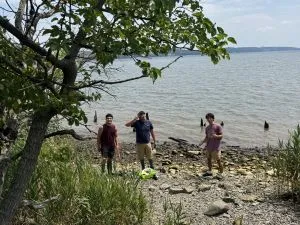
Marine debris is a persistent problem across shorelines including within the Hudson River Estuary and at Piermont Pier. The Next Gen interns used an adapted version of NOAA’s marine debris shoreline assessment protocol to survey the shoreline of Piermont Pier, recording and removing all debris they encountered. Across 4 shoreline assessment days, they collected 1831 pieces of marine debris. Plastic comprised a majority of the marine debris found, including fishing lures, cigarette butts, and beverage bottles and caps, mixed with plastic fragments and films. These materials persist in the environment for decades and break into smaller pieces that fish, birds, and invertebrates easily ingest. Each item removed was both a data point and a small step toward improving habitat quality along the Pier.
Microplastics are plastic fragments ranging from one nanometer to five millimeters that can be manufactured as microplastics or formed when larger pieces of plastic break down over time. Next Gen interns collected samples at three distinct locations along the shoreline to understand the prevalence of microplastics in our section of the river. Samples analyzed yielded 183 microplastics across 9 samples. Most of the microplastics they found were fibers from synthetic clothing fabric, with smaller amounts of fragments and thin films. Fish, invertebrates, and other organisms can ingest microplastics, leading to bioaccumulation and impacting the health of the Hudson River ecosystem.
Freshwater tributaries feed the Hudson River Estuary!
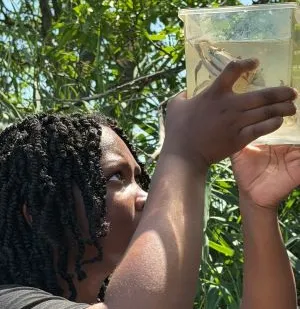
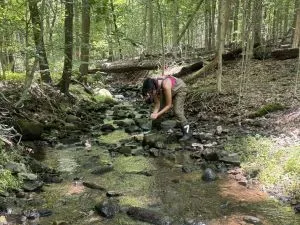
On the last day of the program, the Next Gen interns traveled inland to explore a freshwater tributary. Tributaries are small streams that feed into the larger Hudson River and are part of the watershed. To understand the health of these stream ecosystems, Next Gen interns explored the biodiversity the small streams and pools held. They found dragonfly nymphs, crayfish, a northern two-lined salamander, eastern blacknose daces, frogs and tadpoles! It is important to appreciate the small streams and tributaries that flow through the forests and even our backyards that feed the Hudson River and contribute to the broader ecosystem.
STEAM Guest Speakers
Every Tuesday and Thursday, the Next Gen Interns were joined by the Polar Climate Ambassadors Program Interns (Polar CAP), a group of 9 high school students focusing on learning and communicating the importance of the polar regions and their ties to climate change. Together they learned from a variety of professionals who came down to the Hudson River Field Station to teach the interns about the importance of the work they are doing focused on climate change, environmental issues or the Hudson Estuary. These sessions connected interns with scientists and educators, providing insight into both local environmental issues and broader STEAM opportunities.
Guest Speakers
Julia Gold, an undergraduate intern at Orange and Rockland, kicked off our series of guest speakers! Julia spoke about her internship at Orange Rockland in which she was involved in wildlife and environmental assessments specifically helping with their Monarch butterfly work. She highlighted how electric and energy companies can work to help protect ecosystems and natural spaces while still providing local municipalities with the energy they need!
Catherine Prunella from the New York Sea Grant spoke about microplastics research, outreach, and solutions. She explained how synthetic materials made from petroleum can break down into microplastics and accumulate in the environment. While the effects on human health are not fully understood, researchers are studying correlations between microplastics and biological systems. Prunella highlighted current initiatives to counter microplastic pollution, including the Mr. Trash Wheel in Baltimore, which uses solar and hydropower to intercept plastics before they enter waterways. Interns also learned about Lamont’s current projects focused on AI-driven plastic catchers, washing machine filters for microplastics, and how the Next Gen interns’ sampling of marine debris contributes to AI training to improve plastic detection in waterways.
Betsy Franco Feeney who is an award-winning children’s book author, illustrator, publisher, and STEAM educator came to share her work with interns. She is known for her various children’s books that blend science into storytelling, introducing children to environmental topics from a young age and educating parents along the way! She spoke with interns about how to communicate science to younger audiences through storytelling, and art. Interns got a chance to explore some different art activities that help children learn about diatoms, amoebas, and even clean energy approaches!
Cody Bahlau is a Science Officer with the Office of Marine Operations at Lamont-Doherty Earth Observatory, where he supports global oceanographic research aboard the R/V Marcus G. Langseth. He developed a STEM outreach program called “Desk to Deck” which gives students a glimpse into what working on a research vessel is like. Zooming with the interns, Cody shared about the current research that is ongoing, different career paths that can lead to working on a research vessel, and what living on a research vessel is really like.
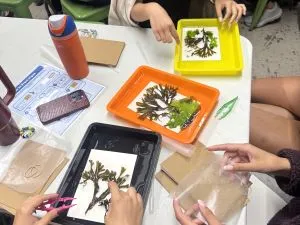
Cait Clemmer works for the National Oceanic and Atmospheric Administration (NOAA), focusing on bringing awareness to different national marine sanctuaries located within the United States. Cait spoke with interns about what a national marine sanctuary is, how they are established, and shared important findings that a recent research cruise to the Hudson Canyon discovered that will help in the process of establishing the Hudson Canyon as a national marine sanctuary. Video surveys of the canyon uncovered a wealth of information about the life that lives within the canyon! Cait showed the interns how to complete an algae press, similar to a flower press, as a fun approach to introduce students and the public to the importance of algae in aquatic ecosystems.
Emily Marcet, an interpretative planning consultant from WolfTree Designs joined interns to discuss and came to speak with the interns about the process and importance of considering your audience when creating exhibits, displays, and educational materials. Interns considered the best approaches for communicating how sea level is going to impact local communities along the Hudson. The field station team along with our summer interns are working alongside Emily Marcet to create a new display for the Hudson River Field Station focused on sea level rise. Stay tuned!
Zazh Schwartz-Weinstein is the regional reviewer for eBird, which is managed by Cornell Lab of Ornithology. eBird uses community collected bird sightings to help advance science, conservation and bird research worldwide. Zach shared examples of local community observations that gave insight into unique bird behavior or situations. He discussed the usage of Piermont Pier/Marsh as an important stopover sight for migratory birds. Interns went on a guided bird watching tour along the pier as Zach pointed out important distinguishing features to help identify different species of birds.
Wrapping up our guest speaker series was Sheean Haley, a Lamont scientist who works within the Biology and Paleo division. Sheean shared with students about her work studying the microbes of the ocean, looking at how phytoplankton respond to environmental changes altering their gene expression in response, and how marine phytoplankton are responding to changing ocean conditions due to climate change.
Broadening Community Understanding of Science
Field Trips
The Next Gen interns led a field trip at the Hudson River Field Station for a high school program run by Columbia’s Engineering School. They planned and ran stations that introduced the estuary’s unique characteristics, how to measure its chemical properties, and taught participants how to identify Hudson fish and invertebrates. Interns explained each method in plain language, demonstrated how to collect and record data, and paused to check for understanding. They adjusted their explanations for students with different levels of experience and connected field observations to broader ideas in ecology and climate. By the end of the day, the high school participants had collected data, and shared their observations, and our interns had strengthened their ability to teach, listen, and lead.
Science Saturdays
Science Saturdays are a cornerstone of community engagement at the pier, inviting the public to explore the Hudson River through hands-on learning. The interns were integral to making these events possible, welcoming over 400 visitors throughout the season. Their primary activity was leading seining sessions, which brought participants into the water to observe the river’s biodiversity up close. They also facilitated fish identification, guided the creation of eDNA bracelets to illustrate modern biodiversity monitoring techniques, and led birding tours that highlighted the connection between avian life and the river’s ecological health. Through these varied activities, the interns played a key role in transforming scientific concepts into engaging, accessible experiences for people of all ages.
Creation of Science Posters
At the end of the internship, the Next Gen interns completed research projects that served as the capstone to their summer program. Each project built on the topics explored throughout the season and incorporated supplemental data from organizations like the NYSDEC and Hudson River Park Trust.
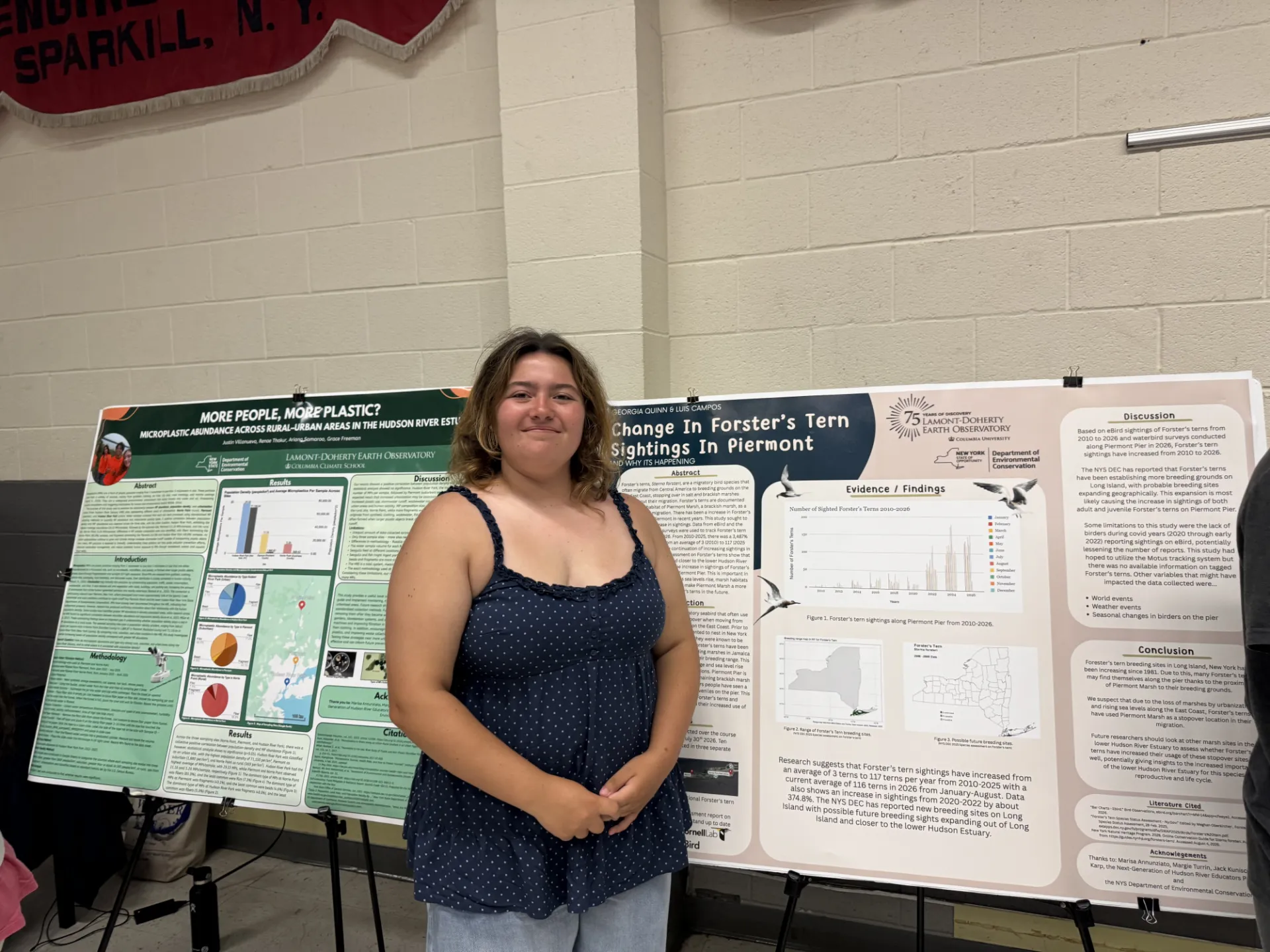
Georgia Quinn and Luis Campos worked on “Change in Forster’s Tern Sightings in Piermont.”
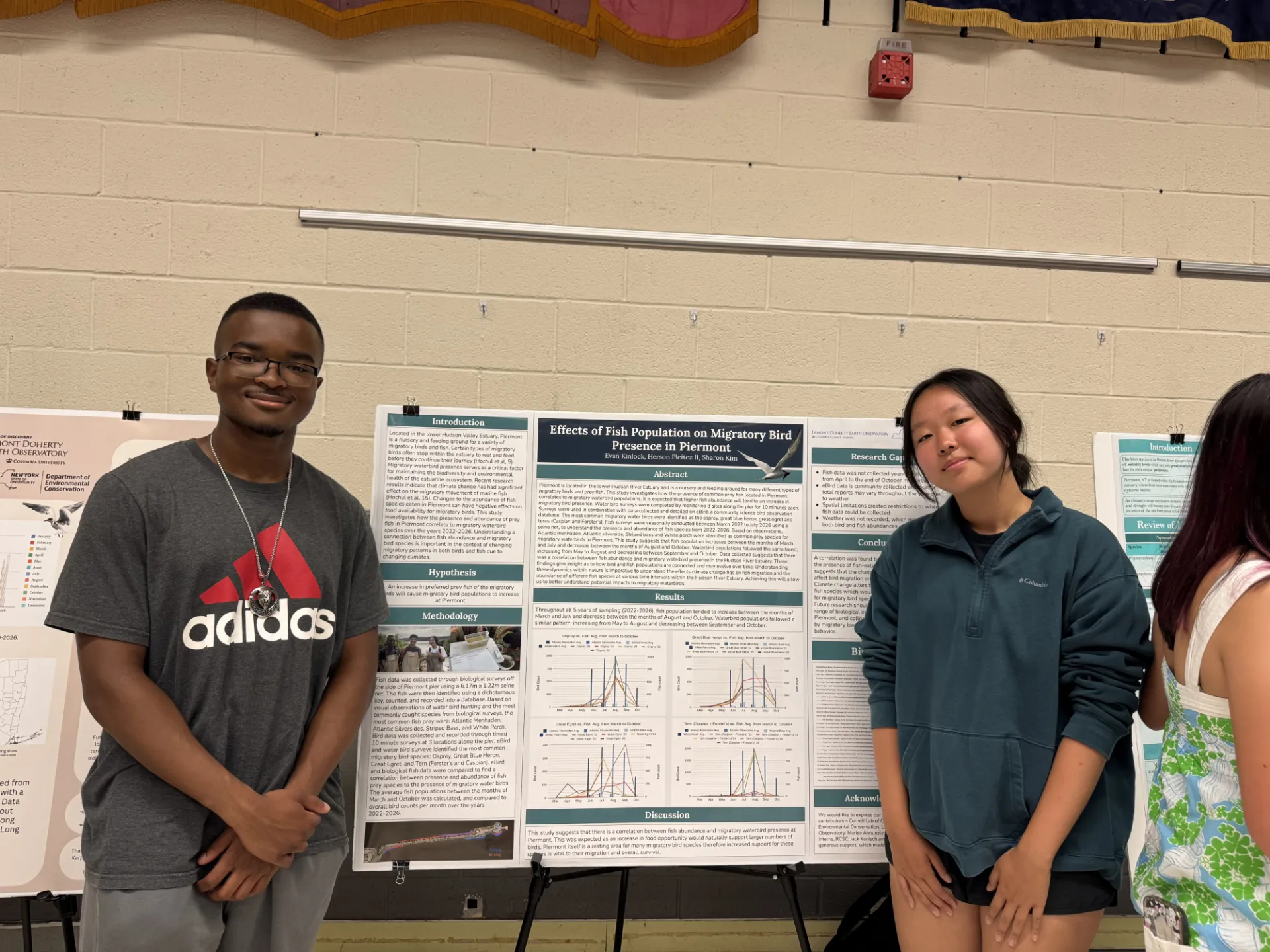
Evan Locke, Herson Pleitez II, and Sharon Kim investigated the “Effects of Fish Population on Migratory Bird Presence in Piermont.”
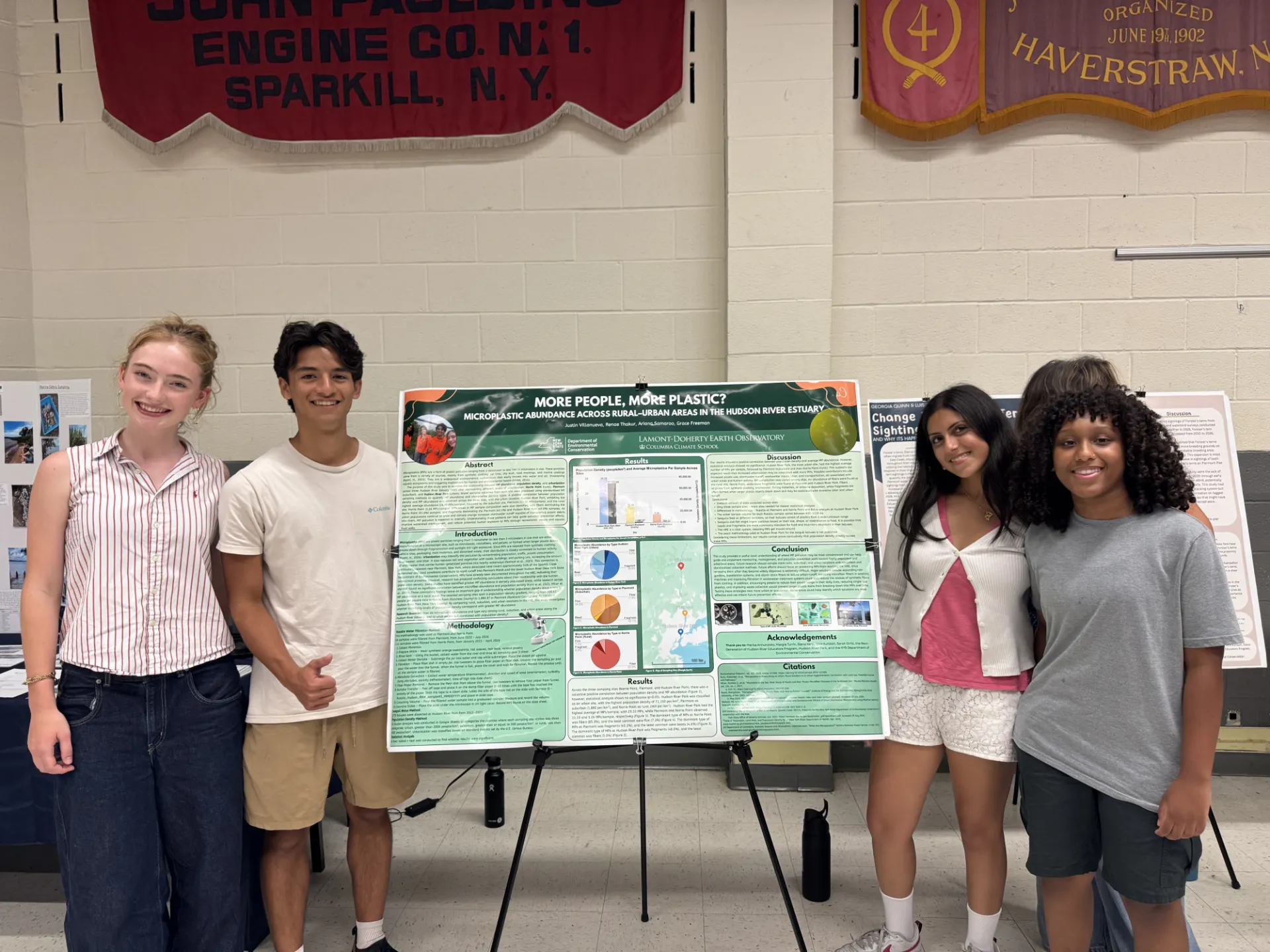
Ariana Samaroo, Grace Freeman, Justin Villanueva, and Renae Thakur completed an investigation of “Microplastic Abundance Across Rural-Urban Areas in the Hudson River Estuary.”
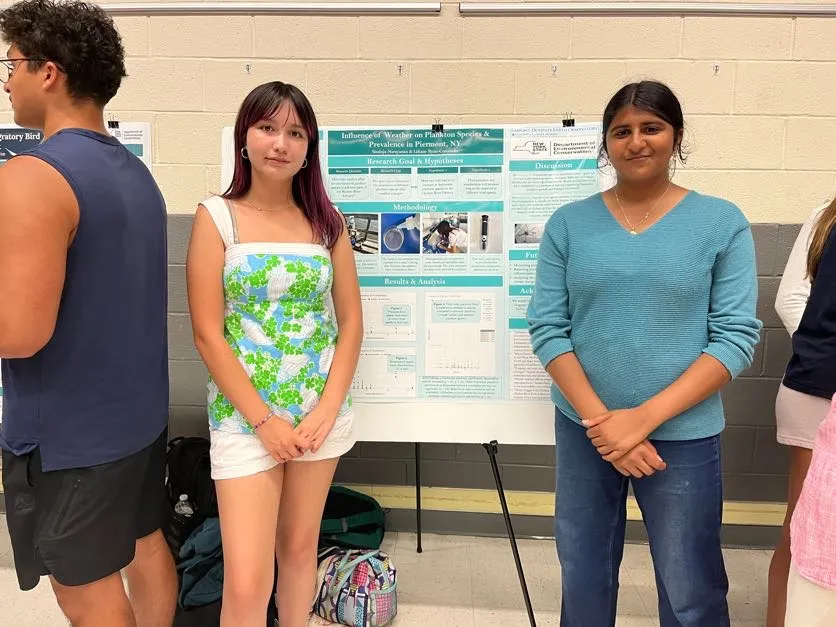
Liliane Ryan-Coronado and Sinduja Narayanan researched the “Influence of Weather on Plankton Species and Prevalence in Piermont.”
These projects demonstrated the interns’ ability to analyze data, draw conclusions, and communicate findings, providing a strong capstone to their summer research experience.
Image Carousel with 4 slides
A carousel is a rotating set of images. Use the previous and next buttons to change the displayed slide
-
Slide 1: Ariana, Grace Freeman, Justin, and Renae's poster: “Microplastic Abundance Across Rural-Urban Areas in the Hudson River Estuary.
-
Slide 2: Evan, Herson, and Sharon's poster: “Effects of Fish Population on Migratory Bird Presence in Piermont.”
-
Slide 3: Luis and Georgia's poster: “Change in Forster’s Tern Sightings in Piermont.”
-
Slide 4: Liliane and Sinduja's poster: “Influence of Weather on Plankton Species and Prevalence in Piermont.”
Tiered Mentorship: RCSC & Next Gen
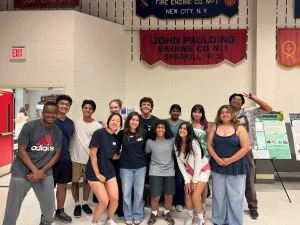
The Next Gen interns are educated and mentored by Rockland Conservation and Service Corps (RCSC) interns over the course of the 6-week program. The Rockland Conservation and Service Corps (RCSC) fosters environmental stewardship in college-aged participants through a summer program combining service work, field research, outreach, education, and community engagement at sites across Rockland County. At Lamont-Doherty’s Hudson River Field Station, RCSC members serve as educators and near-peer mentors for the Next Gen program. Near-peer mentorship offers students guidance from peers who are closer to their age, providing them with access to fresh perspectives on career paths, training opportunities, and experiences within the environmental field.
A special thank you to Siena Karp and Jack Kunisch, our RCSC interns this summer who helped mentor and guide the Next Gen interns!
We are looking forward to working with another great cohort of high school students and seeing what interesting findings await us in summer 2027!