
Next Generation of Hudson River Educators 2025: Extending the Pathway into Climate Change
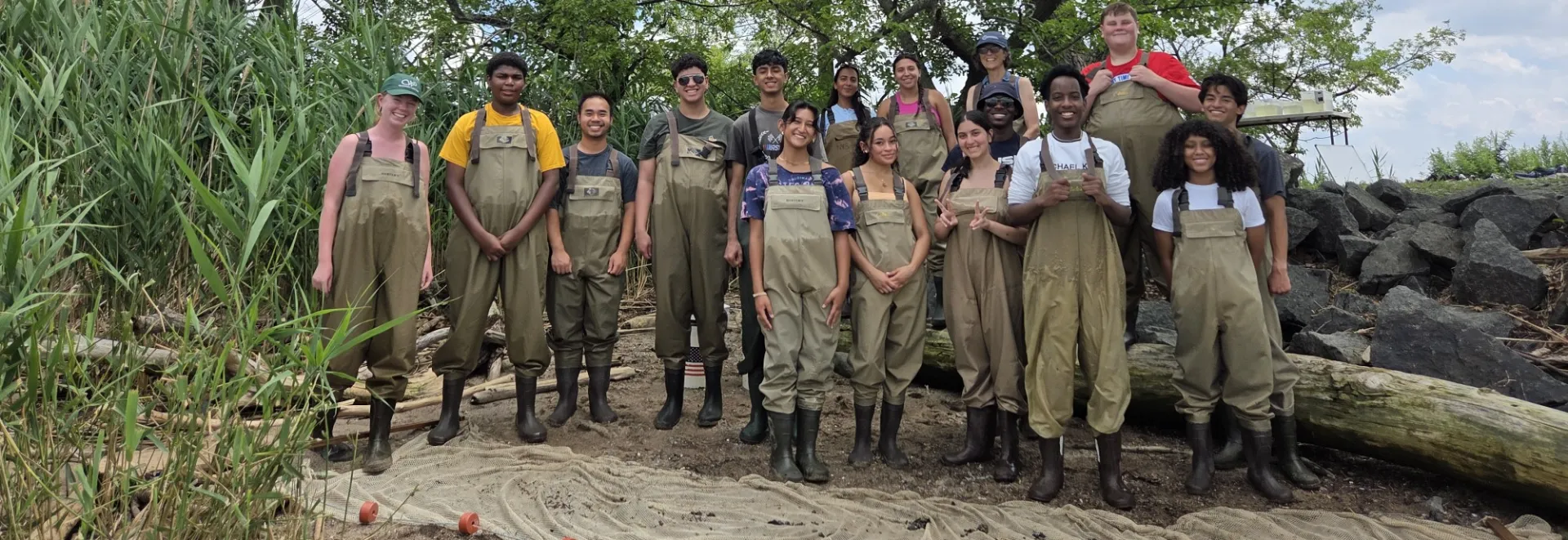
The 2025 Next Generation of Hudson River Educators High School Internship Program focused on considering the various ways that climate change, an ever-present challenge we face today is impacting the Hudson River and its watershed. The interns explored local climate impacts and ecosystem disturbances through field-based explorations and data collection and worked with scientists to increase their understanding of climate change. They shared back the information they learned through hosting a field trip at the Hudson River Field Station, in speaking with the public frequenting Piermont Pier and by participating in outreach events including Science Saturdays and the NYS DEC Great Fish Count to increase Hudson River knowledge, and climate literacy and awareness.
The 2025 cohort of Next Gen interns was composed of 12 passionate high school students from throughout Rockland County and North Jersey including students from Nyack High School, Clarkstown High School South, Nanuet Senior High School, Pearl River High School, Spring Valley High School, Tappan Zee High School, North Rockland High School, Saddle River Day School, and Northern Valley High School. Over the summer the interns gained invaluable experiences building their communication and research skills, increasing their Hudson knowledge through hands-on experiences and grew together to become Hudson River stewards and climate advocates.
Tiered Mentorship: RCSC & Next Gen
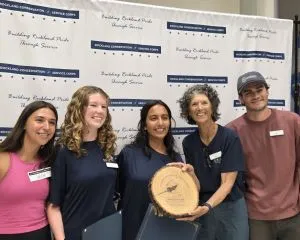
The Next Gen interns are educated and mentored by Rockland Conservation and Service Corps (RCSC) interns over the course of the 6-week program. The Rockland Conservation and Service Corps (RCSC) fosters environmental stewardship in college-aged participants through a summer program combining service work, field research, outreach, education, and community engagement at sites across Rockland County. At Lamont-Doherty’s Hudson River Field Station, RCSC members serve as educators and near-peer mentors for the Next Gen program. Near-peer mentorship offers students guidance from peers who are closer to their age, providing them with access to fresh perspectives on career paths, training opportunities, and experiences within the environmental field.
This summer, Meghan Majewski and Alisa D’Souza served with RCSC at Lamont, where they designed and presented lessons introducing the Hudson River, its estuary, and demonstrated how to conduct field sampling for the various research projects at the field station. By presenting these topics before heading into the field, Meghan and Alisa gave interns a strong conceptual foundation to build upon. Equipped with this knowledge, the Next Gen interns moved into hands-on research, sampling the river system firsthand and developing the technical skills needed for fieldwork. In this setting, the Hudson became both classroom and laboratory, bridging scientific research with personal and professional development.
Hudson Focused Research
Examining the Species of Piermont Pier
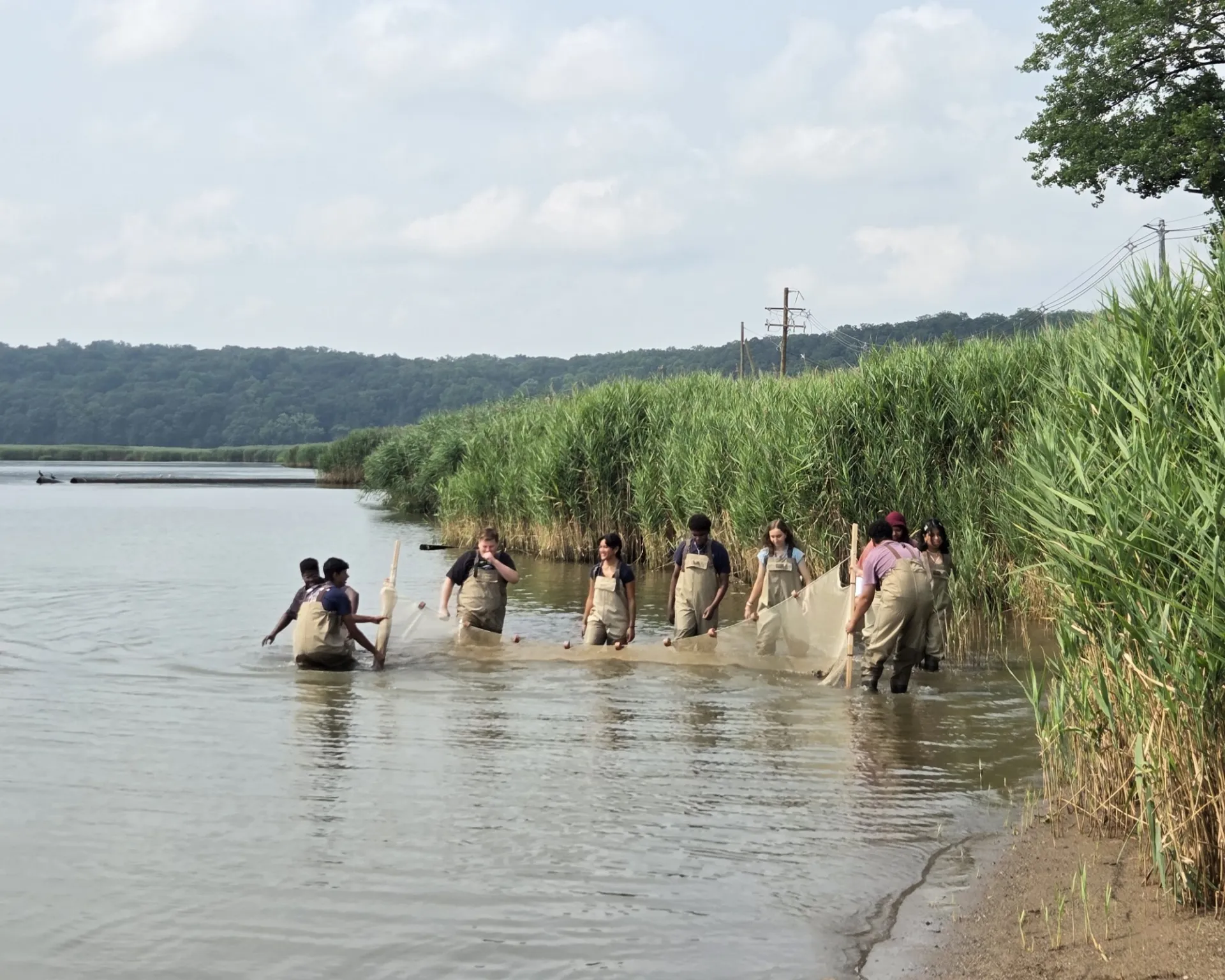
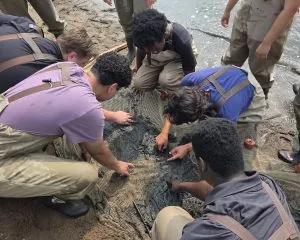
Piermont Pier is adjacent to Piermont Marsh and extends a mile into the Hudson River, giving it a unique range of locations to study the Hudson Estuary's biodiversity. To research this biodiversity, the Next Gen interns used a method of fishing called seining, which entails dragging a net through the water whose bottom edge is held down by weights and top edge buoyed by floats. Fish were identified and counted before being submitted to our database.
Across 27 sampling days, the interns caught 2,625 individuals of 15 different fish species. Atlantic silverside dominated our catches, totaling 2,333 individuals and comprising 88 percent of our yield. Silversides form large, shimmery schools and are an essential food source for larger predatory fish in the system. Other abundant species included striped bass, a top predator in the Hudson Estuary; Atlantic menhaden, whose rising population has been essential for marine restoration; and Bay Anchovy, identified by their hinged jaw, which hangs open as they feed on plankton.
A few species were as interesting as they were scarce. Three drum species (Sciaenidae) came up in our nets (Black drum, Spot, and Northern kingfish), with Spot being the most abundant at 9 individuals. We also caught our first Atlantic needlefish since 2023 alongside a Northern pipefish. These fish are similar but differ in important ways. Both have elongated, slender bodies and narrow mouths. However, the needlefish darts through the water to prey on small fish, while the pipefish is often found suspended vertically in the water column, feeding on small crustaceans and fish, with their tail wrapped around blades of seagrass.
In addition to fish, a diverse array of invertebrates was also featured in our catches. A total of 85 Blue crabs, 5 Mud crabs, and 23 of the invasive Asian shore crab came up in our nets. Sand shrimp and Grass shrimp were both abundant, totaling 112 individuals. Finally, as our waters warmed, swathes of Moon jellyfish and Leidyi Comb Jellies lined our nets, most of which were Moon jellyfish at an estimated 3,628 individuals!
The Next Gen interns' seining efforts contribute to long-term data collection on the diversity and behavior of aquatic species in the Hudson River. This data strengthens our knowledge of potential climate impacts, migratory patterns, and population dynamics.
The Hudson's Planktonic World
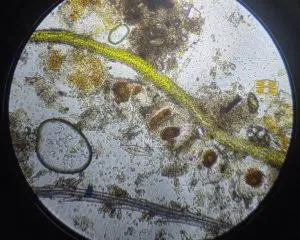
Plankton are small, often microscopic, floating organisms that comprise the base of the Hudson River’s ecosystem. Their role in cycling nutrients and energy makes studying their presence essential for assessing the river’s ecological health and the productivity of its food web. There are both phytoplankton, which undergo photosynthesis to survive, and zooplankton, which consume other organisms to survive. The Next Gen interns were tasked with identifying and recording plankton species in our area. To collect samples, they pulled water from the river with a pump and examined it under a microscope. Many phytoplankton species identified were diatoms, characterized by their silica shell; these included Melosira, Ankistrodesmus, Anacystis, Coscinodiscus, and Cyclotella. Interns also identified the dinoflagellate Prorocentrum quite often, noting its two flagella that propel its oval-shaped bodies through the water. Alongside phytoplankton, zooplankton presented great diversity in our samples. Copepods such as Acartia tonsa, Acartia hudsonica, and Eurytemora affinis were common, alongside crab larvae and small bivalves. A few microscopic jellyfish were observed, their small tentacles and cilia distinguishing them from the rest of the zooplankton. These observations reflect both the biodiversity and the dynamic life cycles the Hudson River supports.
Water Chemistry
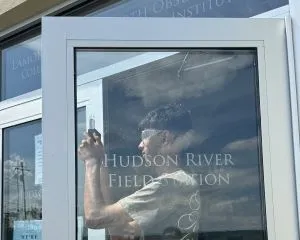
The Hudson River estuary’s chemical properties undergo constant fluctuation, which influences the entire ecosystem. Salinity levels rise and fall with the tides and the flow of freshwater from upstream, while temperature fluctuations occur with the seasons. Nutrients such as nitrogen and phosphate enter the river during rain events, and dissolved oxygen and pH fluctuate with reaeration, photosynthesis, and respiration. Each of these factors shapes the river’s biodiversity because plants, invertebrates, and fish rely on specific ranges of conditions to survive. To study these connections, the Next Gen interns regularly measured water temperature, salinity, pH, alkalinity, and nutrient concentrations using tools like thermometers, refractometers, and LaMotte field kits. These measurements help expand our understanding of how seasonal changes, stormwater runoff, anomalous weather patterns, and climate change influence habitat quality and the health of the Hudson’s ecosystems.
Marine Debris and Microplastics
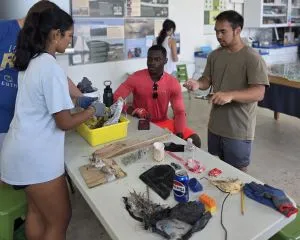
Marine debris is a persistent problem on Piermont Pier. The Next Gen interns used an adapted version of NOAA’s marine debris shoreline assessment protocol to survey the shoreline of Piermont Pier, recording and removing all debris they encountered. Plastic comprised a majority of the marine debris found, including fishing lures, cigarette butts, and beverage bottles and caps, mixed with plastic fragments and films. These materials persist in the environment for decades and break into smaller pieces that fish, birds, and invertebrates easily ingest. Each item removed was both a data point and a small step toward improving habitat quality along the Pier.
Microplastics are plastic fragments ranging from one nanometer to five millimeters that can be manufactured as microplastics or form when larger pieces of plastic break down over time. To clarify the prevalence and investigate potential sources of microplastics near Piermont Pier, the Next Gen interns collected samples at three distinct locations along the shoreline. Most of the microplastics they found were fibers from synthetic clothing fabric, with smaller amounts of fragments and thin films. Fish, invertebrates, and other organisms can ingest microplastics, leading to bioaccumulation and impacting the health of the Hudson River ecosystem.
Collaborative Tuesdays
Every Tuesday the Next Gen Interns were joined by the Polar Climate Ambassadors Program Interns (Polar CAP), a group of 9 high school students focusing on learning and communicating the importance of the polar regions and their ties to climate change. Together they learned from a variety of professionals who came down to the Hudson River Field Station to teach the interns about the importance of the work they are doing focused on climate change, environmental issues or the Hudson Estuary. These sessions connected interns with scientists and educators, providing insight into both local environmental issues and broader STEM opportunities.
Tuesdays Speakers
Ashley Jun, a previous Polar CAP inter, kicked off our collaborative Tuesdays! Ashley spoke about her experience living and working on a small farm in Iceland as part of an immersive experience to learn more about Icelandic culture and customs. She brought different Icelandic candy and food such as pickled shark for interns to try!
Neil Bettez visited from the New York State Department of Environmental Conservation, who leads the Climate Resilience team within the Hudson River Estuary Program. Bettez discussed how climate change will impact the communities surrounding the Hudson River and the resilience strategies local municipalities are implementing. These strategies are referred to as the “Climate Smart Community Certification program” and include updating stormwater infrastructure, expanding green spaces to combat urban heat islands, and action plans for extreme weather events.
Catherine Prunella from the New York Sea Grant spoke about microplastics research, outreach, and solutions. She explained how synthetic materials made from petroleum can break down into microplastics and accumulate in the environment. While the effects on human health are not fully understood, researchers are studying correlations between microplastics and biological systems. Prunella highlighted current initiatives to counter microplastic pollution, including the Mr. Trash Wheel in Baltimore, which uses solar and hydropower to intercept plastics before they enter waterways. Interns also learned about AI-driven plastic catchers, washing machine filters for microplastics, and how the Next Gen interns’ sampling of marine debris contributes to AI training to improve plastic detection in waterways.
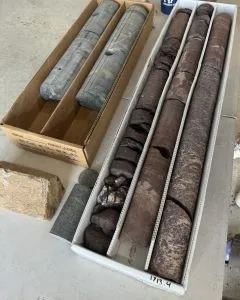
Dennis Kent, a geologist and geophysicist at Lamont-Doherty Earth Observatory, presented the geologic history of the Hudson region. Interns learned about local formations such as the Palisades Sill and examined sediment cores that illustrate the area’s long geological past. Kent’s session connected the interns’ understanding of the modern river with deep history recorded in its rocks and sediments.
Broadening Community Understanding of Science
Field Trips
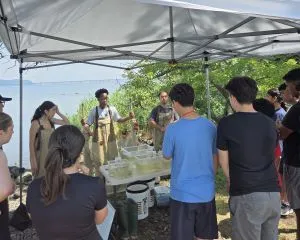
The Next Gen interns led a field trip at the Hudson River Field Station for Dominican University’s SOHLIS Environmental Science Summer Camp. They planned and ran stations that introduced the estuary’s unique characteristics, showed how to measure turbidity, and taught seining and the identification of Hudson fish and invertebrates. Interns explained each method in plain language, demonstrated how to collect and record data, and paused to check for understanding. They adjusted their explanations for students with different levels of experience and connected field observations to broader ideas in ecology and climate. By the end of the day, twenty high school students had handled gear, collected data, and shared their observations, and our interns had strengthened their ability to teach, listen, and lead.
Science Saturdays
Science Saturdays are a cornerstone of community engagement at the pier, inviting the public to explore the Hudson River through hands-on learning. The interns were integral to making these events possible, welcoming over 650 visitors throughout the season. Their primary activity was leading seining sessions, which brought participants into the water to observe the river’s biodiversity up close. They also facilitated fish identification, guided the creation of eDNA bracelets to illustrate modern biodiversity monitoring techniques, and led birding tours that highlighted the connection between avian life and the river’s ecological health. Through these varied activities, the interns played a key role in transforming scientific concepts into engaging, accessible experiences for people of all ages.
Creation of Science Posters
At the end of the internship, the Next Gen interns completed research projects that served as the capstone to their summer program. Each project built on the topics explored throughout the season and incorporated supplemental data from organizations like the Center for the Urban River at Beczak and the Hudson River Park Trust.
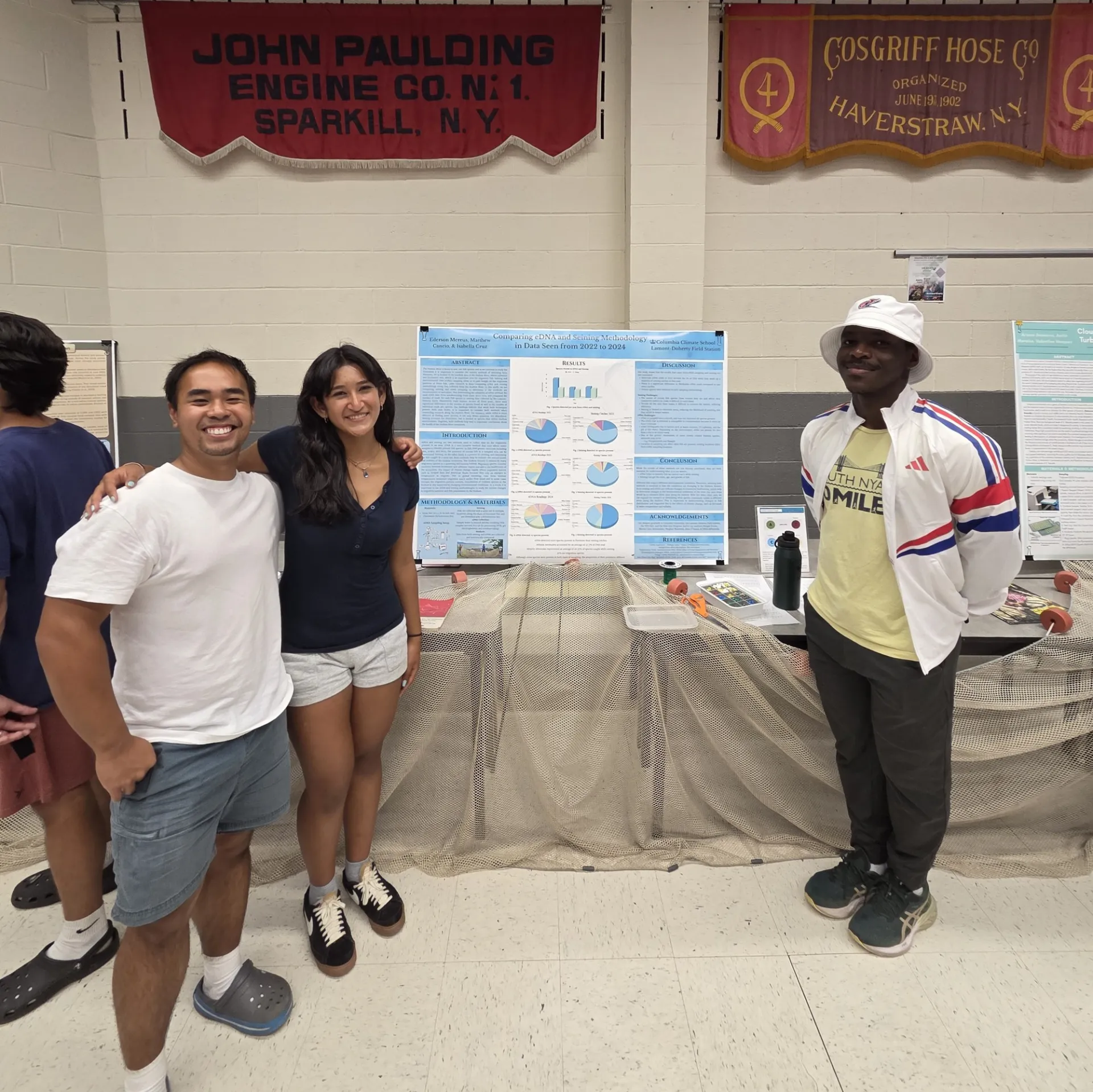
Ederson Mereus, Matthew Cancio, and Isabella Cruz worked on “Comparing eDNA and Seining Methodology.” They found that each technique has distinct advantages. Seining provides direct counts and information on life stages, while eDNA can detect species that are difficult to capture. Used together, the two methods provide a more comprehensive picture of estuarine biodiversity.
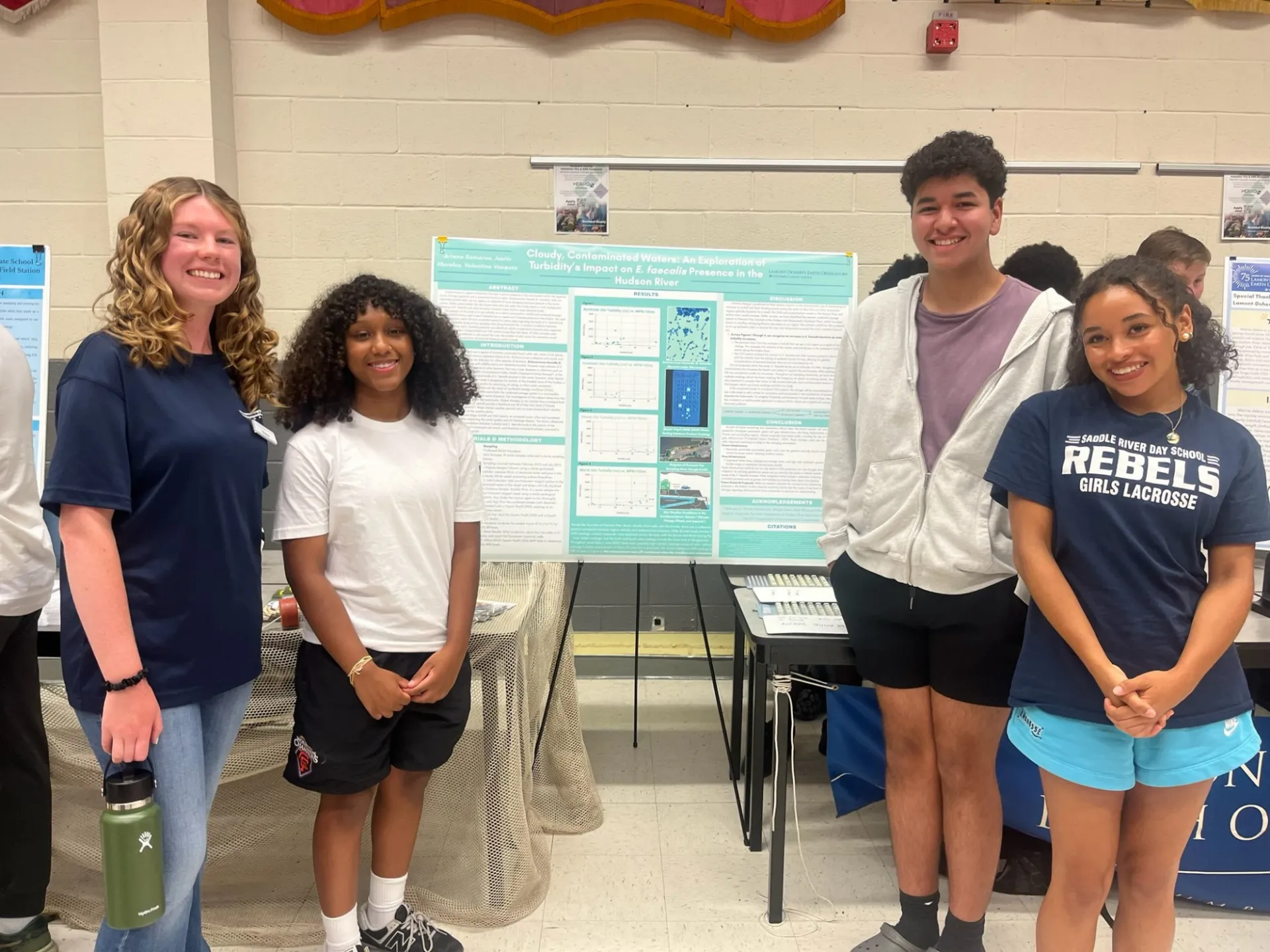
Ariana Samaroo, Justin Morales, and Valentina Vasquez conducted “Cloudy, Contaminated Waters.” They explored how climate-driven changes can affect levels of E. faecalis. The study showed that higher turbidity, more frequent flooding, and rising sea level can all contribute to elevated concentrations of this indicator bacterium in the Hudson Estuary.
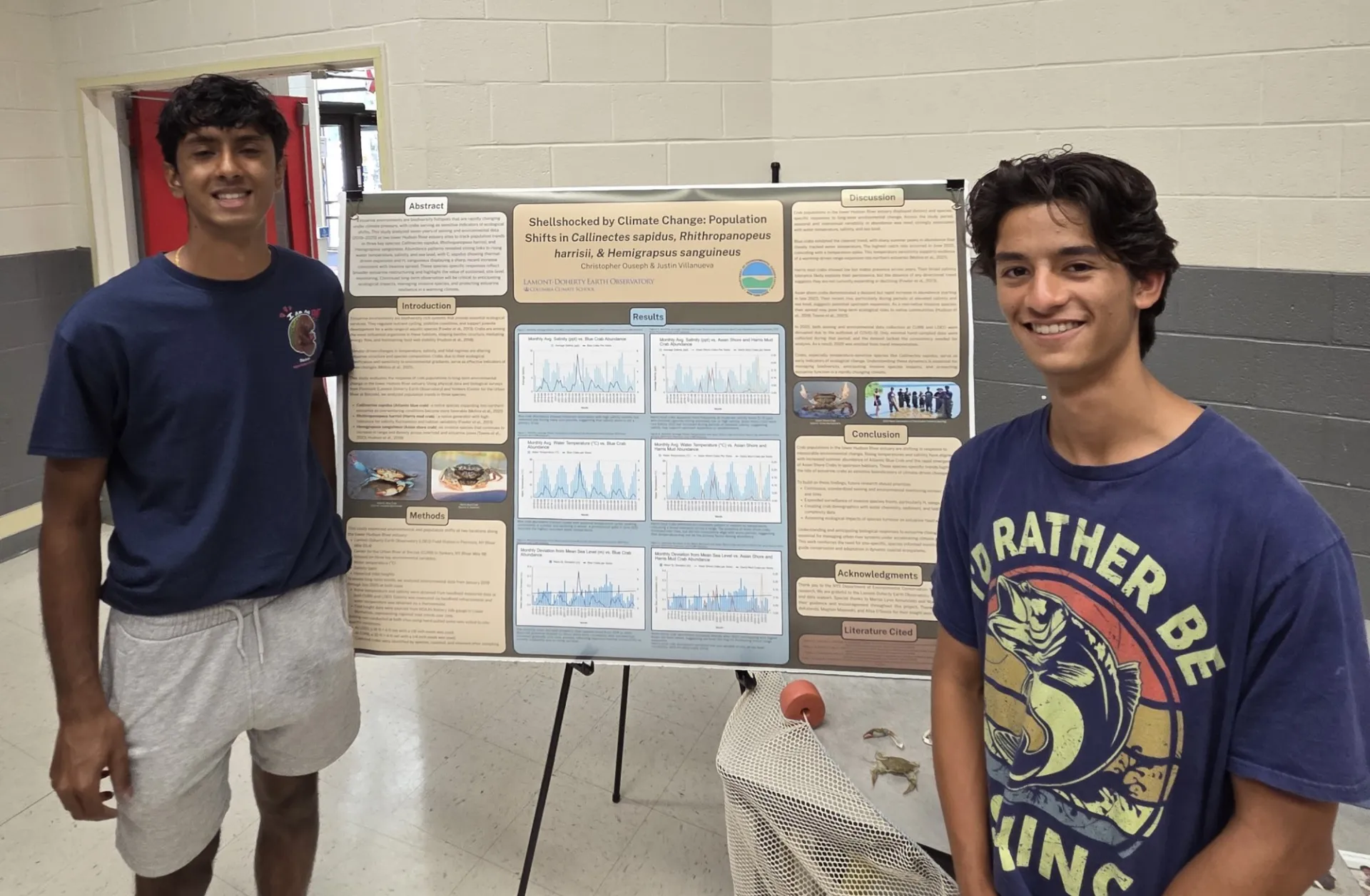
Justin Villanueva and Chris Ouseph led the project “Shellshocked by Climate Change.” They examined how warming, changing salinity, and rising sea level could push crab populations farther up the estuary, moving them outside of their usual range.
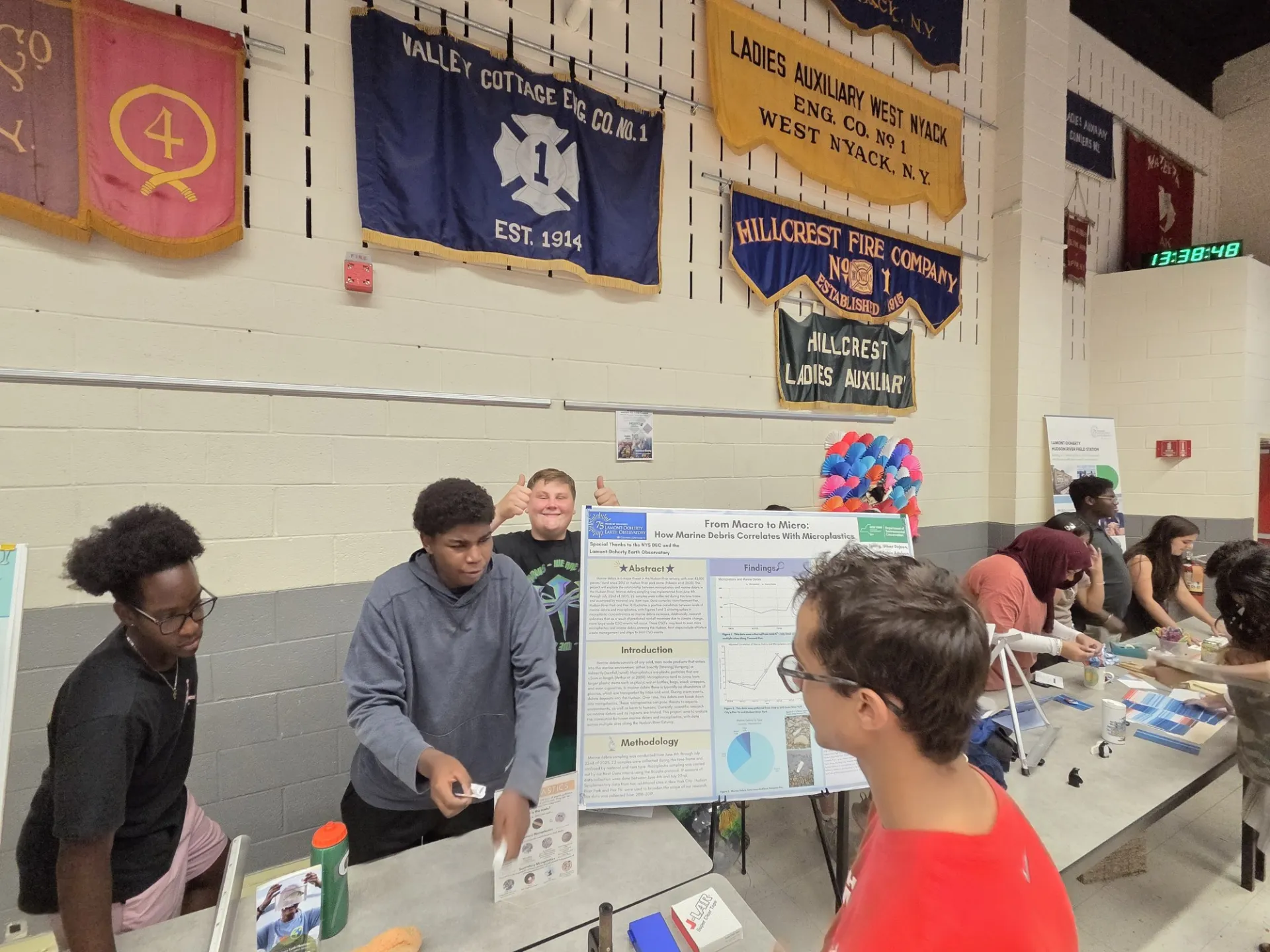
Austin Spong, Oliver Dejean, Sera Anupama, and Fabio Adelson completed the project “From Macro to Micro.” They investigated the link between marine debris and microplastics. Their findings emphasized that reducing shoreline litter is key to limiting the prevalence and ecological impact of microplastics in the estuary.
These projects demonstrated the interns’ ability to analyze data, draw conclusions, and communicate findings, providing a strong capstone to their summer research experience.
Image Carousel with 4 slides
A carousel is a rotating set of images. Use the previous and next buttons to change the displayed slide
-
Slide 1: Isabella's, Matt's and Ederson's Poster: "Comparing eDNA and Seining Methodology"
-
Slide 2: Ariana's, Valentina's and Justin's Poster: "Cloudy, Contaminated Waters"
-
Slide 3: Chris's and Justin's Poster: "Shellshocked by Climate Change"
-
Slide 4: Fabio's, Oliver's, Sera's and Austin's Poster: "From Macro to Micro"
We are looking forward to working with another great cohort of high school students and seeing what interesting findings await us in summer 2026!